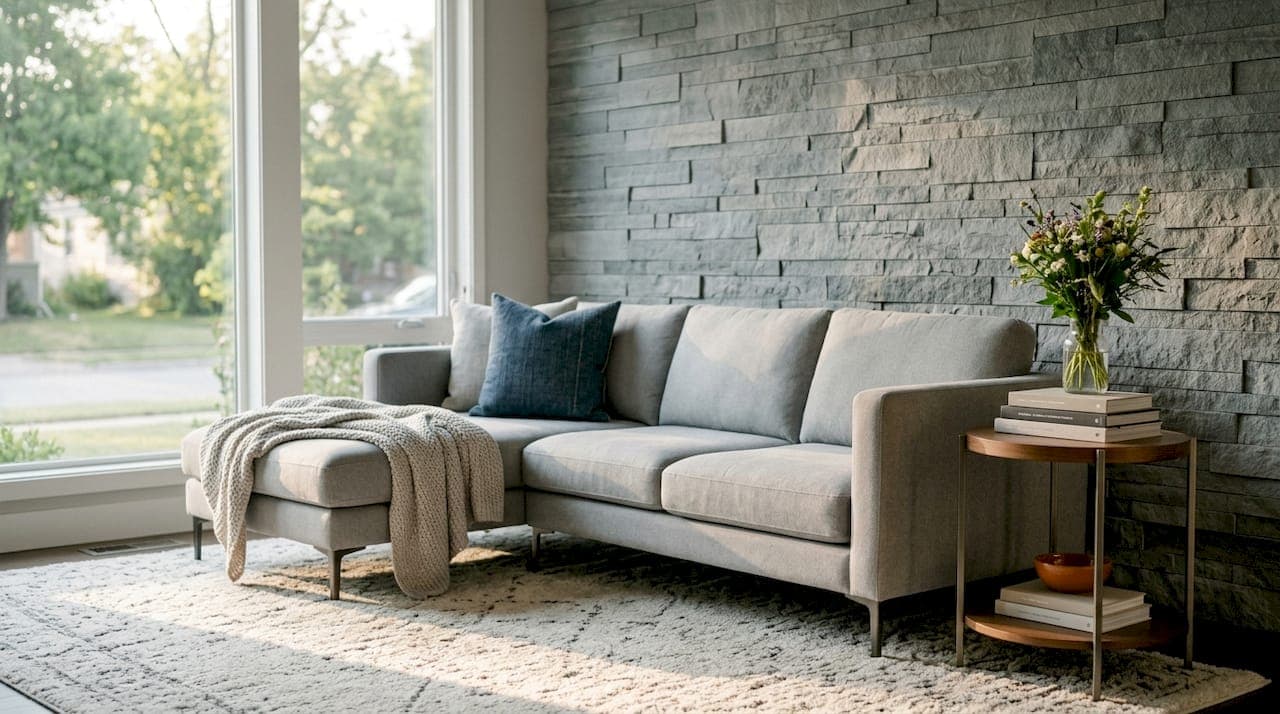
An accent wall in the living room is a single wall designed to stand out through texture, tone, or material, creating a deliberate focal point that elevates the entire space. The best accent wall living room projects in 2026 go far beyond a coat of bold paint. Accent walls are evolving toward architectural integration, using materials like wood slats, stone veneer, and limewash finishes that feel like part of the home's structure. Whether you own or rent, the right focal wall transforms how a room feels, functions, and flows.
Which wall should you choose for your living room accent wall?
The "one wall rule" is the most reliable guide for placement. Prioritize the wall behind the sofa, the fireplace wall, or the media wall. These locations align with where the eye naturally lands when entering a room.
Avoid walls broken up by multiple doors or windows. Interruptions fragment the visual impact and make even a beautiful finish look disjointed. Side walls rarely work because they sit outside the natural attention flow of the room.
Multiple accent walls compete with each other and dilute focus. One well-chosen wall shapes the entire room's character. Two or three competing statement walls create visual noise instead of a clear focal point.
- Sofa wall: The most common choice. Anchors seating and creates a backdrop for the main conversation area.
- Fireplace wall: A natural focal point already. Texture or color here reinforces what the architecture already emphasizes.
- Media wall: Ideal for integrating your TV setup into a designed feature rather than an afterthought.
- Entry-facing wall: The first wall you see when walking in. High impact, especially in open-plan spaces.
Pro Tip: If your room has a fireplace, always treat that wall as the primary accent surface. Fighting against an existing architectural feature never works.
1. Wood slat panels
Wood slat walls deliver warmth and architectural depth in a way flat paint simply cannot. Slats spaced ½–1 inch apart with 1–2 inch wide boards running floor to ceiling create the most cohesive result. Natural oak and ash finishes are the top choices for 2026 because they read as warm without being rustic.
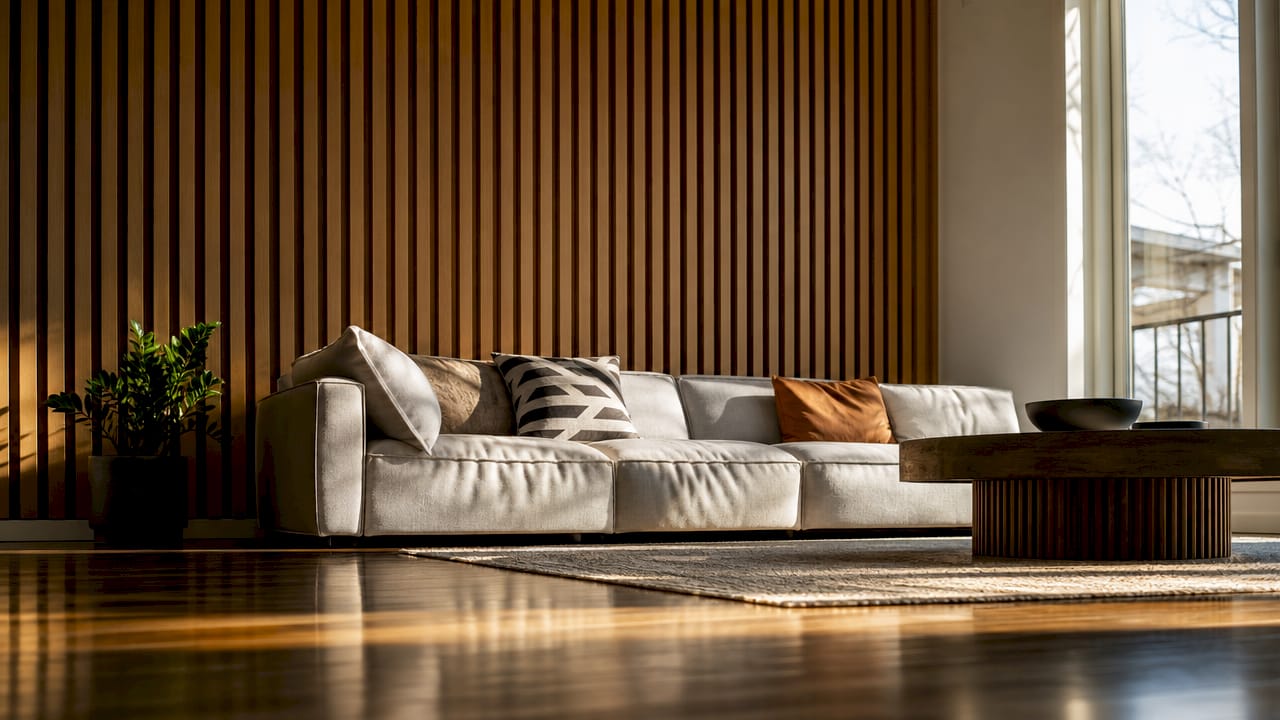
The spacing matters as much as the wood species. Tighter spacing reads as formal and refined. Wider gaps feel more casual and relaxed. Themediawallstore's slat wall kits offer pre-cut, pre-labeled panels that install over a weekend without a contractor.
2. Stone veneer
Stone veneer creates a permanent, high-end look that adds genuine texture and weight to a living room focal wall. It works best on fireplace walls where the material feels contextually appropriate. Installation requires more preparation than paint or panels, and professional installation is recommended for large surfaces.
Cost is the main consideration. Stone veneer installs can exceed $4,000 for a full wall. That investment pays off in longevity and resale appeal, but it is not a reversible choice.
3. Limewash and Venetian plaster finishes
Limewash is one of the most requested textured paint finishes in 2026 because it creates organic, layered depth without adding physical material to the wall. The technique uses overlapping X-shaped strokes that leave some base color visible, producing a warm, aged texture. Venetian plaster goes further, creating a polished, almost stone-like surface.
Both finishes reward patience and practice. A test patch on a hidden section of wall saves a lot of regret. Neither finish is ideal for renters since removal requires repainting.
4. Wallpaper and wall murals
Wallpaper has returned as a serious design tool, not a dated relic. Tactile options like grasscloth, linen-textured paper, and embossed geometric prints add dimension that paint cannot replicate. Large-scale murals work especially well on the wall behind a sofa, turning the entire surface into a piece of art.
Peel-and-stick wallpaper is the renter-friendly version of this idea. Quality has improved significantly, and removal leaves walls undamaged. The trade-off is longevity. Peel-and-stick options rarely last as long as traditional paste-up wallpaper.
5. Board and batten paneling
Board and batten is a classic technique that reads as modern when executed with clean lines and a single paint color. Vertical boards attached over a flat wall create shadow lines and dimension without adding bulk. Painted in a deep charcoal or forest green, board and batten shifts from farmhouse to contemporary instantly.
The key is proportion. Battens spaced too far apart look sparse. Battens too close together look busy. A spacing of 12–16 inches works well in most standard living rooms.
6. Fluted wall panels
Fluted panels are the subtlest option on this list and one of the most sophisticated. The vertical ridges catch light differently throughout the day, creating a surface that changes with the room's natural lighting. Painted in a tone-on-tone finish, fluted panels read as quiet luxury rather than a bold statement.
This approach suits modern and transitional living rooms where the goal is texture without drama. Themediawallstore's essential modern wall designs apply this principle to media wall setups with clean, minimal profiles.
7. Painted arches and geometric tape designs
Painted arches are the most budget-accessible living room accent wall idea available. Painter's tape and a steady hand create arched frames, geometric shapes, or color-blocked sections that cost less than $50 in materials. This approach works for renters and homeowners alike.
The limitation is longevity. Painted designs lack the physical texture that makes wood and stone finishes feel premium. They work best as a temporary update or a stepping stone while saving for a more permanent solution.
Color trends and design principles for 2026
2026 design trends favor moody, tonal depth over random bright colors. Charcoal, navy, forest green, and warm brown neutrals are the dominant palettes. Colors like "Black Panther," "Hague Blue," and "Studio Green" appear repeatedly in high-end living room designs this year.
Tone-on-tone layering is the technique that separates a good accent wall from a great one. Painting the wall, trim, and baseboards the same color creates an integrated architectural feature. White trim on a dark accent wall breaks the visual flow and produces a "painted box" effect that reads as amateur.
Lighting changes everything. A deep charcoal wall in a north-facing room can feel oppressive by midday. A warm terracotta in a south-facing room glows beautifully. Always test paint samples at different times of day before committing.
- Small rooms: Lighter textured finishes prevent a claustrophobic feel. Dark accent walls in small spaces can work, but only with strong artificial lighting.
- Large rooms: Deep, saturated colors anchor the space and prevent it from feeling cavernous.
- Low-light rooms: Warm neutrals and reflective finishes like Venetian plaster bounce light better than flat dark paint.
Pro Tip: Paint the ceiling the same color as your accent wall in rooms with high ceilings. It creates a cocooning effect that feels intentional and luxurious.
How to balance and decorate your focal wall for harmony
The 60-30-10 color rule provides the clearest framework for balancing an accent wall with the rest of the room. The main walls take 60% of the color presence, furniture takes 30%, and accent details including the focal wall take 10%. This ratio prevents the accent wall from overwhelming the room.
Furniture placement reinforces the focal wall's purpose. The sofa should face or relate directly to the accent wall. Floating furniture away from the wall creates awkward dead space and weakens the visual connection.
Lighting is the most underused tool in accent wall design. Wall sconces, LED strip lighting behind panels, and directional floor lamps all bring out texture and depth. An unlit accent wall, especially one with wood slats or stone veneer, appears flat and loses most of its visual impact.
- Rugs and cushions: Echo one color from the accent wall in at least two other elements in the room.
- Gallery walls: Use sparingly on textured surfaces. A limewash or stone wall needs no additional decoration.
- Shelving: Floating shelves on a wood slat wall add function without competing with the texture.
- Avoid: Placing multiple decorative focal points on the same wall. One strong element per wall is the rule.
Cost ranges and DIY vs. professional options
Accent wall projects fall into three budget categories: low-budget at $50–$200, medium at $200–$800, and luxury at $800 and above. Understanding where your chosen material lands helps set realistic expectations before you start.
| Budget Range | Materials | Best For |
|---|---|---|
| $50–$200 | Paint, peel-and-stick wallpaper, tape designs | Renters, quick updates, temporary looks |
| $200–$800 | Wood slats, textured paint, beadboard, standard wallpaper | Homeowners wanting lasting texture |
| $800–$4,000+ | Stone veneer, Venetian plaster, custom built-ins | Luxury finishes, long-term investment |
DIY works well for paint, peel-and-stick wallpaper, and pre-cut panel kits. Stone veneer and Venetian plaster require professional skill to achieve a clean result. A poorly applied plaster finish is harder to fix than a bad paint job.
Renters have strong options in the $50–$200 range. Peel-and-stick wallpaper, removable panels, and painted arches all leave walls undamaged. The trade-off is that these options rarely achieve the same depth and permanence as fixed materials.
Pro Tip: Match your budget to how long you plan to stay in the space. A $150 peel-and-stick solution makes sense for a two-year lease. A $1,500 wood slat wall makes sense for a home you plan to own for a decade.
Key Takeaways
The most effective accent wall living room strategy combines intentional placement, architectural texture, and tonal color layering to create a focal point that feels built-in rather than applied.
| Point | Details |
|---|---|
| Choose the right wall | Prioritize the sofa, fireplace, or media wall. Avoid walls broken by doors or windows. |
| Use texture over flat paint | Wood slats, stone veneer, and limewash create depth that paint alone cannot replicate. |
| Match color to lighting | Test paint samples at different times of day before committing to a dark or saturated color. |
| Balance with the 60-30-10 rule | Keep the accent wall as 10% of the room's color presence to avoid visual overload. |
| Align budget with longevity | Spend more on permanent materials only if you plan to stay in the space long-term. |
Why I think most accent walls fail before the paint dries
Most accent walls fail at the planning stage, not the execution stage. Homeowners pick a color they love on a phone screen, paint one wall, and wonder why the room feels off. The wall was never the problem. The wall choice, the trim color, and the lighting were.
The shift I have seen make the biggest difference is treating the accent wall as an architectural decision, not a decorating decision. When you choose a material or finish that relates to the room's existing structure, the wall feels like it was always there. When you choose a color because it looked good on Instagram, it rarely survives contact with your actual room.
Texture is the most undervalued tool available. A limewash finish in a warm gray reads completely differently from flat gray paint. The depth catches light, changes through the day, and gives the room a quality that photographs cannot fully capture. That is the feeling worth chasing.
The other mistake I see constantly is over-decorating the accent wall after the fact. A strong wood slat wall or a deep Venetian plaster surface does not need gallery frames, floating shelves, and a neon sign. The wall is the art. Trust it.
One last thing: always plan your lighting before you finalize your material choice. A beautiful fluted panel wall with no directional light is a wasted investment. Add a wall sconce, a floor lamp, or LED strips behind the panels. Light is what makes texture visible.
— Jake
Themediawallstore makes your media accent wall worth the investment
A living room accent wall built around your TV setup is one of the highest-impact upgrades you can make. Themediawallstore specializes in exactly that, with DIY media wall kits that arrive pre-cut and pre-labeled for weekend installation. No contractor required.
The range covers everything from slat wall panels to bespoke luxury designs, so whether you want a minimal modern finish or a high-end custom look, there is a kit built for it. Over 1,000 satisfied customers have used Themediawallstore kits to create living rooms that look custom-built at a fraction of the cost. Risk-free returns and expert support mean you can order with confidence.
FAQ
What is an accent wall in a living room?
An accent wall is a single wall treated with a contrasting color, texture, or material to create a deliberate focal point. It draws the eye and anchors the room's design around one surface.
Which wall should be the accent wall in a living room?
The wall behind the sofa, the fireplace wall, or the media wall works best. These locations align with the room's natural focal points and existing architecture.
Are accent walls still in style in 2026?
Accent walls remain in style but have evolved toward architectural texture and tonal depth rather than bold, isolated color. Wood slats, limewash, and stone veneer are the leading choices this year.
What colors work best for a living room accent wall?
Charcoal, navy, forest green, and warm brown neutrals are the top 2026 choices. Painting the trim and baseboards the same color as the wall creates a more integrated, high-end result.
Can renters create an accent wall without damaging walls?
Peel-and-stick wallpaper, removable panels, and painted arches all work within a $50–$200 budget and leave walls undamaged when removed.