Pick a fireplace width that matches or slightly exceeds your TV width. For most living rooms, that means a medium range size. For a bedroom or small apartment, smaller sizes work well. For a feature wall or open-plan great room, opt for wider units to suit the space.
Three rules cover most decisions:
- TV-to-fireplace ratio: The fireplace should be at least as wide as your TV, ideally a few inches wider. A fire that's narrower than the screen above it looks visually unstable.
- Depth: Wall-mount and linear units run 4–6 inches deep. Freestanding units typically run 9–18 inches. Know your wall depth before you order.
- Heating: Most units run 1,000–1,500 watts. That's enough for a small-to-medium room, not a whole floor.
Quick size-by-room guide:
- Bedroom: 25–40 in freestanding or insert
- Small living room or apartment: 40–50 in wall-mount or shallow insert
- Standard living room: 50–65 in linear or built-in
- Open-plan great room: 70–86+ in linear, or linked units
Key Takeaways
The single most important sizing rule: pick a fireplace width that matches or exceeds your TV width, confirm the depth fits your wall type, and verify the wattage only if heating is a primary goal.
| Point | Details |
|---|---|
| Match or exceed TV width | The fireplace should be at least as wide as the TV; narrower looks visually unstable. |
| Standard heating output | A 1,500-watt unit heats roughly 120–150 sq ft; treat it as zone heating, not whole-room. |
| Depth varies by format | Wall-mount units run 4–6 in deep; freestanding units run 9–18 in; measure your wall first. |
| Confirm clearances | Keep internal vents unobstructed and follow manufacturer specs for clearance above the unit. |
| Themediawallstore kits | The Breckenridge 70", Avalon 80", and Slat Luxe kits come pre-sized for common TV and room pairings. |
Table of Contents
- What are the standard electric fireplace dimensions?
- How do you measure your space for an electric fireplace?
- What sizes should you expect by fireplace type?
- How does heating capacity relate to fireplace size?
- What clearances and installation rules do you need to follow?
- How do you size a fireplace for a media wall with a TV?
- How Themediawallstore's kits solve the sizing problem
- What fireplace size fits your specific room?
- Common sizing mistakes to avoid
- The trade-off most buyers underestimate
- Themediawallstore makes sizing a media wall straightforward
- Sources
- FAQ
What are the standard electric fireplace dimensions?
There is no single standard electric fireplace size. Typical electric fireplaces measure roughly 20–32 inches high and 24–48 inches wide, with depths commonly in the 6–12 inch range. That said, the market spans everything from compact 23-inch portrait inserts to 100-inch-plus linear wall panels.
No universal standard exists. Dimensions vary significantly by product format. The ranges below reflect typical offerings across insert, wall-mount, built-in, and freestanding categories.
| Format | Typical Width | Typical Height | Typical Depth | Notes |
|---|---|---|---|---|
| Insert | 25–50 in | 14–22 in | 6–12 in | Fits inside existing firebox or cabinet opening |
| Wall-mount / Linear | 34–86+ in | 12–20 in | 4–6 in | Surface-mounts; minimal wall cavity needed |
| Built-in / Recessed | 36–72 in | 16–24 in | 8–14 in | Requires framed stud-wall cavity |
| Freestanding | 30–60 in | 24–48 in | 9–18 in | Standalone; deepest footprint |
Electric fireplaces are the most flexible format for resizing or replacing a wood or gas unit because they typically require less depth and fewer building-code accommodations. That flexibility is exactly why the size range is so wide.
How do you measure your space for an electric fireplace?
Get a tape measure before you browse a single product page. Guessing costs you a return shipping label.
-
Measure available wall width. Record the full wall width, then the usable section between any windows, doors, or architectural features. Note trim-to-trim and stud-to-stud dimensions separately. The stud-to-stud figure matters if you plan to recess the unit.
-
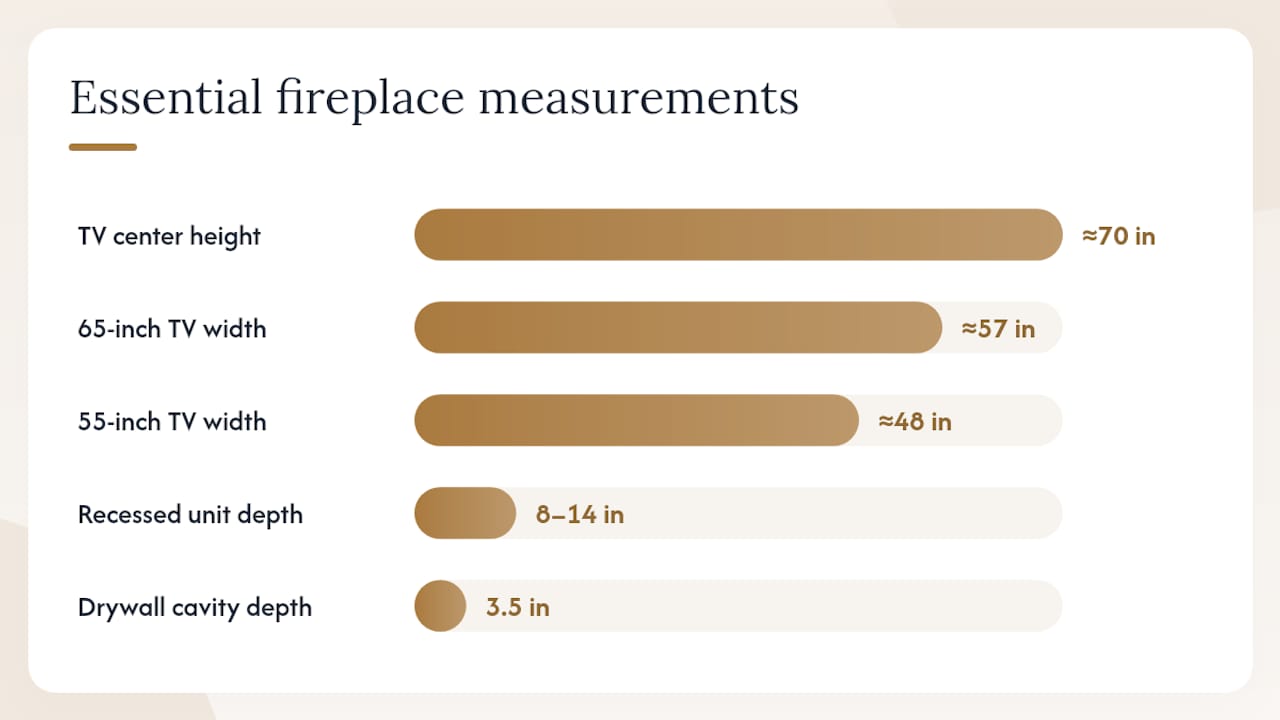
Measure vertical clearance. Measure from the floor to the bottom of any wall-mounted bracket, mantel shelf, or TV. Aim to keep the center of your TV under roughly 70 inches from the floor to avoid neck strain. If a mantel is present, plan for the TV to sit 5–8 inches above it.
-
Measure wall depth. Standard drywall over studs gives you about 3.5 inches of cavity depth. A recessed or built-in unit typically needs 8–14 inches. If you're surface-mounting a linear unit, depth is less critical, but confirm there's no plumbing or HVAC in the wall section.
-
Check outlets, vents, and baseboards. Locate the nearest electrical outlet and measure the distance to your planned mounting spot. Note any baseboard heaters, cable runs, or HVAC vents that could conflict with the unit's footprint or its own internal vents.
Converting TV diagonal to approximate width: Multiply the diagonal by 0.87 for a 16:9 screen. A 55-inch TV is roughly 48 inches wide. A 65-inch TV is roughly 57 inches wide. Use those width figures, not the diagonal, when sizing the fireplace below it.
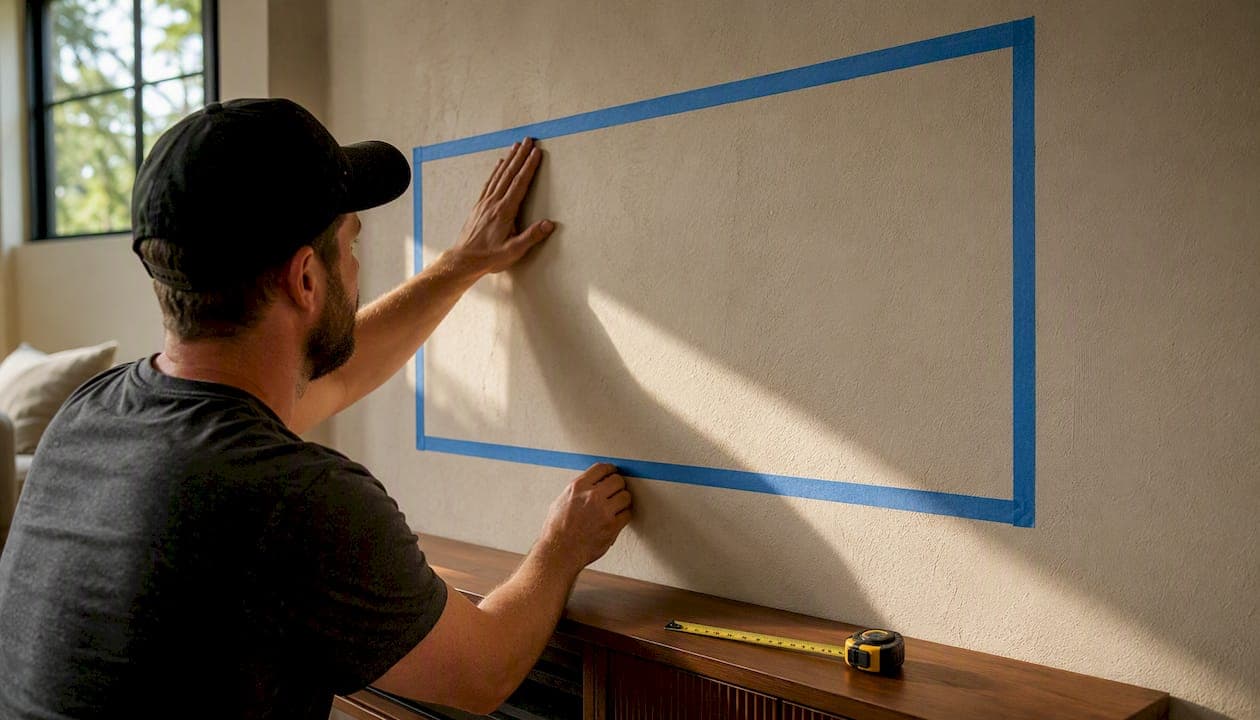
Pro Tip: Before drilling anything, tape the fireplace outline on the wall with painter's tape. Step back 10–12 feet and live with it for a day. Proportions that look right on paper can feel wrong at room scale.
Napoleon's installation guidance recommends confirming both the TV and fireplace manuals before finalizing placement, since clearance requirements vary by model.
What sizes should you expect by fireplace type?
Format dictates your realistic size options more than any other factor. Here's what each type actually delivers.
Insert
Inserts slot into an existing firebox opening or a cabinet cutout. Widths typically run 25–50 inches, with heights in the 14–22 inch range. Depths stay shallow, usually 6–12 inches, which makes them practical for built-in cabinetry. If you're replacing a wood-burning insert, measure the existing firebox opening carefully: the electric insert needs to fit the opening width with a small gap on each side for trim.
Built-in and recessed
These units sit flush with the wall surface and require a framed cavity behind the drywall. Common widths run 36–72 inches, with depths of 8–14 inches. The framing requirement adds installation complexity, but the result is a clean, integrated look with no protrusion into the room. Confirm stud spacing and any in-wall obstructions before ordering.
Wall-mount and linear
The most popular format for media walls. Linear units run 34–86+ inches wide, typically only 4–6 inches deep, and surface-mount directly to the wall. Multiple units can be linked side-by-side for widths beyond 86 inches on very large feature walls. This format suits most DIY installs because it requires no wall cavity work.

Freestanding
Freestanding units are the most flexible for renters or anyone who doesn't want to touch a wall. Widths range from about 30–60 inches, but the deeper footprint (9–18 inches) eats into floor space. They work well in bedrooms and apartments where a media wall isn't practical.
- Inserts and built-ins need precise opening measurements before purchase.
- Linear wall-mounts are the easiest DIY format and the most common choice for media walls.
- Freestanding units offer zero installation complexity but consume the most floor depth.
- Linking multiple linear units is a viable option for walls wider than 86 inches.
How does heating capacity relate to fireplace size?
Most electric fireplaces run on a standard 120V outlet at 1,000 or 1,500 watts. A 1,500-watt unit typically heats roughly 120–150 square feet in a well-insulated room under moderate conditions. That covers a bedroom or small living room comfortably. Larger or colder spaces need supplemental heat.
1,500 watts ≈ 120–150 sq ft. That's the practical ceiling for a standard electric fireplace in a reasonably insulated room. Treat it as zone heating, not whole-home heating.
The critical thing most buyers miss: a wider fireplace does not automatically mean more heat. A 72-inch linear unit may run the same 1,500-watt element as a 36-inch unit. Some larger models pair two heating elements for 3,000 watts total, but that's not universal. Always check the product spec sheet, not just the width.
When heat output should drive your decision:
- The room is a primary living space in a cold climate.
- The room is poorly insulated or has large windows.
- You want to lower thermostat use in a specific zone.
- The fireplace will be the only heat source in the room.
When visual size matters more than wattage:
- The fireplace is primarily decorative or ambiance-focused.
- The room already has adequate central heating.
- You're building a media wall where proportion and TV pairing are the priority.
For media walls, most buyers are in the second category. The flame effect and visual scale matter far more than BTU output.
What clearances and installation rules do you need to follow?
Many sources recommend keeping combustible materials at least 3 feet away from a fireplace opening. For electric units, the more pressing concern is the unit's own internal vents. Blocking those vents causes the thermal cut-off switch to trip, shutting the unit down, or in worst cases, damaging the heating element.
-
Locate the vents before mounting. Most electric fireplaces exhaust warm air from the top or front. Never mount the unit in a fully enclosed cabinet without confirming the vent path is clear.
-
Check the required clearance above the unit. Manufacturers typically specify a minimum clearance between the top of the fireplace and any shelf, mantel, or TV mount above it. This varies by model; 4–12 inches is a common range.
-
Confirm your electrical supply. Most 1,500-watt units draw about 12.5 amps on a 120V circuit. A standard 15-amp outlet handles this, but a dedicated circuit is preferable if the outlet is already shared with other high-draw appliances. Some larger dual-element units require a 240V circuit.
-
Plan cord routing before you mount. Decide whether you'll use in-wall cable management or a surface raceway. The outlet location relative to the mounting height matters more than most buyers anticipate.
Quick installation checklist:
- Vent path confirmed as unobstructed
- Clearance above unit meets manufacturer spec
- Outlet within reach or in-wall wiring planned
- Wall studs or blocking located for mounting bracket
- No plumbing, HVAC ducts, or electrical runs in the planned cavity
How do you size a fireplace for a media wall with a TV?
Start with the fireplace, not the TV. The fireplace sets the scale of the entire wall; the TV should fit within that frame, not the other way around.
The pyramid rule is the clearest design principle here: the fireplace should be at least as wide as the TV and ideally wider, so the composition reads as a stable base supporting the screen above. A fire that's narrower than the TV creates an inverted pyramid that looks top-heavy.
TV-to-fireplace pairing guide:
For vertical spacing, keep the TV center under roughly 70 inches from the floor and position the bottom of the TV 5–8 inches above any mantel shelf, as explained in how to choose an interior door style for complementary interior finishes. On a standard 9-foot ceiling with no mantel, a 55-inch TV centered at about 60 inches works well for seated viewing.
On tall ceilings or wide open-plan walls, the fireplace can run wider than the TV without looking wrong. A 70-inch fire under a 65-inch TV on a 14-foot wall reads as intentional and grounded. The pyramid rule still holds; it just scales up.
Pro Tip: For media walls, the TV should be 70–100% of the fireplace width for a balanced look. If your TV is wider than the fire, you haven't sized the fire correctly.
How Themediawallstore's kits solve the sizing problem
Sizing an electric fireplace correctly is one thing. Building a media wall around it that looks intentional, hides the wires, and does not require a contractor is another. Themediawallstore's pre-cut, pre-labeled kits handle both problems at once.
Three products cover the most common sizing scenarios:
-
Breckenridge 70" Floating Fireplace TV Stand: A 70-inch wall-mounted unit that pairs well with 55–65 inch TVs. The floating design keeps the floor clear, and the integrated fireplace insert is already sized to the cabinet. No separate fireplace sourcing required.
-
Avalon 80" Floating TV Cabinet with RGB LED Fireplace: At 80 inches, this pairs naturally with 65–75 inch TVs and suits standard to large living rooms. The RGB LED fireplace adds color-adjustable ambiance beyond standard flame effects.
-
Slat Luxe Fireplace TV Wall Kit: A two-piece modular kit with slat accent panels that frames both the fireplace and TV in a single cohesive wall treatment. The pre-sized panels remove the guesswork about proportions entirely.
All three kits include hidden wire management, pre-labeled panels, and compatible fireplace inserts. The sizing decisions are already made; you're confirming fit, not calculating it from scratch.
Pro Tip: Check the kit's listed TV size compatibility before ordering. Each kit is designed around a specific TV width range, which means the pyramid rule is already built into the product.
You can browse electric fireplaces for media walls across the full range to find the insert that matches your room dimensions.
What fireplace size fits your specific room?
Room type shapes the decision as much as wall width does.
-
Bedroom: A 25–40 inch freestanding unit or shallow insert is usually the right call. Bedrooms rarely have the wall space for a linear unit, and the viewing distance is shorter, so a smaller flame effect reads just as well. Depth matters here: a freestanding unit with a 12-inch footprint in a 10-by-12 room will feel intrusive.
-
Small living room or apartment: A 40–50 inch wall-mount or shallow insert keeps the space from feeling dominated. Shallow linear units (4–6 inches deep) are ideal because they don't consume floor space. Avoid freestanding units in rooms under about 150 square feet.
-
Standard living room (12–18 ft wide): The 50–65 inch range is the sweet spot. At a typical 10–15 foot viewing distance, a 55-inch fire reads as a proper focal point without overwhelming the wall. This is where the Breckenridge 70" kit often lands, pairing a 70-inch cabinet with a 55–65 inch TV.
-
Open-plan great room or large living area: Go 70–86 inches or wider. At distances beyond 15 feet, a 50-inch fire disappears visually. Larger linear units or linked configurations maintain visual weight. At this scale, the fireplace is often more decorative than functional as a heater, so prioritize width and flame quality over wattage.
Common sizing mistakes to avoid
Most sizing errors fall into a short list of predictable patterns.
- Choosing a fireplace narrower than the TV. This is the most common mistake. The inverted pyramid looks wrong immediately and is hard to fix without replacing the unit.
- Ignoring vent locations. Ordering a unit and then discovering the top vent is blocked by a cabinet shelf is an avoidable problem. Check vent placement in the product specs before purchase.
- Picking a deep freestanding unit for a tight room. A 15-inch-deep freestanding unit in a narrow bedroom or apartment hallway creates a tripping hazard and makes the room feel smaller.
- Assuming wider means more heat. A 72-inch linear unit may run the same 1,500-watt element as a 36-inch unit. Verify the wattage in the spec sheet.
- Skipping the tape-measure step. Wall dimensions look different in person than on a floor plan. Measure the actual wall, including any outlets, switches, or architectural features that reduce usable width.
Pro Tip: Use painter's tape to mock up the fireplace and TV footprint on the wall before ordering. Mark the fireplace width, the TV width above it, and the clearance gap between them. Stand back at your normal viewing distance and assess the proportions. It takes 10 minutes and can save a costly return.
The trade-off most buyers underestimate
The conventional wisdom on electric fireplace sizing tends to collapse into one of two camps: go as wide as possible for visual impact, or match the wattage to the room size for heating efficiency. Both framings miss the actual decision most DIY homeowners face.
For a media wall, width and proportion are almost always the right priority. A fireplace that's visually balanced with the TV and the wall creates a room that feels designed. A fireplace that's technically adequate for heating but visually undersized just looks like an afterthought. The flame effect at 40 inches versus 60 inches in a standard living room is a meaningful difference in presence.
Where the trade-off gets real is depth. A recessed or built-in unit gives the cleanest look but requires framing work that adds time and cost. A surface-mount linear unit installs in a weekend but protrudes from the wall. For most DIY buyers, the surface-mount is the right call: the visual difference is minor, the installation complexity difference is significant.
Wider decorative fires can dominate a wall without adding meaningful heat. Deeper units give more heat but consume space and installation effort. The practical recommendation for most homeowners: prioritize width and proportion for media walls, and prioritize wattage only if the fireplace is the primary heat source for the room. When in doubt, a pre-sized kit removes both decisions from the equation.
Themediawallstore makes sizing a media wall straightforward
Getting the fireplace-to-TV ratio right, hiding the wires, and ending up with a wall that looks custom-built rather than assembled from parts: that's the actual problem most buyers are trying to solve.
Themediawallstore's DIY media wall kits are pre-cut and pre-labeled, so the sizing decisions are already resolved before the box arrives. The Breckenridge 70" suits 55–65 inch TVs in standard living rooms. The Avalon 80" scales up for larger rooms and 65–75 inch screens. The Slat Luxe kit wraps both the fireplace and TV in a single wall treatment with slat accent panels.

Every kit includes hidden wire management, compatible fireplace inserts, and expert support if you hit a snag. Over 1,000 homeowners have installed these kits without a contractor. The price is a fraction of a custom build. Browse the full range and find the kit that fits your wall at Themediawallstore's shop, or explore custom media wall designs if you want a bespoke layout.
Sources
- Fireplace Dimensions: Sizing Guide for Architects - Planika USA
- Fireplace sizes (article) - Angi
- Media Wall Fires: The Complete Planning Guide (Before You Buy Anything) - Direct Fireplaces | Direct Fireplaces
- How Much Wall Space is Needed for Electric Fireplaces - MagikFlame
- Optimal Fireplace Height: Installation Guide - Napoleon
- How big of a room will a 1500 watt heater heat? - OnTimeSupplies
Always check the manufacturer's installation manual for your specific model. Clearance requirements, vent placement, and electrical specs vary and the manual supersedes any general guidance.
FAQ
What is the standard size of an electric fireplace?
There is no single standard. Electric fireplaces typically measure 20–32 inches high and 24–48 inches wide, with depths of 6–12 inches, but formats range from compact 25-inch inserts to 86-inch-plus linear wall units.
How much space does an electric fireplace need?
The unit itself needs clearance on all sides per the manufacturer's manual. Keep combustible materials at least 3 feet from the fireplace opening, and confirm the internal vents are unobstructed above and in front of the unit.
How many inches off the floor should an electric fireplace be mounted?
Mounting height depends on your TV placement. Target a TV center height under roughly 70 inches from the floor, then position the fireplace below it with the recommended clearance gap between them (typically 4–12 inches depending on the model).
How big a room will a 1,500-watt electric fireplace heat?
A 1,500-watt unit heats approximately 120–150 square feet in a well-insulated room under moderate conditions. Larger, colder, or poorly insulated rooms need supplemental heating.
Should the TV be wider than the fireplace?
No. The fireplace should be at least as wide as the TV, and ideally wider. The pyramid rule calls for the TV to be 70–100% of the fireplace width for a visually grounded media wall. A TV wider than the fire creates an unstable, top-heavy look.
Recommended
- Electric Fireplaces for Media Walls | The Media Wall Store
- Breckenridge 70" Floating Fireplace TV Stand — Wall Mounted with Electric Fireplace | The Media Wall Store
- Slat Luxe Fireplace TV Wall Kit – 2 Piece Modern Media Wall | The Media Wall Store
- How It Works — Custom Install & DIY Kits | The Media Wall Store