
An accent wall is defined as a single wall treated with a distinct material, color, or texture to serve as the room's focal point. The best living room accent wall ideas in 2026 move well past simple paint contrasts. Architectural texture and tonal harmony now lead the way, with wood slats, stone veneer, tonal paneling, and textured wallpaper replacing the bold, mismatched color pops of earlier decades. The result is a living room that feels layered, intentional, and genuinely designed rather than decorated. Whether you own your home or rent it, the right accent wall can change how a room feels without a full renovation.
1. Living room accent wall ideas built on architectural texture
The strongest accent wall designs in 2026 treat the wall as an architectural feature, not a paint job. Wood slats, stone veneer, tonal paneling, and textured wallpaper are the four materials driving this shift. Each one adds depth through shadow, grain, and surface variation that flat paint simply cannot replicate.
Wood slat walls
Wood slat walls create a warm, graphic texture that works in modern, Scandinavian, and transitional interiors. The key is proportion. Slats sized 1–2 inches wide with ½–1 inch gaps produce a refined, contemporary look. Wider slats or larger gaps start to read as rustic or unfinished. Natural or lightly stained finishes pair best with modern furniture. Themediawallstore's slat wall designs show how this treatment integrates with a full media wall setup for a cohesive focal point.
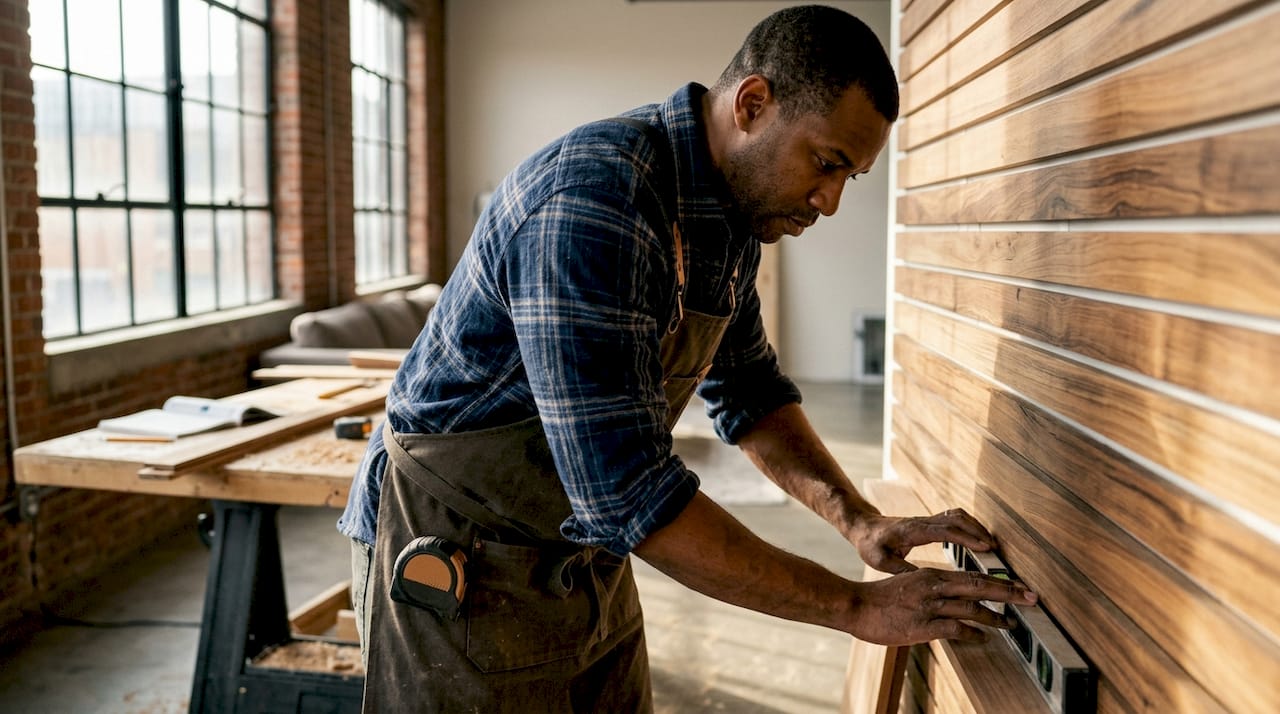
Pro Tip: Paint the wall behind the slats a shade darker than the slats themselves. The contrast deepens the shadow lines and makes the texture read more dramatically from across the room.
Stone and brick veneer
Stone veneer delivers the visual weight of a masonry wall without the structural cost. The installation rule that separates a polished result from an awkward one: stone veneer should run floor to ceiling. Stopping it halfway makes the treatment look pasted on. Pair it with low-profile, modern furniture to prevent the room from feeling like a mountain lodge.
Board and batten paneling
Board and batten uses vertical boards fixed over a flat panel to create a geometric grid pattern. The style reads as both traditional and modern depending on the paint color. White or off-white batten on a warm gray background gives a clean, architectural finish. Dark batten on a deep charcoal wall creates a tone-on-tone effect that feels sophisticated and current.
Fluted and ribbed panels
Fluted panels are the quieter cousin of wood slats. The ridges are shallower and closer together, producing a subtle shadow play rather than a bold graphic. They work especially well in tonal color schemes where the goal is texture over contrast. Many homeowners use fluted MDF panels painted in a single matte color for a look that photographs beautifully and costs far less than custom millwork.
Textured wallpaper and murals
Textured wallpaper acts like art you can touch. Grasscloth, linen-weave, and embossed geometric papers add tactile depth without any construction. Large-format murals work as a single statement piece, particularly in rooms with minimal furniture. The key advantage for renters: most peel-and-stick versions remove cleanly without damaging the wall surface.
Deep matte paint treatments
Paint remains the fastest way to define an accent wall. Deep matte finishes in charcoal gray, navy, and warm browns complement lighter furniture and add sophistication. Tone-on-tone treatments, where the accent wall is a slightly darker version of the room's main color, create a layered effect that feels intentional rather than jarring. Matte sheens absorb light rather than reflecting it, which makes the color appear richer and more grounded.
2. How to choose accent wall colors and textures for your room
Color and texture selection depends on two factors: room size and existing decor. Getting either wrong produces a wall that fights the room instead of completing it.
For larger rooms, darker accent walls work well because they pull the wall visually closer, making the space feel more intimate. Deep monochromatic hues and warm neutral tones dominate 2026 design guidance for exactly this reason. They add depth without introducing a color that clashes with furniture or flooring.
For smaller rooms, the approach flips. Light tones and subtle textures keep the room feeling open. Small-scale patterns and light-colored wallpaper prevent the visual compression that large prints cause. A soft linen-textured wallpaper in a warm white reads as texture without eating into perceived square footage.
A few principles that apply to any room size:
- Choose the wall that already draws the eye. The wall behind a sofa or fireplace is almost always the right choice.
- Match the accent wall's undertone to the room's existing palette. A cool gray wall in a room full of warm wood tones will always look out of place.
- Avoid stopping a treatment halfway up the wall unless the design is deliberate. Texture that stops midway reads as unfinished rather than intentional.
- Use vertical lines to add perceived height. Tall, narrow panels or vertical shiplap make ceilings feel higher than they are.
- Test paint colors in large swatches before committing. Matte finishes look dramatically different under artificial light versus daylight.
3. Budget-friendly accent wall ideas and DIY techniques
A strong accent wall does not require a contractor or a large budget. The most accessible options cost very little and can be completed in a single weekend.
-
Paint with a deep matte finish. This is the lowest-cost option with the highest visual return. A single gallon covers most accent walls. Choose a warm charcoal, deep navy, or earthy brown for a current, grounded look.
-
Apply peel-and-stick wallpaper. Peel-and-stick wallpaper is the top choice for renters because it removes without damage. Patterns range from geometric to botanical, and installation requires no tools beyond a squeegee.
-
Install a DIY wood slat kit. Pre-cut slat kits are available in standard wall heights and require only a level, adhesive, and a finish nailer. The result looks custom but costs a fraction of professional millwork. Themediawallstore's DIY media wall kits include pre-labeled components that simplify the process significantly.
-
Build board and batten with MDF strips. MDF boards from a hardware store, cut to length and glued in a grid pattern, create a board and batten wall for under $100 in materials. Paint the entire surface one color for a clean, architectural finish.
-
Create a gallery wall. Large-scale art and curated shelf arrangements serve as flexible focal points that cost nothing to rearrange. A gallery wall built around a central oversized print reads as intentional and designed.
-
Layer floating shelves with objects. Shelves styled with books, plants, and ceramics create a three-dimensional accent wall without any permanent installation. This works particularly well in rental apartments where wall modifications are restricted.
Pro Tip: Combine two budget techniques for a richer result. Paint the wall a deep matte color first, then layer peel-and-stick geometric wallpaper over the lower third. The contrast between the two surfaces creates a wainscoting effect at zero extra cost.
4. Accent wall ideas for small living rooms
Small rooms require a different strategy. The goal is to add character without making the space feel smaller or more cluttered.
Vertical lines and paneling create the illusion of higher ceilings and a larger room overall. This is the single most useful tool for compact spaces. Narrow vertical shiplap or thin wood slats running floor to ceiling draw the eye upward and stretch the perceived height of the room.
Beyond vertical lines, these approaches work well in tight spaces:
- Light-toned peel-and-stick wallpaper with small-scale patterns. Large-scale prints on small walls cause a cramped feeling. Small geometric or botanical patterns in warm whites and creams keep the room airy.
- Subtle textured panels in soft tonal colors. Fluted MDF panels painted in the same color as the surrounding walls add texture without visual noise.
- A single large art piece. One oversized print creates a focal point without the visual complexity of a gallery arrangement. It keeps the wall active without fragmenting the eye.
- Mirror panels. Mirrors bounce light and double the perceived depth of a room. A full-height mirror panel on an accent wall is one of the most effective space-expanding tools available.
- Minimalist floating shelves. A single row of narrow shelves styled sparingly adds dimension without consuming floor space or overwhelming the wall.
The one thing to avoid: busy, high-contrast patterns. They reduce perceived square footage and make small rooms feel restless rather than cozy.
Key takeaways
The most effective living room accent walls in 2026 use texture, vertical lines, and tonal color to create architectural depth rather than relying on bold color contrast alone.
| Point | Details |
|---|---|
| Texture over color contrast | Wood slats, stone veneer, and fluted panels outperform bright paint for lasting visual impact. |
| Floor-to-ceiling coverage | Architectural treatments like stone veneer and slats should run the full wall height to avoid an unfinished look. |
| Small rooms need vertical lines | Narrow vertical shiplap or slats visually lift ceilings and expand perceived space. |
| Budget options deliver real results | Paint, peel-and-stick wallpaper, and DIY slat kits create high-end looks for a fraction of custom build costs. |
| Choose the wall that already draws the eye | The wall behind a sofa or fireplace is almost always the strongest accent wall candidate. |
What I've learned from years of watching accent wall trends come and go
Most homeowners pick an accent wall color first and ask questions later. That is the wrong order. The wall you choose matters more than the treatment you apply to it. A beautifully textured slat wall on the wrong surface, say, a side wall that nobody faces, adds cost without adding presence.
The shift toward architectural accent walls as room extensions rather than standalone features is the most significant design correction of the past few years. A wall that uses the same wood tone as your flooring, or the same stone as your fireplace surround, feels like it belongs. A wall painted a random bold color feels like an afterthought.
My honest advice: start with texture before you commit to color. A tonal wood slat wall in a warm natural finish will look current in ten years. A bright teal paint wall will not. Spend your budget on materials that age well, and use paint as a complement rather than the main event. If you are renting, peel-and-stick options have genuinely improved. You can achieve a textured, layered look without touching the original wall surface.
The other mistake I see constantly is stopping a treatment at chair-rail height without a clear design reason. It reads as unfinished every time. If you are going to commit to a material, run it the full height of the wall. The extra material cost is small. The visual difference is significant.
— Jake
How Themediawallstore makes accent walls easier to build
Creating a texture-rich accent wall used to mean hiring a contractor or spending weeks sourcing materials. Themediawallstore changes that equation with pre-cut, pre-labeled DIY media wall kits that most homeowners install in a single weekend.
The kits are designed to deliver a high-end, architectural finish without the custom build price tag. You get the wood slat or paneled look that defines 2026's best living room accent wall designs, assembled from components that arrive ready to fit together. Themediawallstore backs every kit with expert support and risk-free returns, so you are not guessing your way through the process. Browse the full range of wall design styles to find the finish that fits your room, your budget, and your timeline.
FAQ
What is the best accent wall material for a living room in 2026?
Wood slats, stone veneer, and fluted panels are the top materials for 2026 because they add texture and depth that paint alone cannot achieve. Tonal paneling and textured wallpaper are strong alternatives for lower budgets.
How do I choose which wall to make an accent wall?
Choose the wall that already draws the eye when you enter the room. The wall behind a sofa, fireplace, or TV is almost always the strongest candidate because furniture placement already directs attention there.
Can renters create accent walls without damaging walls?
Yes. Peel-and-stick wallpaper and removable panel systems let renters create textured, layered accent walls without permanent modification. Both options remove cleanly and leave the original wall surface intact.
What colors work best for a living room accent wall?
Deep matte finishes in charcoal gray, navy, and warm brown work best in 2026. For small rooms, light tones and subtle textures keep the space feeling open rather than compressed.
How do vertical lines help a small living room?
Vertical shiplap or narrow wood slats draw the eye upward, making ceilings appear higher and the room feel larger. Designers recommend running vertical treatments from baseboard to ceiling for the strongest effect.