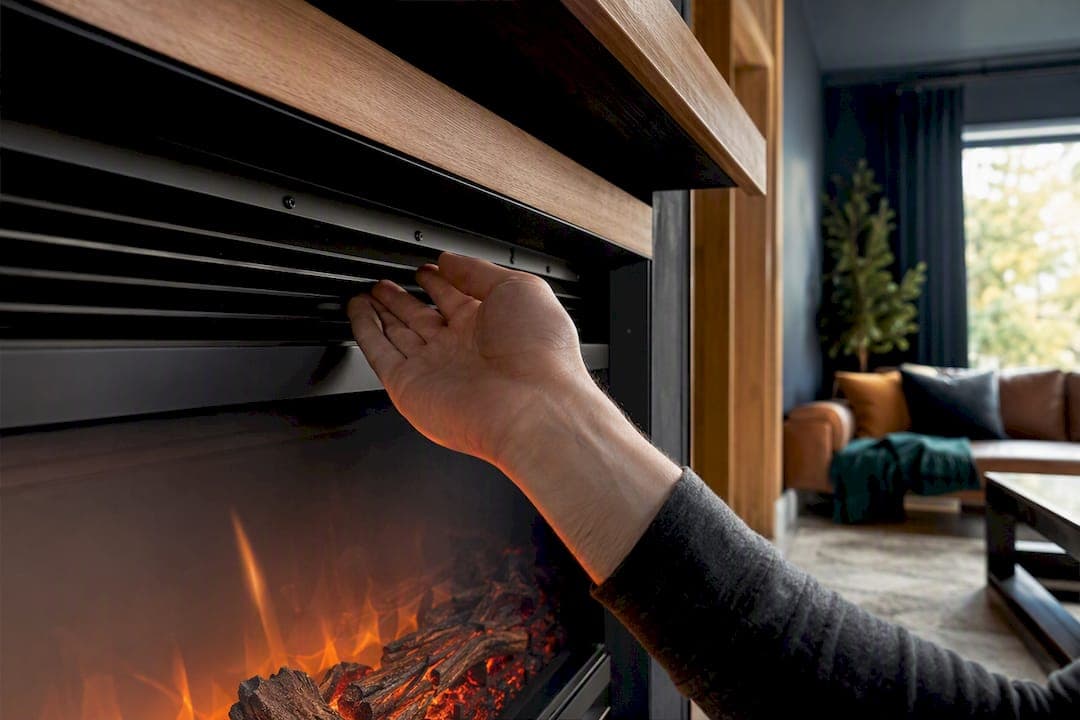
A quiet hum or soft whir from the blower and flame motor is normal operation. Grinding, loud rattling, or any burning smell is not. Unplug the unit, let it cool for 15 minutes, and restore power to see if the sound returns. If it does, work through the diagnostic checklist below before deciding whether this is a DIY fix or a job for a technician.
TL;DR:
- Most noise issues come from dust buildup or loose fasteners, which are easily fixed with routine cleaning and tightening.
- Rattling or chatter usually indicates loose trim or fan blades, while escalating noise signals worn bearings needing replacement.
- Quiet operation depends heavily on motor quality and housing; higher-end models with brushless motors are significantly quieter than budget units.
- External factors like room acoustics, installation method, and furniture placement can amplify perceived noise without indicating a fault.
- Immediate technician assistance is necessary if the fireplace emits burning smells, sparks, overheats, or the noise persists after cleaning and tightening.
Table of Contents
- How Do You Diagnose Electric Fireplace Noise?
- What Do Different Electric Fireplace Sounds Mean?
- What Are the Best DIY Fixes for a Noisy Electric Fireplace?
- When Should You Stop and Call a Technician?
- How Often Should You Maintain an Electric Fireplace?
- Does Electric Fireplace Noise Affect Room Ambiance?
- Do All Electric Fireplace Brands Sound the Same?
- Can You Reduce Electric Fireplace Noise Beyond Basic Maintenance?
- Why Does the Same Fireplace Sound Louder in Some Rooms?
- The Media Wall Store's Take on Quiet Fireplace Installations
- Ready to Build a Quieter Media Wall?
- Sources
- FAQ
How Do You Diagnose Electric Fireplace Noise?
Most noise complaints get solved in the time it takes to make coffee. Run through this sequence before touching a screwdriver.
- Power cycle and listen. Switch the unit off, wait 30 seconds, and turn it back on. Note whether the sound happens only at startup or continues once the unit reaches steady state.
- Isolate the subsystem. Run flame effect alone, then heat alone, then both together. If the noise only shows up with heat running, the blower motor is the likely source.
- Check the surface. Set a level against the top and front of the unit. Fireplaces sitting on an uneven floor or hollow media console vibrate louder than the motor itself.
- Inspect visually. Look for loose screws, dust clumps in the vents, or anything that fell into the intake (coins, pet toys, and packing debris are common culprits).
- Track the pattern. Does the sound get louder as the unit warms up, or does it fade after a few minutes? Fading points to thermal expansion; escalating points to a mechanical issue.
Keep notes as you go. If you end up calling a technician, this five-minute checklist is exactly what they'll ask for first.
What Do Different Electric Fireplace Sounds Mean?
Every noise has a fingerprint, and matching it to the right component saves you from tearing the unit apart looking for the wrong problem.
- Steady hum or soft whir. This is the blower fan and flame-effect motor doing their job. Consumer Reports testing puts this normal operating range around 30 to 50 decibels, roughly the volume of a quiet conversation. It gets louder as dust builds up or bearings wear.
- Rattling or chatter. Almost always loose trim, a mounting screw that walked out over time, or an unbalanced fan blade knocking against its housing.
- Clicking or popping at startup. Metal parts expanding as they heat up cause a few pops in the first minute or two, and that's completely normal. A rhythmic, repeating click that doesn't stop usually means the flame rod is misaligned or the motor is struggling.
- Grinding or screeching. This is the noise that should worry you. It typically signals worn bearings in the blower or flame motor, and Plainpaper notes it tends to get worse with continued use rather than resolve on its own.
- Noise tied to heat cycling. If the sound comes and goes as the thermostat kicks the heater on and off, you're likely hearing the blower motor or a thermal cutoff switch doing exactly what it's designed to do.
The pattern that matters most: normal sounds stay flat or fade. Abnormal sounds escalate. A hum that's been the same volume for two years isn't a problem. A hum that's gotten noticeably louder over a month is worth investigating now, before it becomes a grinding sound later.
What Are the Best DIY Fixes for a Noisy Electric Fireplace?
Work through these in order. Most units are fixed by step two or three; very few people need to reach step five.
- Unplug and let it cool. Give the unit at least 15 minutes to cool down completely, and check your owner's manual for warranty terms before opening any panel. Some manufacturers void coverage if the housing is removed by anyone other than a certified technician.
- Clean the vents and blower. Dust and pet hair are the single most common cause of a louder-than-normal hum. Vacuum the intake and exhaust vents, then use a can of compressed air on the fan blades to knock loose what the vacuum can't reach.
- Tighten what's loose. Check every visible screw, trim clip, and mounting bracket. Rattling almost always traces back to one loose fastener, and rubber grommets that have hardened or cracked over time can let vibration transfer straight into the cabinet.
- Reseat the flame rod. If clicking persists past startup, open the access panel per your manual and check whether the flame spindle or rod is rubbing against its housing. A slight adjustment often stops the noise instantly.
- Lubricate only if the manual says to. Most blower motors use sealed bearings that should never be oiled — adding lubricant to a sealed motor attracts dust and shortens its life rather than extending it. If your manual specifically calls for lubrication on an exposed part, use a silicone-based product only.
Pro Tip: Cleaning and tightening resolves the overwhelming majority of nuisance noises. Motor replacement is the exception, not the rule, so don't jump straight to buying parts before you've vacuumed the vents.
When does the fan or motor itself need replacing? If grinding persists after cleaning and the noise gets louder under load, the bearings are likely gone. Blower fans are commonly user-replaceable on inserts with a rear access panel; flame motors sit deeper in the assembly and are worth handing to a technician unless you're comfortable with basic wiring.
When Should You Stop and Call a Technician?
Some sounds mean stop immediately, not "keep an eye on it."
- Burning smell, smoke, or visible sparks. Disconnect power right away. This can indicate overheating or an electrical fault that a fan cleaning won't fix.
- A tripped breaker. If the unit trips your breaker more than once, that's an electrical problem, not a mechanical one.
- Noise with no power flowing. A buzz or hum that continues even when the unit is switched off points to a wiring issue inside the wall or outlet, not the fireplace itself.
- Grinding that returns after cleaning. At that point you're looking at bearing failure, and forcing the motor to keep running risks a full burnout.
A noise that shows up when the unit is off, or one paired with any smell of burning plastic, is not a troubleshooting problem. It's an electrical safety issue that needs a licensed technician, full stop.
Before you call, write down the model and serial number (usually on a sticker inside the access panel), describe when the noise happens, and take a short video with sound if you can. That fifteen seconds of footage saves the technician a guessing game and often saves you a second visit.
How Often Should You Maintain an Electric Fireplace?
A little routine care prevents most of the noise complaints covered above from ever happening.
- Every three months: Vacuum the vents and wipe down accessible surfaces to keep dust from building up on the blower blades.
- Once a year: Open the access panel and inspect the fan housing, flame motor, and mounting brackets for anything that's worked loose.
- Daily habits: Running the heater at max setting around the clock accelerates motor wear. A timer or thermostat setting that cycles the unit reduces strain and, frankly, saves on your electric bill too.
- Seasonal units: If you're storing a portable insert over summer, clean it fully before boxing it up. Dust that sits in a blower for six months turns into a stubborn, caked-on rattle by fall.
Pro Tip: Quarterly cleaning and one annual inspection is the single most effective habit for preventing dust and loose-fastener noise before it starts, according to the maintenance schedules most manufacturers publish in their manuals.
Does Electric Fireplace Noise Affect Room Ambiance?
A fireplace is supposed to add calm to a room, and a noisy one undercuts that instantly. The whole appeal of a flame effect is the sense of stillness it creates, and a rattling fan or a rhythmic click competes directly with that. You notice it most in a bedroom or a small den where there's little other sound to mask it.
Comfort research on ambient noise generally shows that a steady, low-frequency hum reads as background and fades from conscious attention within minutes. A sound that changes pitch, however, such as an intermittent click or a rising whine, keeps pulling your attention back. That's why a fireplace that clicks every few seconds feels far more irritating than one that hums continuously at the same volume, even if the hum is technically louder on a decibel meter.
This matters most in rooms built around the fireplace as a focal point: a media wall installation where the TV, seating, and fireplace all face each other in a tight footprint. In that layout, noise has nowhere to dissipate before it reaches your ears. It's one more reason to treat noise as a functional spec, not an afterthought, when you're choosing or installing a unit meant to anchor a living space.
Do All Electric Fireplace Brands Sound the Same?
No. Noise output varies significantly between price tiers, and the difference usually comes down to two components: the motor and the housing.
Consumer Reports testing found that top-rated models run noticeably quieter than budget units, and traced the gap directly to motor quality and housing construction. Higher-end inserts tend to use brushless motors, which run with less friction and less audible whine than the brushed motors common in entry-level units. Better acoustic insulation inside the housing also absorbs vibration before it escapes as sound, the same way a well-built appliance panel muffles a dishwasher.
Budget units cut costs in exactly the places that generate noise: thinner housing plastic that resonates rather than absorbs, and motors without the bearing quality to run smoothly for years. That's not a knock on affordable fireplaces broadly. It's a specific pattern: the noise complaints cluster heavily around units where housing and motor quality were the first things trimmed to hit a lower price point.
If you're shopping for a replacement insert specifically because your current one has become a noise problem, model specs are worth reading closely, not skimming. A quiet flame-only mode and a rated decibel range in the spec sheet are both good signs the manufacturer engineered for sound, not just heat output. Themediawallstore's electric fireplace guidance for media walls walks through which inserts pair well with a built-in installation, where noise has fewer places to escape than in an open room.
Can You Reduce Electric Fireplace Noise Beyond Basic Maintenance?
Cleaning and tightening handle most cases, but a few structural changes go further when a unit is still louder than you'd like.
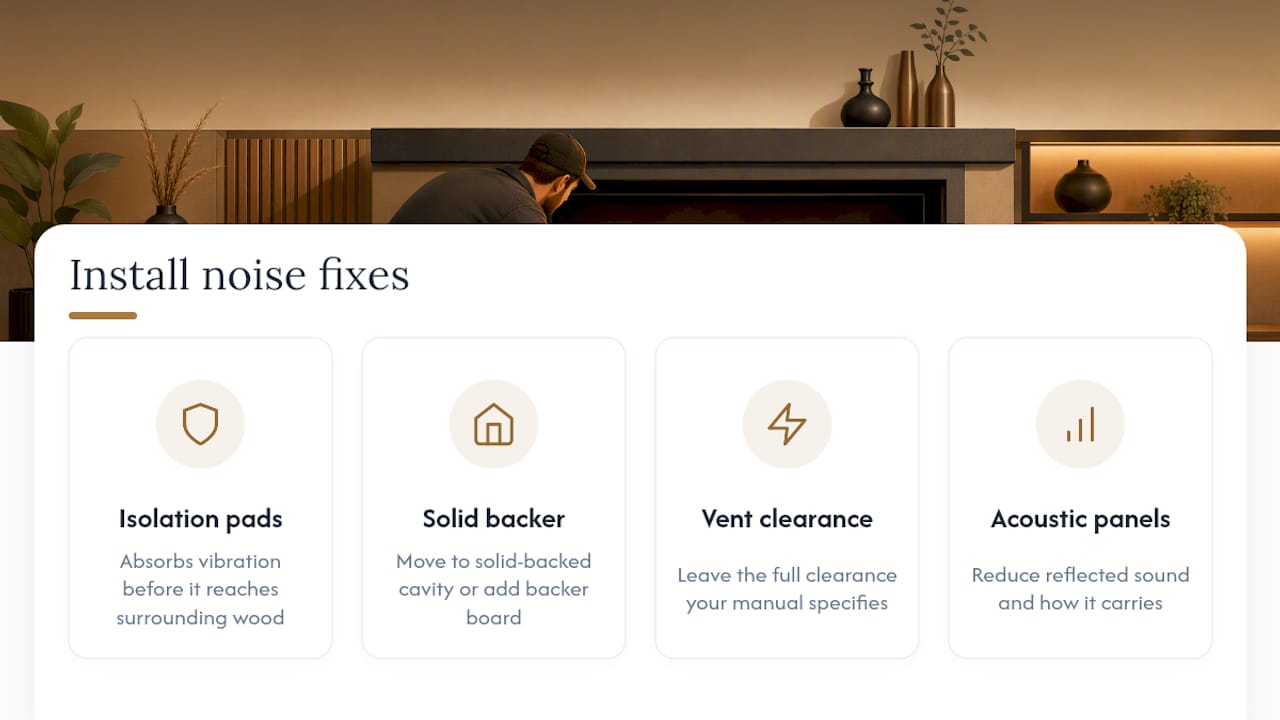
Isolation pads under the unit. A thin strip of rubber or felt between the fireplace base and its shelf or cabinet absorbs vibration before it transfers into the surrounding wood, which is often what turns a quiet hum into an audible buzz.
Repositioning matters more than people expect. A fireplace recessed into a hollow media console can resonate like a drum. Moving it to a solid-backed cavity, or adding a solid backer board behind the unit, cuts down on that resonance immediately.
Clearance around vents. Blocking the intake or exhaust even partially forces the fan to work harder, and a straining fan is a louder fan. Leave the full clearance your manual specifies, especially on recessed or built-in installs where it's tempting to seal things up tight for a cleaner look.
Sound-dampening materials near the install. Acoustic panels or slat wall paneling around a media wall don't quiet the fireplace itself, but they reduce how much the sound reflects and carries through the room. That's a meaningfully different fix from silencing the unit, and it works even on fireplaces you can't easily open up.
None of these replace the diagnostic work in the sections above. They're what you layer on top once you've confirmed the noise itself is within normal range but still louder than you'd like in that particular room.
Why Does the Same Fireplace Sound Louder in Some Rooms?
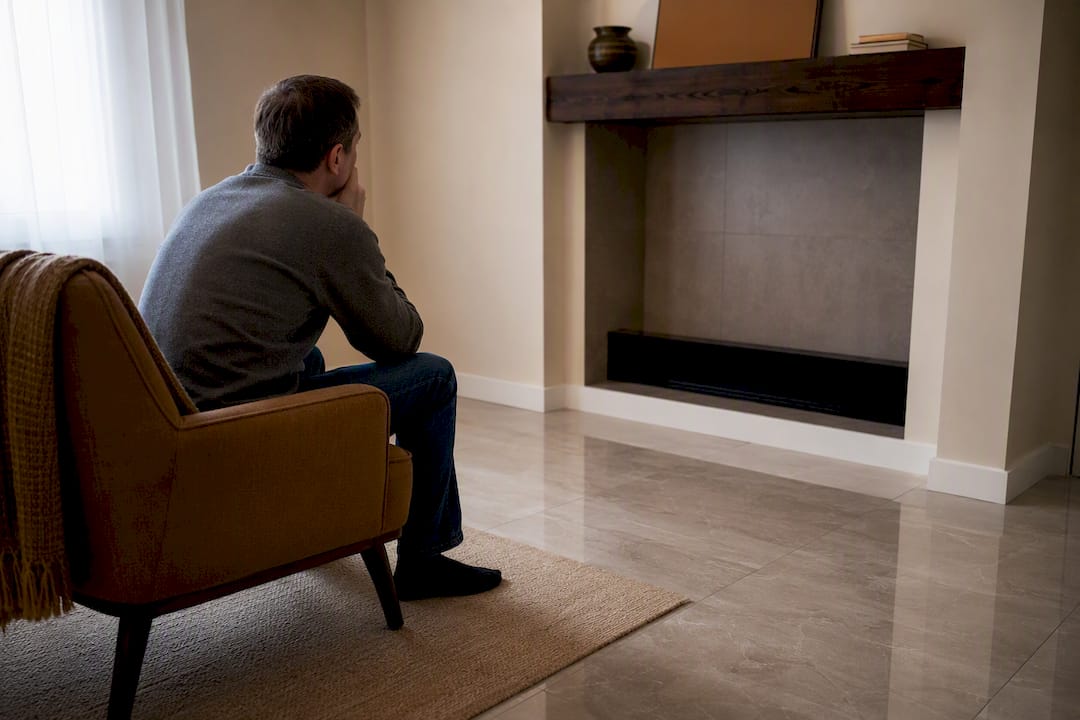
Room acoustics change what you perceive even when the fireplace itself hasn't changed at all. A hard-surfaced room with tile floors, bare walls, and minimal furniture reflects sound instead of absorbing it, so the same 40 decibel hum can feel noticeably louder than it does in a room full of upholstered furniture and rugs.
Corner and recessed installations behave differently too. A fireplace tucked into a hard-backed alcove bounces sound forward into the room rather than letting it diffuse, which is part of why built-in media wall installs sometimes seem louder than the same unit sitting freestanding on an open floor.
Distance and seating position play a role as well. If your main seating spot sits close to and directly in front of the unit, you'll hear every fluctuation the fan makes. Move that same seating six feet back or slightly off axis, and the perceived volume drops even though the fireplace hasn't changed at all. Before assuming a noise complaint means something is wrong with the unit, it's worth testing whether the room itself is the amplifier.
The Media Wall Store's Take on Quiet Fireplace Installations
Most noise complaints we hear trace back to installation, not the insert itself. Solid mounting into studs, isolation pads under the unit, and ventilation cutouts sized to the manufacturer's spec eliminate the vibration and airflow strain that cause rattling and motor whine. Compatible inserts matter too. Forcing an incompatible fireplace into a tight recess, or ignoring recommended clearances, is a common shortcut that creates noise years down the road. If you're unsure whether a specific insert fits your planned build, our support team can walk through the specs with you before you order.
— Jake
Ready to Build a Quieter Media Wall?
If your current fireplace has become a noise problem, the fix isn't always troubleshooting an aging unit. Sometimes it's building the install right the first time. Themediawallstore's kits come with pre-cut panels, mounting hardware, and ventilation routing already sized to fit compatible inserts, so you're not left guessing at clearances or forcing a fireplace into a recess that's too tight for its airflow needs.

The 70" Distressed White Electric Fireplace TV Stand with Linear Insert pairs a quiet-running linear insert with a stand engineered for proper airflow around the motor housing, which is exactly the kind of clearance that keeps a blower from straining and getting louder over time. Because every kit ships pre-cut and pre-labeled, you're not improvising vent cutouts on-site the way a custom carpentry job often does. Browse the full DIY media wall kit shop to see finishes and configurations, and if you have questions about which insert fits your space, Themediawallstore's support team can help before you buy. Every order comes with risk-free returns, so getting it right costs you nothing extra.
Sources
- Best electric fireplace inserts of the year
- 9 Surprising Reasons for Electric Fireplace Making Noise
- Is My Electric Fireplace Supposed to Make Noise? Sound Guide
FAQ
Why Does My Electric Fireplace Make Noise?
A steady hum or soft whir comes from the blower fan and flame-effect motor and is normal at roughly 30 to 50 decibels. Grinding, escalating rattles, or clicking that doesn't fade usually points to dust buildup, loose fasteners, or worn motor bearings.
What Is the Downside of an Electric Fireplace?
Beyond noise from the blower motor, electric fireplaces produce less realistic heat output than gas or wood options and depend entirely on electrical service, so a dedicated circuit matters for larger units drawing significant amperage. Noise tends to be the most common daily annoyance owners report.
Is It Okay to Run an Electric Fireplace All Night?
Most units are designed for continuous use, but running one at maximum heat setting around the clock accelerates motor wear and increases the odds of noise developing sooner. A timer or moderate thermostat setting is easier on the blower motor long term.
What Is the Life Expectancy of an Electric Fireplace?
Well-maintained units with regular cleaning typically last many years before a motor needs replacement, though exact lifespan varies by build quality and usage. Higher-end models with brushless motors and better housing insulation, as found in Consumer Reports' testing, tend to hold up longer under regular use.