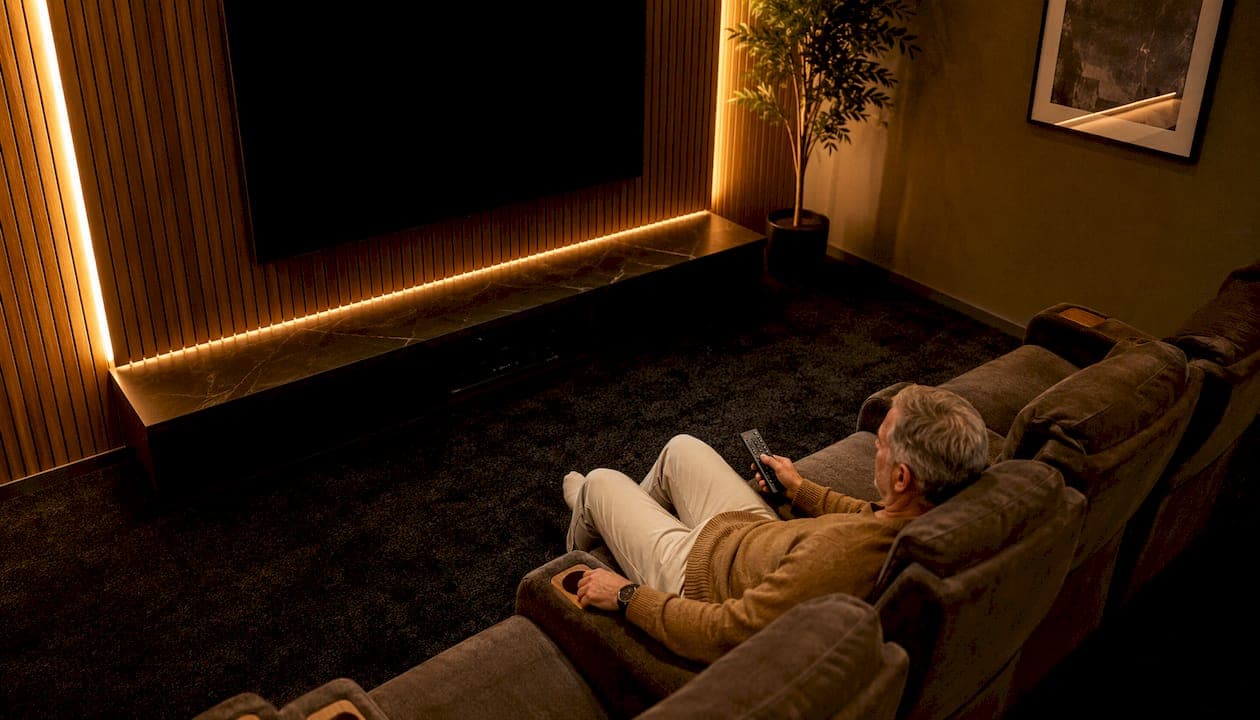
The best home theater wall ideas combine dark matte paint, integrated lighting, acoustic panels, and a purpose-built media wall into one cohesive design. Get those four elements right and even a spare bedroom delivers a genuine cinema experience.
Here is what works in 2026:
- Dark matte paint in charcoal gray, matte black, navy blue, deep burgundy, or forest green to absorb light and sharpen contrast
- Wood slat accent panels and modular panel systems for texture, warmth, and subtle acoustic benefit
- Media walls with integrated cabinetry, hidden wire management, and LED lighting for a clean, professional look
- Acoustic panels mounted at first reflection points to eliminate muddy dialog and echo
- Wall sconces and LED bias lighting to create layered ambient light without screen glare
- Themed art and floating shelves behind the screen for personality without distraction
Table of Contents
- What are the best home theater wall design ideas for 2026?
- How do media walls integrate lighting and storage?
- What wall colors work best for a home theater?
- Where should you place lighting in a home theater?
- How do you decorate the wall behind your home theater screen?
- Key Takeaways
- FAQ
What are the best home theater wall design ideas for 2026?
Wood slat accent panels are the single biggest design shift in home theater walls right now. They add visual depth, break up flat painted surfaces, and provide a degree of sound diffusion that bare drywall simply cannot. Pair them with a dark matte background and you get a wall that looks custom without requiring a contractor.
Modular panel systems are worth considering if you want flexibility. You can configure them around a floating console, a fireplace insert, or a full floor-to-ceiling built-in. Open-pore wood veneers and matte laminates both work well because they avoid the glare that glossy surfaces create under bias lighting.
Pro Tip: Mount slat panels on the screen wall and the two flanking side walls for a wrapped theater feel. Leave the rear wall for acoustic fabric panels, which handle the sound reflections that hit listeners directly from behind.
For storage, floating cabinetry built into the panel system keeps remotes, gaming controllers, and media accessories out of sight. Themediawallstore's slat wall kits include pre-cut, pre-labeled panels that install over a weekend, with finish options ranging from warm walnut tones to cool charcoal gray.
Acoustic panels mounted at ear level and at first reflection points absorb the sound frequencies that cause muddy dialog. Fabric-wrapped panels in black, gray, or charcoal handle mid-to-high frequencies most effectively. For a typical medium-sized room, plan on several fabric-wrapped acoustic panels at first reflection points for clear audio.
How do media walls integrate lighting and storage?
A media wall organizes your display, speakers, storage, and lighting into a single built-in system with concealed wiring and proper ventilation. The result is a room that looks designed rather than assembled.
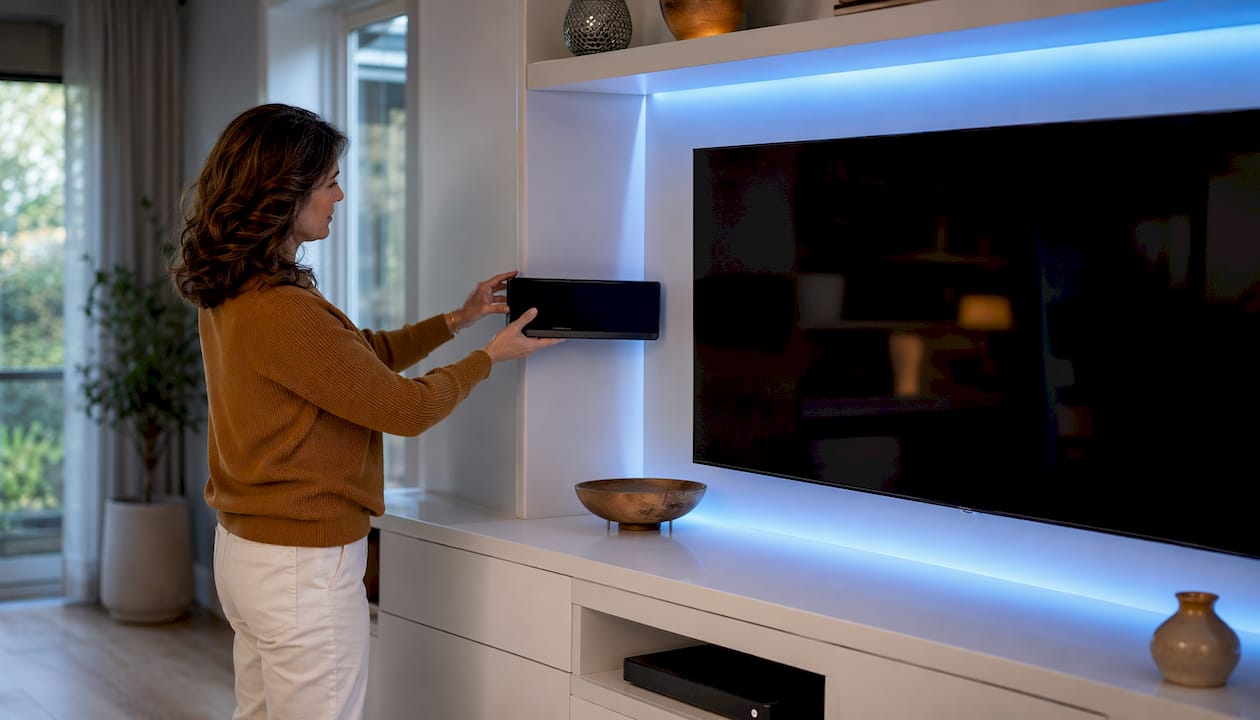
Cable management is not optional. AV equipment generates real heat, and silent temperature-triggered fans keep receivers and gaming consoles below 95°F. Plan low intake vents and high exhaust vents with at least two inches of clearance above electronics. Use 14/2 or 12/2 AWG speaker wire, label every run at both ends, and pull a spare Cat6 alongside every HDMI cable so future upgrades do not require opening walls.
Lighting built into the media wall does double duty. Integrated LED valance lighting above the display highlights the wall's architecture without spilling onto the screen. Bias lighting behind the screen at a warm color temperature reduces eye strain and makes the picture appear to have better contrast. For fireplace-integrated walls, verify manufacturer clearances and add a heat deflector if the TV sits directly above the unit.
Themediawallstore offers DIY media wall kits with pre-cut panels, integrated LED lighting, floating cabinetry, and hidden wire management. The kits are designed for weekend installation without contractors, at a fraction of the cost of a fully custom build.
What wall colors work best for a home theater?
Dark, matte paint colors are the correct choice for dedicated home theaters: charcoal gray, matte black, navy blue, deep burgundy, and forest green all reduce light reflection and sharpen image contrast. Light colors and glossy finishes reflect screen light back at the viewer, washing out dark scenes and destroying immersion.
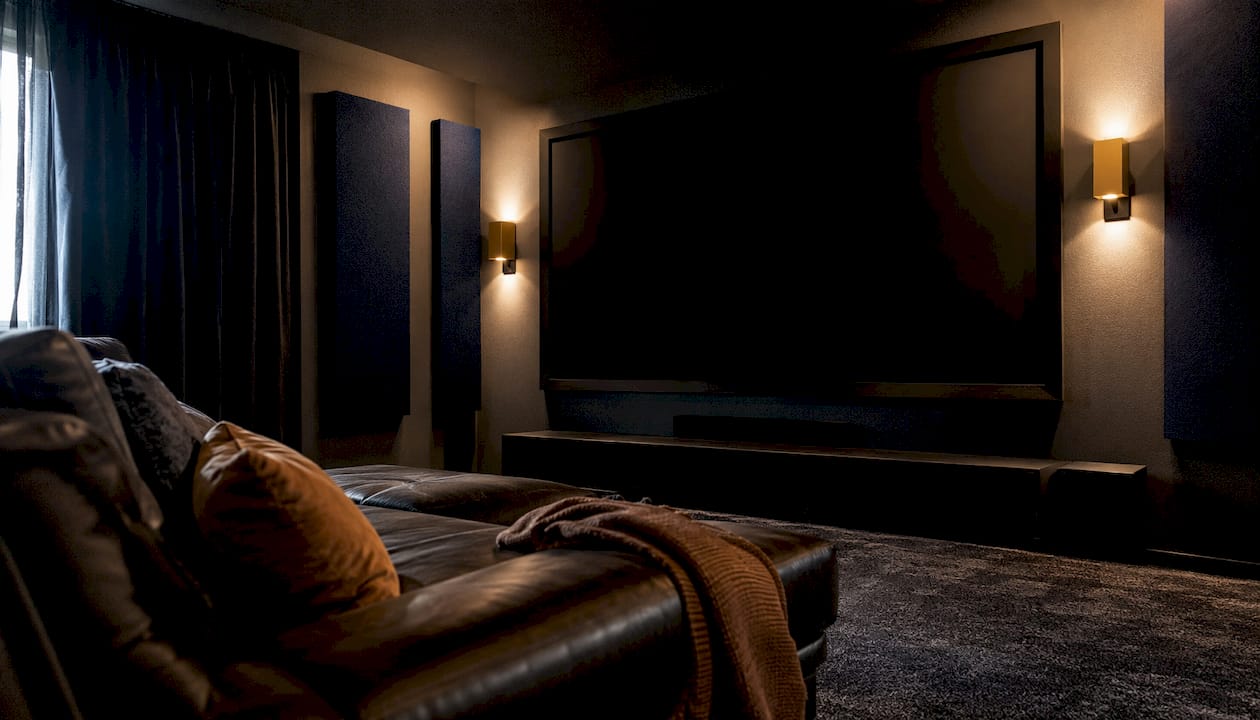
Finish matters as much as color. Flat or matte paint diffuses light rather than bouncing it directly at the screen. Eggshell, satin, and semi-gloss finishes act like mirrors once the projector or TV is running. If durability is a concern, modern washable matte formulas from premium brands resist scuffs without adding sheen.
The two-tone approach is one of the most effective ways to add visual interest without sacrificing performance. Paint the screen wall and ceiling matte black to maximize contrast, then use deep charcoal, navy, or burgundy on the side and rear walls. This breaks up the monotony of an all-black room while keeping light reflectance low across every surface. Painting the ceiling the same dark tone as the walls creates a visual "pod" effect that enhances immersion, especially in smaller rooms. For more ideas on two-tone wall treatments, interior design trends in adjacent spaces can offer useful color pairing inspiration.
Fabric-wrapped acoustic panels double as a texture element. Panels in charcoal or deep navy absorb both light and sound, and they look intentional when spaced evenly and symmetrically across the side walls.
Where should you place lighting in a home theater?
Wall sconces should be mounted at a comfortable height along the side walls, rather than near the screen. At that height, they provide enough ambient light for safe navigation without casting reflections on the display. Dimmable sconces let you dial between movie mode and social viewing without changing fixtures.
Bulbs with a warm color temperature are recommended for home theater lighting to create a cozy atmosphere. Cooler whites feel sterile and ruin the cinematic mood. Warm white LEDs in that range match the color temperature of traditional cinema lighting and reduce visual fatigue during long sessions.
LED strip lighting installed behind trim, shelving, or floating panels creates a soft glow that makes the room feel larger. For bias lighting behind the screen, set brightness to roughly 10% of peak screen luminance. That level reduces eye strain without competing with the image. Themediawallstore's media wall lighting accessories include dimmable LED strips designed specifically for this application.
Layering works. A movie scene might dim sconces to near-off, activate bias lighting behind the screen, and leave LED step lights on for floor visibility. A pause scene brings sconces up slightly. Smart dimmers tied to a single control interface make scene switching effortless.
How do you decorate the wall behind your home theater screen?
Keep it minimal. The screen wall's job is to frame the display, not compete with it. Matte black or a very dark color on this wall creates a shadow-box effect that makes the blacks on screen appear deeper by eliminating any bright reference point nearby.
Artwork and framed movie posters should be hung at roughly 54 inches from the floor in seated viewing areas, slightly lower than the standard 58-inch gallery height. One well-chosen 24-by-36-inch poster in a matte black frame reads as intentional. Multiple posters covering the wall create visual noise that pulls attention away from the screen.
Floating shelves at 8–10 inches deep work well in alcoves or on side walls for curated displays: limited-edition Blu-ray steelbooks, small sculptures, or vintage cinema glass. Negative space is your friend. Heavy blackout curtains or velvet fabric panels along the side walls serve double duty, absorbing both light and sound while adding a classic theater texture. Velvet absorbs nearly all incident light, making it more effective than even the best matte black paint for the areas immediately flanking the screen.
Key Takeaways
The most effective home theater walls combine dark matte surfaces, integrated media wall cabinetry, layered warm lighting at 2700K–3000K, and acoustic panels at first reflection points to deliver both visual and audio performance.
| Point | Details |
|---|---|
| Paint color and finish | Use dark matte shades (charcoal, navy, black) with flat finish to absorb light and prevent glare. |
| Two-tone wall approach | Paint the screen wall matte black and use deep charcoal or navy on side and rear walls for immersion. |
| Sconce placement | Mount wall sconces 60–66 inches from the floor with 2700K–3000K bulbs for ambient light without glare. |
| Bias lighting | Place LED strips behind the screen at roughly 10% of peak screen brightness to reduce eye strain. |
| Acoustic panels | Install several fabric-wrapped panels at first reflection points in a typical medium-sized room for clear audio. |
FAQ
What is the best color for home theater walls?
Dark, matte colors such as charcoal gray, matte black, and navy blue are the best choices because they absorb light rather than reflecting it back at the screen. Always use a flat or matte finish, as eggshell and satin finishes act like mirrors once the display is running.
How do I decorate the wall behind my TV in a home theater?
Keep the screen wall dark and uncluttered. Hang minimal themed artwork or a single framed movie poster at about 54 inches from the floor, and use matte black frames to avoid reflections.
What should I put in a theater room for the best experience?
A purpose-built media wall with integrated cabinetry, hidden wiring, acoustic panels on the side walls, and layered dimmable lighting covers the essentials. Add heavy blackout curtains and a thick rug to control both light and sound.
What is the ideal wall sconce height for a home theater?
Mount wall sconces 60–66 inches from the floor along the side walls, at least three feet from the screen, with dimmable warm-white bulbs in the 2700K–3000K range.