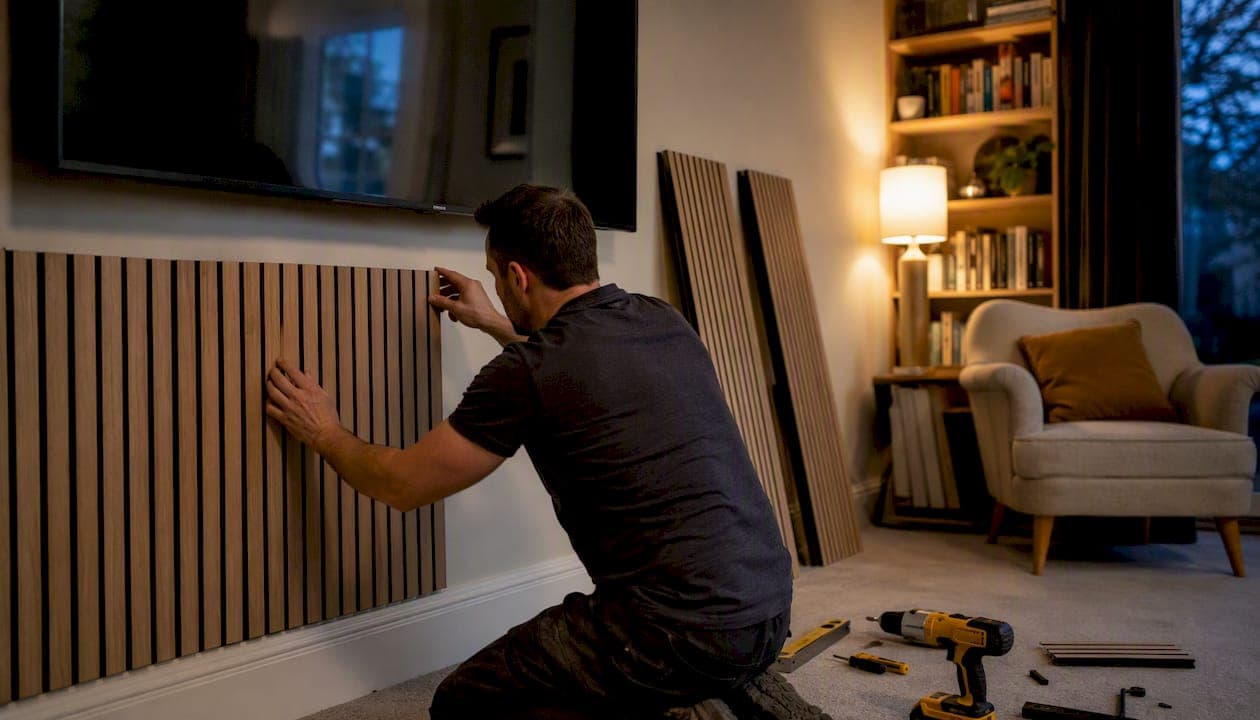
For most UK homeowners, a quality DIY media wall kit is the better call. You get the same floor-to-ceiling look, a fraction of the disruption, and thousands of pounds back in your pocket. Custom builds still earn their keep when you need genuine architectural integration: an oddly shaped chimney breast, a load-bearing quirk, or a fireplace configuration that no off-the-shelf panel can fit around.
Here's the quick triage:
- Pick a kit if: your wall is a standard flat or near-flat surface, you want it done in a weekend, and your budget sits under a few thousand pounds.
- Pick custom if: you're working around structural obstacles, need bespoke joinery to match existing cabinetry, or want a completely one-off design with no compromise on dimensions.
A kit like the ones sold through The Media Wall Store arrives pre-cut, pre-labeled, and ready to assemble, which is why homeowners can go from flat-pack boxes to a finished, styled wall in a single weekend without hiring a single trade.
Table of Contents
- Media Wall Kit vs Custom: What's the Actual Difference?
- What Does a Custom-Built Media Wall Actually Involve?
- Kit vs Custom: A Side-by-Side Comparison
- How to Decide Between a Kit and a Custom Build
- What Do Media Walls Actually Cost, and How Long Do They Take?
- Materials and Finish Quality: What to Actually Check
- Installation Realities and the Mistakes That Cost the Most
- Real Outcomes: What Kit Customers Actually Experience
- Who Should Buy a Kit, and Who Should Go Custom?
- Why We Sell Kits, and When We Still Say Call a Pro
- If a Kit Fits: How The Media Wall Store Makes It Simple
- Sources
- FAQ
Media Wall Kit vs Custom: What's the Actual Difference?
A pre-made or DIY media wall kit is a manufactured system: panels are cut to standard dimensions at the factory, pre-finished, pre-labeled, and shipped with the hardware and instructions needed to assemble them at home. It's not flat-pack furniture in the IKEA sense, because the panels are designed specifically to wrap a TV and create a floor-to-ceiling feature wall, and it's not bespoke cabinetry either, because you're not paying a joiner to build something from raw board. It sits in the middle: factory precision, homeowner assembly.
A typical kit includes:
- Pre-cut MDF or plywood panels sized for standard TV widths and ceiling heights
- A backer board or mounting battens for fixing to the wall
- Floating cabinet units or shelving inserts
- Cable-routing channels or trims to hide wiring
- Integrated LED channels for accent lighting
- All fixing hardware (screws, wall plugs, brackets)
- Step-by-step assembly instructions with labeled parts
Furniture-built systems like this are engineered offsite and simply assembled in the home, which is a large part of why they skip the plaster drying and repainting that traditional builds require.
Pro Tip: Measure your wall width, ceiling height, and TV bracket points twice before ordering. Kit panels are cut to fixed dimensions, and a measurement error of even an inch can mean a gap you can't hide or a panel that doesn't reach the ceiling. Most kit returns come down to sizing mistakes, not product defects.
What Does a Custom-Built Media Wall Actually Involve?
A custom-built media wall is a made-to-order installation, usually constructed on site from raw materials, tailored to your exact room dimensions rather than a standard size. It integrates the TV, storage, and often a fireplace or lighting into one continuous feature, and because it's built to fit your specific space, it can add measurable value to a home in a way a generic kit sometimes can't.
The typical build sequence looks like this:
- Site survey and design consultation to map the wall, TV position, and any structural features
- Studwork and plasterboard construction, or bespoke cabinetry framing
- Electrical work for integrated fireplaces, sockets, or lighting circuits
- Skimming, sanding, and painting (for plasterboard builds) or veneering and finishing (for cabinetry builds)
- Final fitting of the TV, trims, and any accessories
If you're adding a hardwired electric fire or new sockets, an electrician typically needs to sign off the work, and any structural alteration (removing a chimney breast, for example) may trigger building control involvement. Expect a finish that's fully bespoke to your room, but also expect the trades, the mess, and the timeline that come with it.
Kit vs Custom: A Side-by-Side Comparison
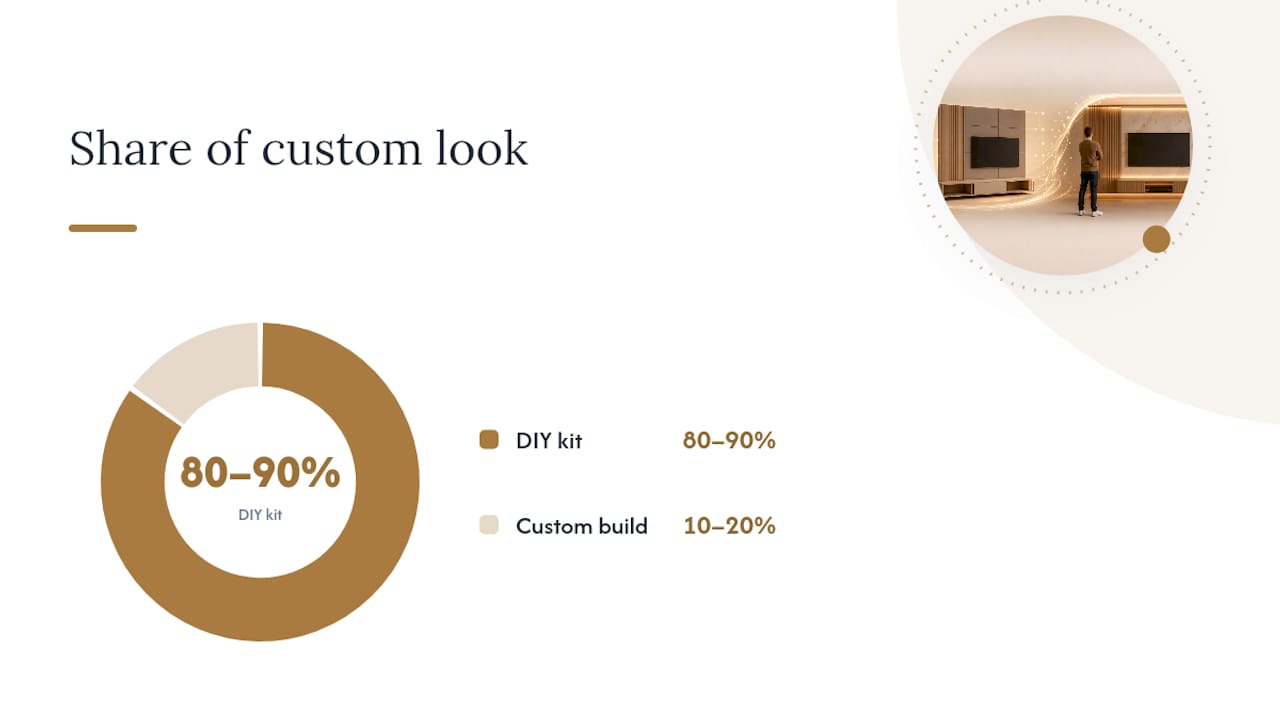
The trade-offs boil down to control versus convenience. A kit gets you 80 to 90 percent of the custom look for a fraction of the cost and time; custom gets you the remaining 10 to 20 percent of fit and flexibility, at a proportionally higher price.
| Dimension | DIY Kit | Custom Build |
|---|---|---|
| Typical cost | Low hundreds to low thousands | Several thousand, often over £5,000 for high-end fitted walls |
| Installation time | A weekend to a week | several weeks lead time, plus 1 to 3 weeks on site |
| Skill & tools required | Basic DIY skills, drill, level | Multiple trades, professional tools |
| Customization / fit to wall | Standard sizes, some adjustability | Built to exact room dimensions |
| Material & finish quality | Factory-finished, consistent | Depends on tradesperson, fully bespoke |
| Warranty / repairability | Manufacturer warranty, replaceable panels | Depends on builder, harder to source matching materials later |
| Design options / built-in features | Fireplace-ready, LED channels, slat panels available | Unlimited, but each feature adds cost and time |
| Long-term value / resale impact | Neutral to positive if well-finished | Can add more value, but only if executed to a high standard |
Best for kits: homeowners with a standard flat wall, a fixed budget, and a weekend to spare. Renters-turned-buyers who want a fast style upgrade. Anyone who wants a fireplace-integrated wall without hiring an electrician for the whole project.
Best for custom: homeowners with structural obstructions like chimney breasts or alcoves. Anyone matching existing bespoke joinery. Buyers who want a completely unique design with no size compromise.
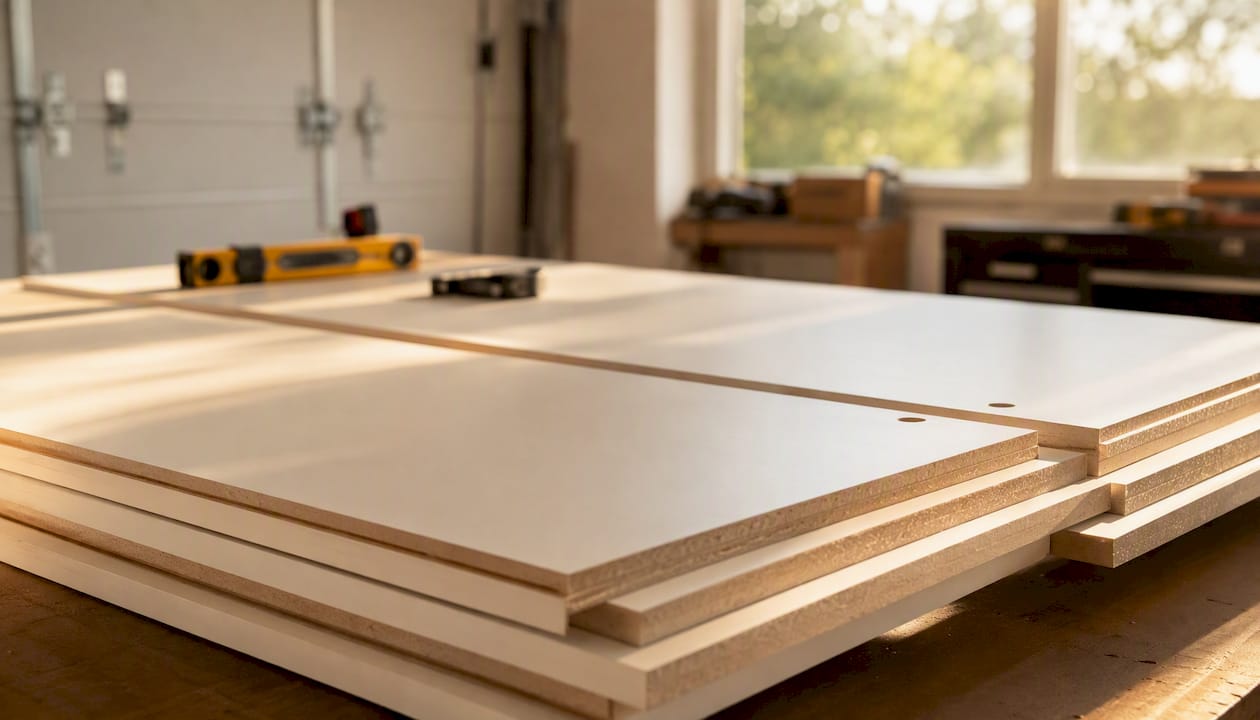
The DIY route carries more risk for alignment and finish if you're working from scratch with raw materials, but a manufactured kit largely removes that risk because the cutting and finishing precision is already done for you at the factory.
Across The Media Wall Store's customer base, the overwhelming majority of buyers report their kit met their design and sizing needs without requiring a professional to intervene, which reflects how far pre-engineered kits have closed the gap with custom joinery.
How to Decide Between a Kit and a Custom Build
Run through this checklist before you spend a penny:
- What's the wall actually used for? Living room feature wall, bedroom TV setup, or a media room?
- What size is your TV, and how much does it weigh? Heavier TVs need reinforced mounting points.
- Do you want an integrated fireplace, and is it electric or requires venting?
- Are you likely to move house in the next 3 to 5 years? Kits are easier to remove or leave behind.
- What's your actual budget range, not your aspirational one?
- How many weekends can you realistically commit to assembly?
If you're leaning toward a kit, ask the vendor:
- What's the warranty period, and does it cover panel defects or just hardware?
- Can I return or exchange if the size doesn't fit my wall?
- Are finish samples available before I commit to a color or veneer?
- What's your exact-fit policy if my wall isn't perfectly flat?
If you're leaning toward custom, ask the builder:
- When can you do the site survey, and how firm is the resulting quote?
- What's the realistic lead time from signed contract to finished install?
- Who handles the electrics, and are they qualified and insured?
- What happens if you find something unexpected once the wall is opened up?
Pro Tip: Before ordering anything, tape a cardboard template to the wall at your TV's exact height and width. Sit on your sofa and check the sightline. This five-minute test catches more sizing regrets than any spec sheet, whether you're buying a kit or briefing a custom builder.
What Do Media Walls Actually Cost, and How Long Do They Take?
Entry-level kits start in the low hundreds and stretch into the low thousands for luxury finishes with integrated lighting and fireplace surrounds. Custom builds start where kits top out and climb from there, commonly landing several thousand pounds, sometimes exceeding £5,000 once you add a fireplace, electrics, and bespoke joinery.
What actually moves a project between price bands: the materials (MDF versus real veneer), whether you're adding a fireplace, whether an electrician needs to run new circuits, how complex the wall shape is, and the finish level you want.
| Option | Cost range | Lead time | Install time |
|---|---|---|---|
| Entry-level kit | Low hundreds | Ships in days | 1 weekend |
| Luxury kit (fireplace, LED, veneer) | several thousand pounds | Ships in 1 to 2 weeks | 1 weekend to a few days |
| Simple custom build | £2,500 to £5,000 | 2 to 4 weeks | 1 to 2 weeks on site |
| High-end custom build | £5,000+ | weeks long | 2 to 3 weeks on site |
Furniture-built kit systems typically install in 2 to 3 days once they arrive, compared with the weeks a plasterboard renovation project can absorb between studwork, skimming, drying, and painting. That gap is the single biggest reason kits appeal to homeowners who can't tolerate weeks of dust sheets over the sofa.
Labor costs for custom trades vary noticeably across the UK. A joiner or electrician in London will typically quote higher day rates than the same trade in a smaller regional town, so get at least two local quotes before committing to a custom project's budget.
Materials and Finish Quality: What to Actually Check
Not all panels are created equal, and the material choice affects both how your wall looks in five years and how much weight it can safely hold.
- MDF: Dense, smooth, and takes paint beautifully without plastering. Better screw-hold for shelving and heavier fixtures. Slightly heavier and less moisture-tolerant than plasterboard unless it's moisture-resistant MDF (MR-MDF).
- MR-MDF: The moisture-resistant version, worth the small premium near bathrooms, kitchens, or rooms prone to condensation.
- Plywood / birch ply: Strong, lightweight, and durable, often used for structural cabinet carcasses inside a kit.
- Slat veneer panels: The acoustic-slat look popular right now; adds texture and can help with room acoustics, though real wood veneer costs more than a printed laminate version.
- Laminates: Budget-friendly, wipeable, but can look flat compared with real veneer under direct light.
- Plasterboard: Cheaper and lighter than MDF, and offers better fire resistance when properly specified, which is why many professional builds mix MDF detailing with plasterboard for large flat surfaces.
For a kit, check the edge-banding (are the panel edges sealed cleanly, or do they look raw?), whether the finish is pre-applied at the factory, and how tight the factory-cut joints sit together. For a custom build, check the skimming quality before paint goes on, how the paint prep was handled around any fireplace surround, and whether fixings are fully concealed rather than visible screw heads.
Pro Tip: If your media wall backs onto an exterior wall or sits near an electric fireplace, choose moisture-resistant MDF or a sealed veneer finish. Standard MDF can swell slightly over time in damp conditions, and you won't notice until the seams start showing.
Installation Realities and the Mistakes That Cost the Most
Before you pick up a drill, you'll want a stud finder, a spirit level, a decent cordless drill, the correct wall fixings for your wall type (stud, brick, or blockwork), silicone sealant for gap-filling, and cable conduits or trunking to keep wiring out of sight.
The mistakes that come up again and again:
- Underestimating total cost. The kit price is rarely the final price once you add brackets, extra fixings, or a tool you didn't own.
- Wrong TV placement. Mounting too high for comfortable viewing is the single most common regret homeowners report.
- Poor cable routing. Leaving wires visible ruins the entire clean-wall effect that's the whole point of the project.
- Insufficient reinforcement for heavy TVs. A 65 inch TV needs a mounting point rated for its weight, not just a screw into MDF.
- Ignoring ventilation for electric fires. Fireplace inserts generate heat and need the clearance the manufacturer specifies.
- Improper measuring. The single biggest cause of kit returns and custom build change orders alike.
These are the same practical failure points that show up whether you're assembling a kit or briefing a builder, which tells you something: the risks aren't really about DIY versus professional, they're about preparation.
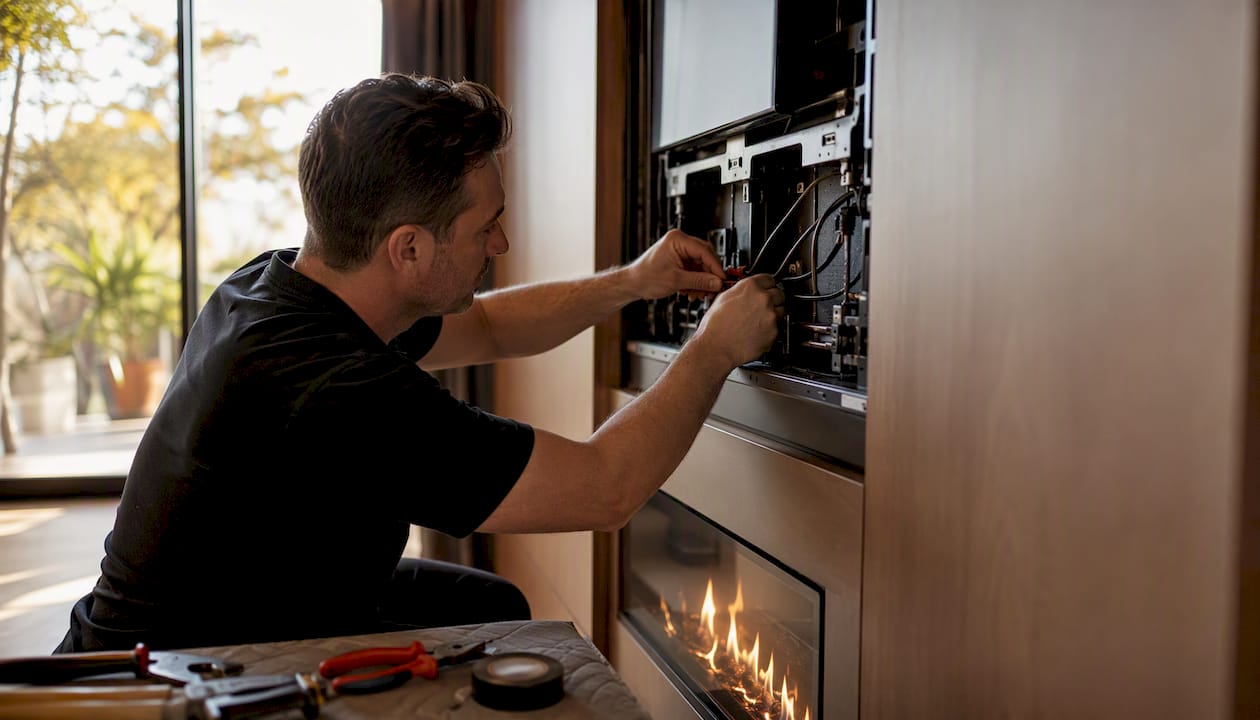
Pro Tip: Bring in an electrician the moment your project involves a hardwired electric fireplace, new sockets, or a heavy TV mount on a wall you're not confident is structurally sound. That's the threshold where DIY risk genuinely outweighs the savings, and it's a small cost against the risk of a fire hazard or a TV coming off the wall.
Popular Kit Styles and Design Options Worth Considering
Kits today cover a surprisingly wide design range:
- Minimalist floating cabinetry: clean lines, no visible legs, TV appears to float on the wall
- Slat-accent walls: the acoustic-slat trend, adds texture and warmth to an otherwise flat surface
- Integrated fireplace surrounds: electric fire inserts framed directly into the panel design
- Marble-effect panels: a luxury look at a fraction of real stone's cost and weight
- Painted MDF seamless walls: a single continuous painted surface for a bespoke, built-in appearance
- Cinema-style recessed shelving: built-in storage for speakers, consoles, or media boxes
When you're browsing kit galleries, look past the styled hero shot. Zoom into the panel joins and edges, look for real-room installs rather than studio renders, and ask for physical finish swatches before you commit to a color. A DIY assembly guide can also tell you a lot about how forgiving a kit's design actually is once you're the one holding the drill.
Real Outcomes: What Kit Customers Actually Experience
One recurring pattern among The Media Wall Store's customers involves a straightforward living room upgrade: a standard flat wall, a 65 inch TV, and a desire for a fireplace-integrated feature without hiring three separate trades. The kit route took a single weekend from delivery to finished install, landing in the mid-range kit price band rather than the multi-thousand-pound territory a custom equivalent would have required.
That kind of outcome isn't universal, and a wall with structural quirks will always need more hands-on planning. But for the standard flat-wall scenario that describes most UK living rooms, it's the outcome kits are specifically engineered to deliver.
Who Should Buy a Kit, and Who Should Go Custom?
If you fit any of these, a kit is your answer:
- You have a standard, flat wall with no structural obstructions
- Your budget caps out well below several thousand pounds.
- You want it finished this weekend, not next month
- You're comfortable with a drill, a level, and following a numbered instruction sheet
If you fit any of these, go custom:
- Your wall has a chimney breast, alcove, or other structural feature to work around
- You're matching existing bespoke cabinetry elsewhere in the room
- You want a design with zero compromises on scale or shape
- You're planning extensive electrical work beyond a simple plug-in fireplace insert
Measure your wall this week. If it's flat and standard, browse kit configurations and order. If it's not, get a designer out for a site survey before you spend anything.
Why We Sell Kits, and When We Still Say Call a Pro
The honest business case for kits is simple: most UK living rooms have a flat wall, a standard TV size, and a homeowner who doesn't want to live with dust sheets for a month. Manufacturing precision has gotten good enough that a factory-cut panel system can now deliver a finish that would have needed a skilled joiner a decade ago, at a fraction of the cost and time.
That said, kits aren't the answer to every wall. If your chimney breast juts out at an odd angle, if you're integrating a hardwired fireplace that needs its own circuit, or if you want something no manufacturer offers off the shelf, a custom build or a professional installer is genuinely the better call. Pretending otherwise would be selling you the wrong product for your wall, and that helps nobody.
If you're not sure which category your project falls into, get in touch with the team for a quick assessment of your wall and your plans. It costs nothing to ask, and it's a lot cheaper than ordering the wrong kit twice.
If a Kit Fits: How The Media Wall Store Makes It Simple
Most UK homeowners don't need a builder's schedule and a five-figure quote to get a genuinely striking media wall. They need panels that are already cut, already labeled, and already wired for the fireplace they've been eyeing on Pinterest for a year.
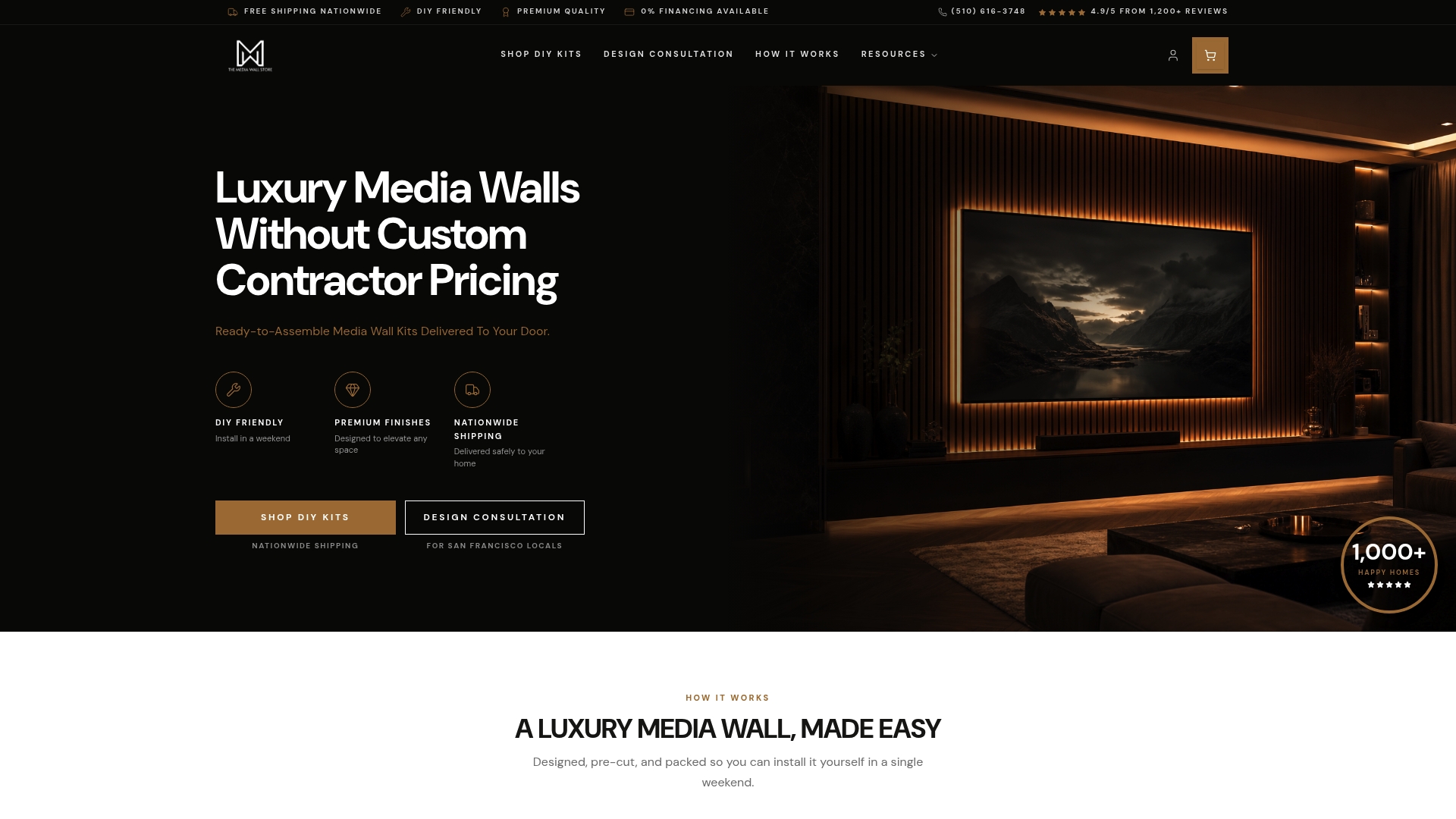
That's the entire premise behind The Media Wall Store's kits: pre-cut and pre-labeled panels, integrated cable-routing channels built into the design, and an install timeline measured in a weekend rather than weeks. One standout in the current kit catalog is the Monaco Noir luxury media wall kit, which pairs a bold, high-end finish with the same weekend-assembly system across the whole range, and if you want fireplace integration specifically, the electric fireplace TV stand shows how the fire and the cabinetry come pre-matched rather than bolted together as an afterthought. For homeowners whose wall genuinely needs a bespoke solution, the custom design service covers that end of the spectrum too.
One customer put it simply: "It looked custom. It wasn't." Measure your wall, browse the shop, and order the kit that matches your space this week.
Quick Recap: The Decision in Five Points
The core claim of this guide: a pre-cut DIY kit delivers most of a custom media wall's look for a fraction of the cost and time, and custom only wins when structural complexity demands it.
| Point | Details |
|---|---|
| Kits win on speed and cost | Most kit installs finish in a single weekend for a range of costs from lower to moderate amounts. |
| Custom wins on structural fit | Choose custom only for chimney breasts, alcoves, or bespoke joinery matching. |
| Measure twice before ordering | Sizing errors cause most kit returns and most custom quote revisions. |
| Electrics are the real threshold | Bring in an electrician for hardwired fireplaces or new circuits, regardless of route. |
| The Media Wall Store fits the standard-wall case | Pre-cut, pre-labeled kits install in a weekend and cover fireplace-ready and luxury finish options. |
Sources
- Media Wall vs TV Unit: Which is right for your living room? | Interiors by Build NE
- DIY Media Wall vs Professional Installation (2026 Guide) | Media Wall Master
- Plasterboard vs Furniture Built Media Walls: What Homeowners Don’t Realise | Devin Furniture
- MDF or Plasterboard for Media Walls? Pros & Cons Guide | Flamecrafters
FAQ
How much do custom media walls cost?
Simple custom builds typically start around £2,500, while high-end custom media walls with integrated fireplaces and bespoke joinery commonly exceed £5,000 depending on materials and trade rates in your area.
What are the most common media wall mistakes?
Underestimating total cost, poor cable routing that leaves wires visible, incorrect TV placement that ruins sightlines, and insufficient reinforcement for heavy TVs are the mistakes that come up most often on both kit and custom projects.
Are media walls worth the money?
For a standard flat wall, a well-finished kit is generally worth it because it delivers most of the visual impact of a custom build at a fraction of the price; custom builds are worth it specifically when structural complexity demands a bespoke solution.
Can you actually install a media wall kit yourself?
Yes. Kits from The Media Wall Store are designed for DIY assembly with pre-cut, pre-labeled panels and basic tools, and most homeowners with average DIY skills finish in a single weekend without hiring a trade.
When should I hire a professional instead of using a kit?
Call in a professional when your wall has structural obstructions, when you're adding a hardwired electric fireplace or new electrical circuits, or when a heavy TV mount needs reinforcement beyond what a standard panel provides.
Do media wall kits hold their value the same way custom builds do?
A well-finished kit tends to be resale-neutral to slightly positive, while a high-quality custom build can add more resale value, but only when it's executed to a genuinely high standard and suits the room it's built for.