
Custom wall panels are decorative wall coverings tailored to your specific design, size, and material preferences to transform interior spaces with unique texture and style. Unlike standard paint or wallpaper, these panels let you choose the substrate, finish, pattern depth, and dimensions to fit your exact room. Themediawallstore brings this level of personalization to homeowners through pre-cut, pre-labeled DIY kits that install over a weekend without a contractor. Whether you want acoustic slat panels in a home theater or a bold 3D textured feature wall in your living room, the right custom interior panels turn an ordinary wall into a focal point.
What types of custom wall panels are available?
The material you choose determines how your wall looks, feels, and performs over time. Each substrate has a distinct set of strengths.
- MDF (Medium-Density Fiberboard): The most common base for CNC-routed decorative panels. MDF accepts paint and primer well, holds crisp edges, and stays flat. It works best in dry rooms like living rooms and bedrooms.
- Wood veneer: A thin real-wood layer bonded to a stable core. Veneer panels deliver genuine grain character without the cost or weight of solid timber. Finishes range from natural stain to lacquered gloss.
- WPC (Wood-Plastic Composite): Moisture-resistant and dimensionally stable. Custom WPC panels can be produced in thicknesses from 8mm to 30mm with lengths reaching 2,800mm. That range makes WPC a strong choice for bathrooms, kitchens, and high-humidity spaces.
- PET felt: Made from recycled polyester fibers. These panels absorb sound effectively, with acoustic ratings up to NRC 0.80 depending on mounting conditions. That rating means the panel absorbs 80% of sound energy that hits it, which is significant for home offices and media rooms.
- PVC and metal: PVC panels are lightweight and water-resistant. Metal panels, typically powder-coated aluminum or steel, suit industrial and contemporary styles and resist dents well.
Finishes span natural wood stain, painted, powder-coated, and lacquered options. Fluted and slat panels add vertical rhythm to a room. Peel-and-stick panels offer a low-commitment entry point for renters or first-time DIYers. 3D textured designs create depth and shadow that flat paint simply cannot replicate.
Pro Tip: Match your material to the room's function first, then choose the finish. A beautiful MDF panel in a bathroom will warp within months. WPC or PVC belongs in wet zones; MDF and wood veneer belong in dry living spaces.

How are custom wall panels made?
Understanding the production process helps you set realistic expectations and get better results from your supplier.
- Design input. The process starts with your design file, a reference image, or a catalog pattern selection. Suppliers who offer bespoke wall coverings range from pre-designed catalog picks to fully custom one-off designs. Clarifying how custom you want to go at the start avoids cost surprises later.
- CNC routing vs. laser cutting. CNC routing handles larger sheets and carves genuine 3D relief into the panel surface. CNC-routed panels reach standard sizes up to 48" x 96". Laser cutting produces sharper corners and finer detail but is limited to smaller formats, typically around 36" x 52". CNC is the right choice for bold, sculptural walls; laser cutting suits intricate, flat patterns.
- Finishing decisions. Most custom wood panels arrive unfinished by default. Ordering pre-primed panels costs more and adds lead time, but it simplifies painting on complex 3D surfaces where a brush or roller struggles to reach recessed areas.
- Production and lead time. After you approve the final design, standard lead time runs 2–3 weeks for CNC-routed panels. Factor that window into your project schedule before demolishing your old wall treatment.
- Lighting review. Before production locks in, test your chosen pattern against the room's lighting. The same panel can look dramatically different under direct sunlight versus soft evening light. A physical sample or a 3D render under your room's lighting conditions prevents regret.
Pro Tip: Ask your supplier for a physical sample tile before approving full production. A 12" x 12" sample costs very little and shows you exactly how the texture, color, and finish behave under your actual room lighting.
What are the installation options for custom wall panels?
Installation method affects both the final look and the long-term performance of your panels. Getting this step right matters as much as choosing the right material.
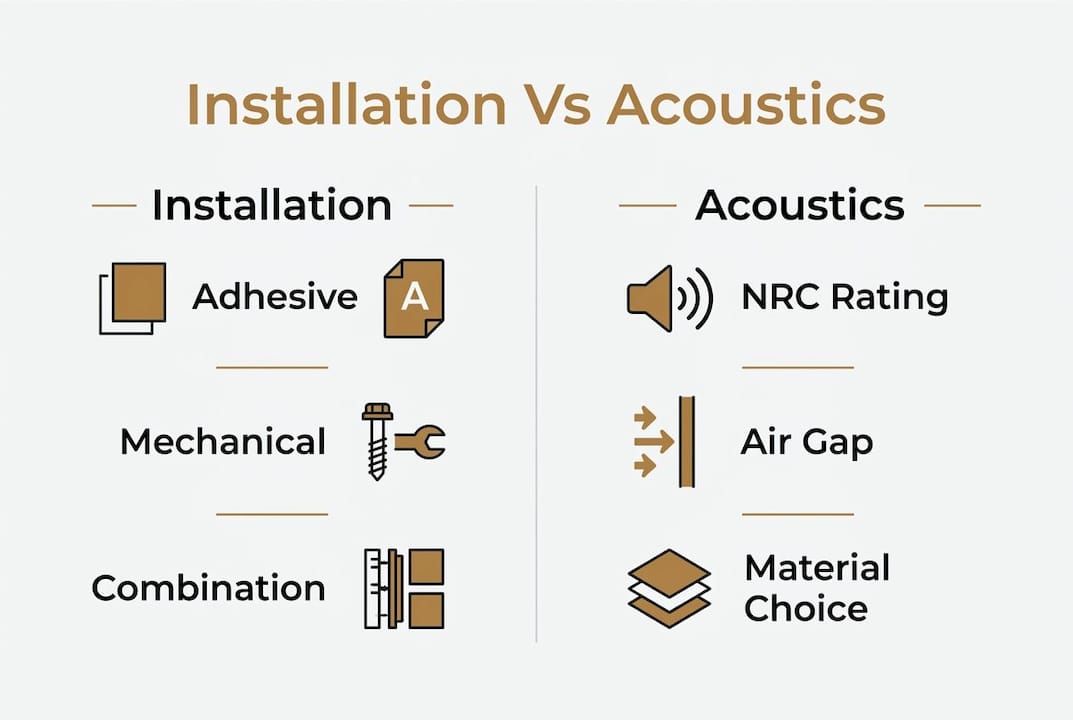
- Adhesive mounting: Construction adhesive applied to the back of the panel bonds it directly to a prepared wall. This method works well for lightweight panels like PET felt and thin PVC. The wall surface must be clean, flat, and free of loose paint or texture.
- Mechanical fasteners: Screws or nails driven through the panel face or hidden clips behind the panel. This method suits heavier panels like thick MDF or metal. It also allows future removal without damaging the wall substrate.
- Combination method: Adhesive plus fasteners. This is the most secure approach for large, heavy panels or installations in high-traffic areas. The adhesive holds the panel flat while the fasteners carry the load.
- Surface preparation: Skim-coat or sand any uneven wall areas before installation. A panel laid over a bumpy surface will telegraph every imperfection through the face. Prime bare drywall before applying adhesive.
- Panel size and handling: Large panels at 48" x 96" require two people to position safely. Plan your layout on the floor before lifting anything onto the wall.
- Flexible backing panels: Slat panels with a flexible mesh or felt backing can curve slightly around minor wall irregularities. They also cut easily with a utility knife, which simplifies fitting around outlets and corners.
Acoustic performance depends not only on the panel material but also on mounting conditions. An air gap between the panel and the wall surface significantly boosts sound absorption. If acoustic improvement is your goal, check the manufacturer's recommended mounting detail before you commit to flush adhesive installation.
What are the benefits and potential drawbacks of custom wall panels?
Custom panels deliver real advantages, but they also come with trade-offs worth knowing before you order.
Benefits at a glance:
| Benefit | What it means for your home |
|---|---|
| Full personalization | Size, pattern, material, and finish match your exact vision |
| Acoustic improvement | PET felt panels reach NRC ratings up to 0.80, reducing echo in media rooms |
| Space transformation | 3D texture and shadow depth create visual impact that paint cannot replicate |
| Sustainable options | WPC and PET felt panels use recycled or composite materials |
| DIY-friendly formats | Pre-cut kits from Themediawallstore install in a single weekend |
Drawbacks to plan for:
The biggest challenge is design accuracy. Homeowners often expect custom panels to arrive ready to hang with no further input, but successful custom orders require clear design files or detailed reference images. Vague briefs produce panels that miss the mark.
Lead times add another layer of planning. A 2–3 week production window means you cannot order panels the week before a renovation deadline. Budget also scales with complexity. Fully custom one-off designs cost more than catalog patterns, and pre-finished panels cost more than unfinished ones.
Compared to paint or standard wallpaper, decorative wall panels require more planning and a higher upfront investment. The payoff is a wall treatment that lasts years longer and adds genuine visual and acoustic value that flat finishes cannot match.
Pro Tip: Order panels with a 10% overage on coverage area. Cutting errors, outlet cutouts, and corner trims consume more material than most homeowners expect on their first project.
How to select and order custom wall panels for your home
A clear process prevents the most common ordering mistakes and keeps your project on schedule.
- Measure your wall accurately. Record height, width, and the location of every outlet, switch, and window. Note any baseboards or crown molding that will affect panel placement.
- Choose your material and finish based on room function. Dry living rooms suit MDF or wood veneer. Wet or humid spaces need WPC or PVC. Rooms where sound matters call for PET felt or acoustic slat panels.
- Select your pattern. Catalog patterns from a supplier like Themediawallstore give you a proven design with predictable results. Fully custom patterns require a CAD file or a detailed reference image. Clarifying the degree of customization early keeps costs and timelines realistic.
- Request samples before committing. A physical sample tile confirms color, texture depth, and finish quality. Test it on your actual wall under your room's lighting conditions before approving production.
- Confirm lead time and shipping. Standard CNC production runs 2–3 weeks after design approval. Add shipping time to your project calendar. Large panels ship as freight, not parcel, so plan for a delivery window rather than a specific day.
- Plan your budget with finishing in mind. Unfinished panels cost less but require onsite priming and painting. Pre-finished panels simplify installation but add cost. If you lack a spray setup for painting complex 3D surfaces, the pre-finished option pays for itself in time and frustration saved.
Themediawallstore supports homeowners through this process with free 3D design consultations, sample approvals, and pre-cut kits that arrive labeled and ready to install. Exploring the full design catalog before you measure gives you a realistic picture of what is achievable at different price points.
Key Takeaways
Custom wall panels deliver the most value when material choice, production method, and installation technique align with the room's specific function and lighting conditions.
| Point | Details |
|---|---|
| Match material to room function | Use WPC or PVC in wet zones; reserve MDF and wood veneer for dry living spaces. |
| Plan for lead time | CNC-routed panels typically require 2–3 weeks after design approval, so order early. |
| Test lighting before ordering | The same textured panel looks dramatically different under daylight versus evening light. |
| Order pre-primed for complex textures | Pre-finished panels cost more but simplify DIY painting on 3D surfaces. |
| Acoustic performance needs an air gap | Flush adhesive mounting reduces sound absorption; follow the manufacturer's mounting detail for acoustic panels. |
Why lighting is the detail most homeowners get wrong
Most articles on custom wall panels focus on material comparisons and installation steps. Those things matter. But the single factor that separates a stunning feature wall from a disappointing one is lighting, and almost nobody talks about it seriously.
I have seen homeowners order a beautiful deep-relief CNC panel, install it perfectly, and then feel underwhelmed because the room has flat overhead lighting that washes out every shadow. The texture that looked dramatic in the supplier's photo was shot under raking side light that made every groove pop. In their room, under recessed downlights, the same panel looked almost flat.
The fix is simple but requires patience. Before you approve production, get a physical sample tile and hold it against your wall at different times of day. Morning sun, afternoon light, and evening lamp light will each reveal something different. If the texture disappears under your lighting, either change the lighting plan or choose a deeper relief pattern that holds its visual weight regardless of light angle.
The other thing I would push back on is the idea that custom panels are a premium-only option. Themediawallstore's pre-cut DIY kits bring professional-grade aesthetics to a price point that makes sense for most homeowners. You do not need a contractor or a custom fabricator to get a result that looks like one. You need a good plan, the right material for your room, and a sample in hand before you commit. That combination beats any amount of browsing product photos online.
— Jake
How Themediawallstore makes your panel project easier
Themediawallstore builds DIY media wall kits specifically for homeowners who want a high-end result without hiring a contractor. Every kit arrives pre-cut and pre-labeled, so you spend your weekend installing rather than measuring and cutting.
The shop page covers multiple styles, from slat walls to marble-effect finishes, with options that suit both minimalist and statement-driven interiors. If you are not sure where to start, a free 3D design consultation maps your room dimensions to a finished design before you spend a dollar. Themediawallstore also offers risk-free returns and expert support, so you can order with confidence. Over 1,000 satisfied customers have already used these kits to create feature walls that look custom-built at a fraction of the cost.
FAQ
What are custom wall panels made from?
Custom wall panels use substrates including MDF, wood veneer, WPC, PET felt, PVC, and metal. The right material depends on the room's moisture level, acoustic needs, and desired finish.
How long does it take to get custom panels made?
Standard CNC-routed panels carry a lead time of 2–3 weeks after final design approval. Laser-cut panels and pre-finished orders may add additional time depending on the supplier.
Can I install custom wall panels myself?
Most panels install with construction adhesive, mechanical fasteners, or a combination of both. Pre-cut kits from Themediawallstore are designed for weekend DIY installation without professional tools or contractors.
Do custom wall panels improve acoustics?
PET felt acoustic panels reach NRC ratings up to 0.80, meaning they absorb up to 80% of sound energy. Acoustic performance also depends on mounting conditions, including the air gap between the panel and the wall.
How do I choose the right pattern for my room?
Test a physical sample tile against your wall under your actual room lighting before approving production. The same textured panel looks different under daylight, overhead lighting, and evening lamps, so lighting conditions should guide your final pattern choice.