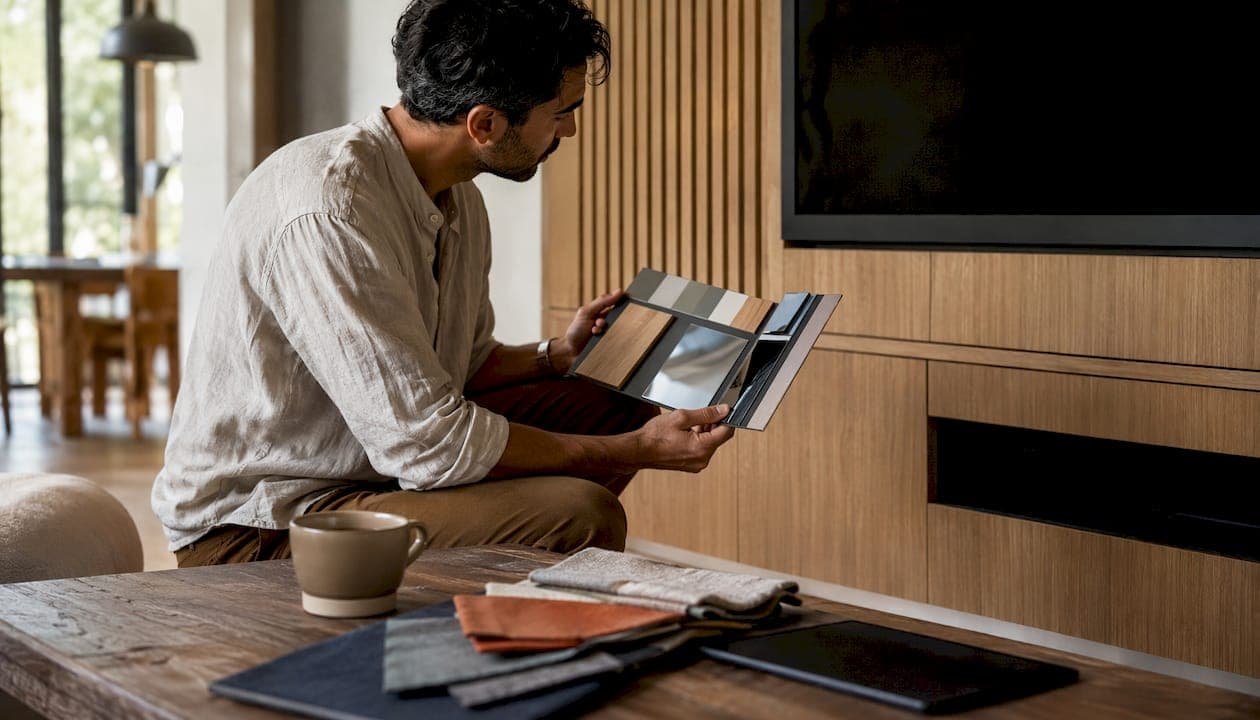
Modern panel interior design is the practice of covering walls with structured, modular panel systems that combine materials, concealed hardware, and integrated technology into a single cohesive feature. Done right, it turns a plain wall into the visual anchor of a room. The best systems in 2026 go further: they fold in LED lighting, floating cabinetry, and hidden wire management so the finished wall looks custom-built without the contractor price tag. Themediawallstore's luxury DIY media wall kits are built exactly on this principle — pre-cut, pre-labeled panels that install over a weekend and deliver a look that rivals six-figure custom builds.
Key features that define a high-performance panel wall:
- Modular construction for individual panel removal and replacement
- Concealed mounting hardware (clips, brackets, adaptor clips) for a gap-free surface
- Integrated LED lighting to highlight texture and depth
- Floating cabinetry for storage and visual balance
- Hidden wire management for clean tech integration
- Multiple finishes including smoked walnut, marble, and matte black
Table of Contents
- What panel interior design materials work best for your space?
- How concealed mounting makes panel installation cleaner and smarter
- How integrated lighting and cabinetry turn a panel wall into a focal point
- Why Themediawallstore's DIY kits suit discerning homeowners
- How to keep panel interiors looking sharp over time
- How panel walls improve the acoustics of a media room
- How to budget realistically for a panel interior project
- Themediawallstore brings luxury panel walls within reach
- FAQ
- Key Takeaways
What panel interior design materials work best for your space?
Popular panel materials in 2026 fall into three main categories: fluted wood, MDF, and PVC. Each has a clear lane.
- Fluted wood is the prestige choice. The ribbed, linear grooves create dynamic texture that shifts with light angles, making it the dominant style in modern media walls and living rooms. It also carries genuine acoustic benefits — the surface irregularity diffuses sound rather than reflecting it flat.
- MDF is the workhorse. Paintable, smooth, and easy to cut, it suits bedrooms and hallways where you want a custom look on a tighter budget. Wooden and MDF panels both offer warmth and elegant 3D effects best suited for living rooms and bedrooms.
- PVC handles moisture. Kitchens, bathrooms, and laundry rooms need a panel that won't warp or swell — PVC delivers that, plus it wipes clean in seconds.
Mixed-material walls are increasingly common. Interior panel systems support combinations of wood, glass, acrylic, and metal using adaptor clips that maintain consistent reveal spacing across varying panel thicknesses. The result is a wall that reads as intentional rather than assembled from parts.
For media walls specifically, wood slats are the clear front-runner. The texture photographs well, ages gracefully, and pairs naturally with the warm glow of LED strip lighting.
How concealed mounting makes panel installation cleaner and smarter
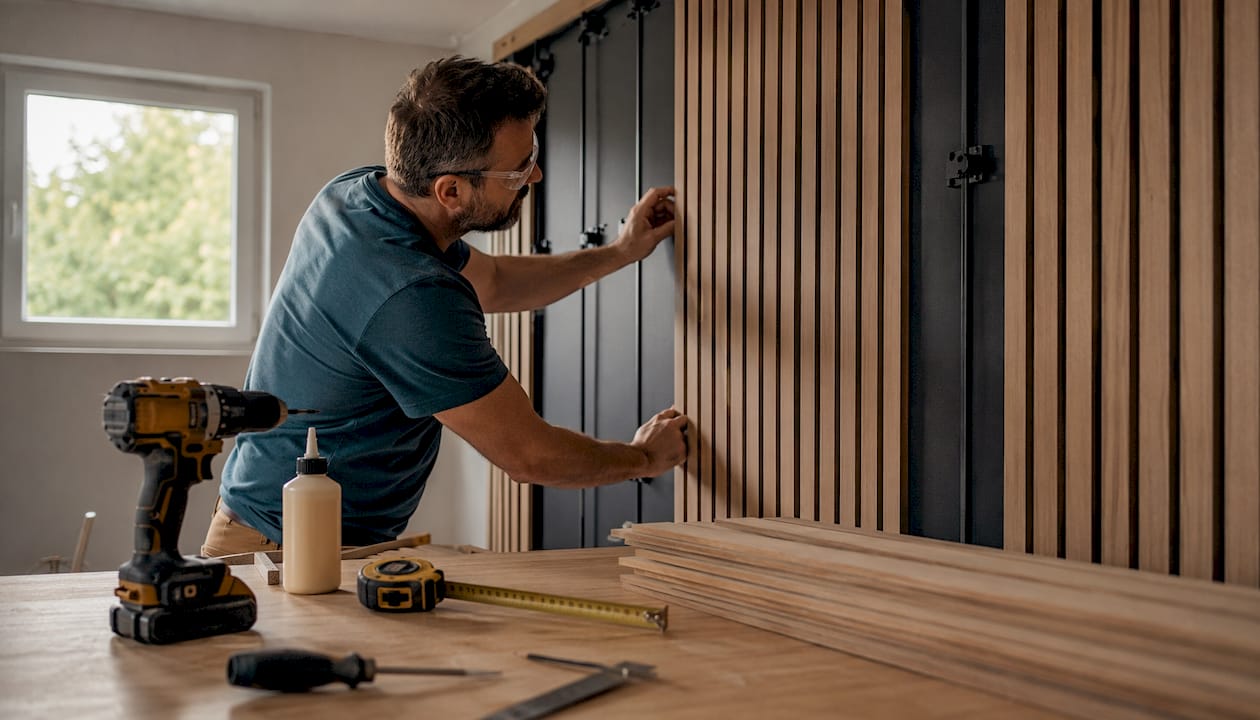
The gap between a DIY panel wall that looks professional and one that looks amateur usually comes down to the mounting method. Modern panel systems use concealed clips or brackets rather than visible nails or adhesives, producing a surface with no exposed fasteners and consistent spacing throughout.
- Clips attach to the wall structure; panels drop into the framework without face-nailing
- Adaptor clips accommodate varying panel thicknesses in the same installation
- Modular frameworks compensate for environmental expansion without buckling or seam gaps
- Individual panels can be removed and replaced without disturbing adjacent sections
- Cable chases behind panels keep wiring accessible for future tech upgrades
That last point matters more than most homeowners realize. A media wall that looks perfect today needs to accommodate a new TV mount, a soundbar upgrade, or a streaming device in three years. Modular panel systems provide long-term access for electrical or tech updates without damaging wall surfaces — something adhesive-bonded panels simply cannot offer.
Pro Tip: Leave a small expansion gap at panel edges during installation to prevent buckling during seasonal shifts. Wood and MDF panels move with humidity changes, and that small tolerance prevents buckling during seasonal shifts without creating a visible gap.
How integrated lighting and cabinetry turn a panel wall into a focal point
Lighting is what separates a panel wall from a great panel wall. LED strip lighting placed to wash across fluted or slat surfaces emphasizes the three-dimensional depth of the grooves — the shadows shift as ambient light in the room changes, keeping the wall visually alive throughout the day. For media wall lighting, placement behind the TV creates bias lighting that reduces eye strain during viewing, while strips along cabinetry edges define the wall's structure after dark.
A few design principles worth following:
- Recess LED drivers inside cabinetry or the panel framework so heat dissipates properly and the driver stays accessible for replacement
- Float cabinetry at a height that balances the TV visually — typically with the console sitting 12–16 inches off the floor
- Run dedicated cable chases behind panels before closing the wall; retrofitting wiring through a finished panel system means cutting or removing panels
- Match hardware finishes across lighting fixtures, cabinetry pulls, and mounting brackets for a cohesive look
Fireplaces integrate cleanly into panel systems when the surround is treated as a panel zone with its own reveal spacing. The key is planning the electrical and gas rough-in before panels go up, not after. Themediawallstore's kits include options for fireplace integration, so the surround and the panel wall read as one designed element rather than two separate installations.
Why Themediawallstore's DIY kits suit discerning homeowners
The practical problem with custom media walls has always been the same: the design process takes months, the installation requires a contractor, and the final bill reflects both. Themediawallstore's luxury DIY media wall kits solve that by delivering pre-cut, pre-labeled panels that a homeowner can install over a single weekend.
- Pre-cut and pre-labeled panels eliminate measuring and cutting on-site
- Modular layout options allow configuration around existing architecture
- Integrated accessories include lighting kits, floating cabinetry, and hardware finishes in brass, chrome, and matte black
- Pricing comes in significantly below custom contractor builds
- Over 1,000 satisfied customers with expert support and risk-free returns
- Blog content and style guides provide design direction before purchase
The acoustic slat wall panel in smoked walnut is a strong example of how the kits translate design-world materials into a DIY format. The fluted profile delivers the texture and warmth of a designer installation; the pre-cut format means no specialized tools and no wasted material.
How to keep panel interiors looking sharp over time
Panel walls are low-maintenance by design, but a few habits keep them looking new for years.
Wood and MDF panels: Dust with a dry microfiber cloth weekly. For smudges, a slightly damp cloth with mild dish soap works well — avoid saturating the surface, and dry immediately after. Never use abrasive cleaners or steam, which can raise the grain or warp MDF edges.
PVC panels: These are the easiest to maintain. A damp cloth handles most cleaning; for grease in kitchen installations, a diluted all-purpose cleaner is fine. PVC won't warp, swell, or absorb moisture, so it tolerates more aggressive cleaning than wood.
Hardware and reveals: Wipe clip covers and reveal trims with a dry cloth. Chrome and brass finishes benefit from an occasional polish with a product matched to the metal type. Matte black hardware should be cleaned with a damp cloth only — polishing compounds can strip the matte finish.
Check panel joints and corners every six months. A panel that has shifted slightly can usually be re-seated without tools in a modular system. Catching it early prevents the gap from widening.
How panel walls improve the acoustics of a media room
Flat, hard walls reflect sound directly back into the room, which creates flutter echo and muddies dialogue in a media setup. Textured panel surfaces — particularly fluted wood slats — break up that reflection by scattering sound in multiple directions rather than bouncing it straight back. The effect is a room that sounds noticeably cleaner without any dedicated acoustic treatment.
Wood panels add a second acoustic benefit: mass. A solid wood or MDF panel wall absorbs low-frequency energy better than drywall alone, which reduces the boomy bass buildup common in rooms with hard parallel walls. For a dedicated home theater or media room, combining slat panels with insulation behind the wall structure brings performance closer to a professionally treated space. The interior panel doors in the same room contribute to the overall acoustic envelope, so treating walls and doors together produces the most consistent result.
How to budget realistically for a panel interior project
Panel projects vary widely in cost depending on material, coverage area, and how much of the work you do yourself.
Material costs are the largest variable. PVC panels sit at the affordable end; solid wood and fluted walnut panels cost more per square foot but last longer and hold their look better over time. MDF lands in the middle and is the most common choice for painted accent walls.
Labor is where DIY kits pay off most. A contractor-installed custom media wall in a major U.S. market typically runs several thousand dollars above material costs. Themediawallstore's pre-cut kits eliminate that line item entirely for most installations.
Accessories add up. Budget separately for LED lighting, cabinetry, and hardware finishes. These are the details that make a panel wall look designed rather than assembled, so cutting them is a false economy. Check the full accessories range before finalizing a budget — knowing the all-in cost upfront prevents surprises mid-project.
A practical approach: price the panel kit first, then add lighting and cabinetry as a second phase if the initial budget is tight. The modular system makes phased upgrades straightforward.
Themediawallstore brings luxury panel walls within reach
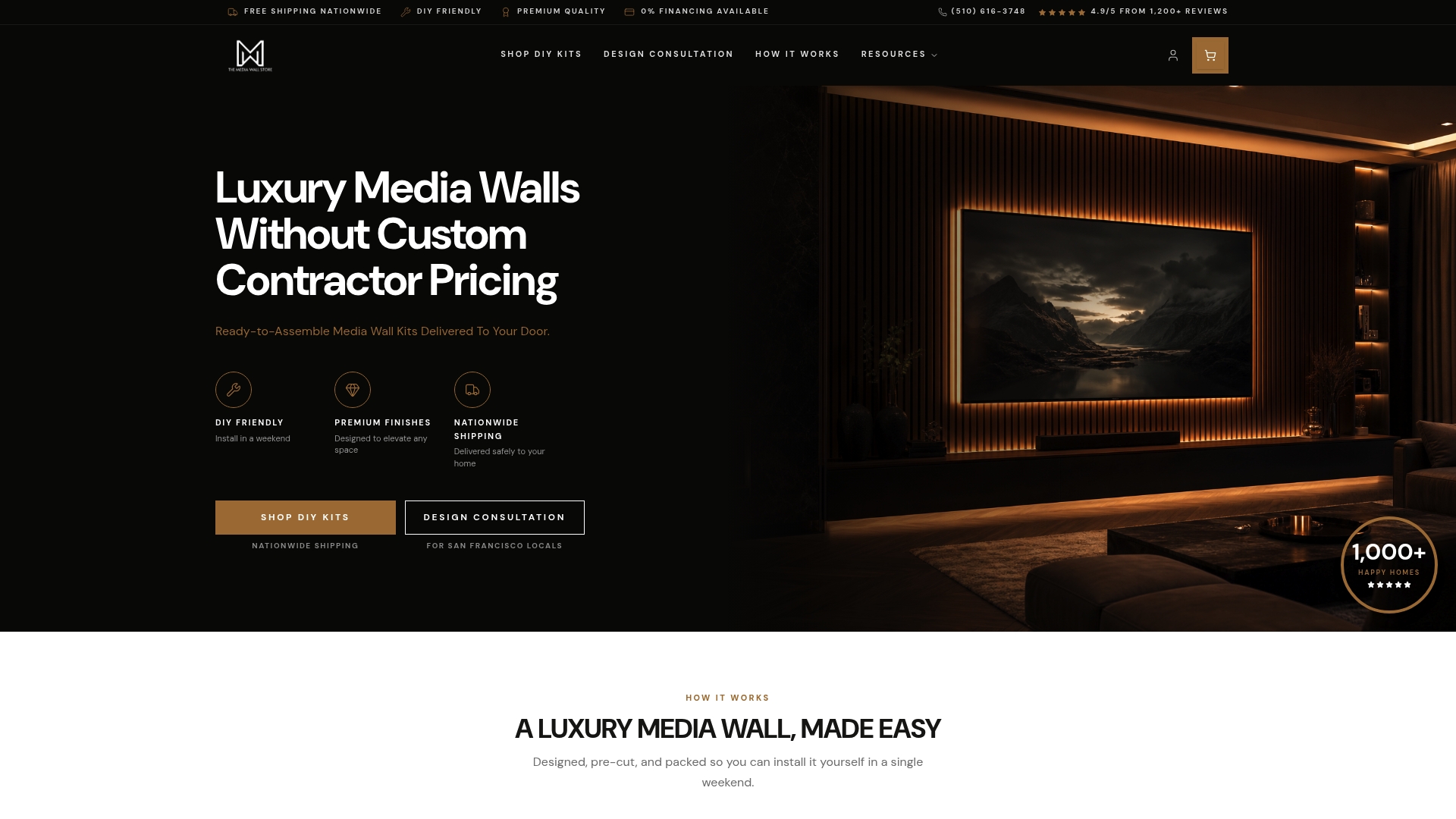
Custom media walls used to mean choosing between a high contractor bill and a compromised result. Themediawallstore changes that math. Their DIY media wall kits arrive pre-cut and pre-labeled, with every panel, clip, and hardware piece accounted for — no contractor required, no weeks-long installation timeline. The kits include options for integrated LED lighting, floating cabinetry, slat accent panels, and fireplace surrounds, so the finished wall reflects a complete design rather than a collection of parts. For homeowners in the San Francisco Bay Area, Themediawallstore also offers white-glove custom installation for a fully hands-off experience. Browse the full kit range at themediawallstore.com/shop and find the design that fits your space.
FAQ
What materials work best for a media wall panel?
Fluted wood and wood slats are the top choice for media walls — they offer acoustic benefits, visual depth, and a high-end look that pairs well with integrated LED lighting. PVC suits humid rooms; MDF works well for painted accent walls.
Can I install a panel media wall without a contractor?
Yes. Themediawallstore's pre-cut, pre-labeled DIY kits are designed for weekend installation by homeowners with basic tools, using concealed clip systems that require no specialized skills.
How do panel walls affect room acoustics?
Textured panel surfaces scatter sound rather than reflecting it flat, reducing flutter echo. Wood and MDF panels also add mass that absorbs low-frequency bass buildup, improving overall sound clarity in media rooms.
What does a DIY media wall kit typically include?
Themediawallstore's kits include pre-cut panels, concealed mounting hardware, and options for LED lighting, floating cabinetry, and multiple hardware finishes — everything needed for a complete installation.
How do I maintain wood panel walls long-term?
Dust weekly with a dry microfiber cloth and spot-clean with a lightly damp cloth and mild soap. Check panel joints every six months and re-seat any shifted panels early to prevent gaps from widening.
Key Takeaways
Modular panel systems with concealed hardware, integrated LED lighting, and pre-cut components deliver professional media wall results without contractors or extended timelines.
| Point | Details |
|---|---|
| Material selection matters | Fluted wood suits media walls and living rooms; PVC handles moisture-prone spaces; MDF works for painted accent walls. |
| Concealed mounting is essential | Clip-based modular systems allow panel removal, tech upgrades, and expansion tolerance without damaging surrounding panels. |
| Lighting defines the result | LED strips placed to wash across fluted surfaces create depth and ambiance; recess drivers inside cabinetry for heat management. |
| Budget for accessories upfront | LED lighting, cabinetry, and hardware finishes are the details that make a panel wall look designed — price them before starting. |
| Themediawallstore | Pre-cut, pre-labeled luxury DIY kits with integrated lighting and cabinetry options, priced well below custom contractor builds. |