Stacking a TV over a fireplace is visually tidy but often causes viewing discomfort, so choose it only when your main seating lines up close to eye level and the fireplace runs cool. Otherwise, place the TV on an adjacent wall or in a recessed niche. The layout options, ergonomic rules, and planning checklist below will help you pick the right setup for your room.
TL;DR:
- Mounting the TV above a fireplace is suitable only when seating is close to eye level and the display can be tilted downward by 5 to 15 degrees for comfort.
- Heat from electric or gas fireplaces requires proper clearance and deflectors to prevent damage or glare, especially in stacked or high-mounted setups.
- Recessed or adjacent wall placements improve viewing comfort and avoid neck strain compared to a stacked position, particularly in rooms with lower or more distant seating.
- Using pre-cut, labeled media wall kits simplifies installation by eliminating measuring and trimming, making it accessible for DIY projects.
- Artistic materials such as wood slats, stone, or painted shiplap unify the fire and TV wall, enhancing aesthetic cohesion without sacrificing functionality or comfort.
Table of Contents
- Layout Options for Pairing a TV and Fireplace
- Weighing the Pros and Cons of Mounting a TV Above a Fireplace
- Ergonomics and Viewing Guidelines Worth Following
- Styling and Materials That Tie the Wall Together
- A Practical Checklist Before You Start Building
- How Pre-Cut Media Wall Kits Solve the Hard Parts
- Comfort or Cohesion: What Actually Matters More
- Getting Your TV and Fireplace Wall Built the Easy Way
- Where to Read More Before You Build
- Sources
- FAQ
Layout Options for Pairing a TV and Fireplace
Most living rooms fall into one of five workable layouts, and the right one depends on room depth, seating distance, and how much you want to spend.
- Stacked (TV over fireplace): works when the mantel sits low and seating is far enough back that your neck doesn't crane upward; common in smaller rooms where a second wall isn't available.
- Adjacent placement: the TV sits on a side wall or perpendicular wall, keeping the fireplace as the room's social anchor while the screen gets its own sightline.
- Recessed niche: the TV drops into a built-out or framed cavity beside or above the firebox, which visually lowers its apparent height and softens the "screen on a pedestal" look.
- Separate media wall: the fireplace lives on one wall and the TV and cabinetry live on another, often connected with matching trim or paint for cohesion.
- Floating fireplace and console: a wall-mounted or freestanding electric unit with an adjacent or stacked TV, popular in open-plan spaces where a full built-in isn't practical.
Mantel height, TV offset, and integrated cabinetry all affect how balanced the wall looks. A shallow mantel keeps the TV closer to eye level, while a floating console can visually anchor a stacked setup that would otherwise feel top-heavy. Renters tend to favor adjacent or floating options since they avoid permanent framing.
Weighing the Pros and Cons of Mounting a TV Above a Fireplace
Design professionals point out that a fireplace and a TV compete for attention: the fireplace is a social, aesthetic anchor while the TV is a functional focal point, and when the two can't be aligned at a comfortable viewing height, placing the TV on an adjacent wall or in a recessed niche is often the better fix.
- For it: one clean focal wall, no second feature competing for space, and a streamlined look in smaller rooms.
- Against it: neck strain from looking up for long stretches, glare from windows or overhead lighting hitting a high screen, and speaker placement that ends up too far from ear level.
- Heat is a real factor: even electric inserts throw some warmth upward, and a mantel or heat deflector can help keep that away from the screen.
Pro Tip: A full-motion tilt mount angled downward can offset several inches of extra mounting height and meaningfully cut neck strain from your main seat.
Ergonomics and Viewing Guidelines Worth Following
Comfort comes down to three numbers: height, distance, and tilt.
- Aim for the screen's center at or near seated eye level, roughly 42 inches from the floor for most sofas.
- When the fireplace forces the TV higher, add a downward tilt of 5 to 15 degrees to compensate.
- Match distance to size: bigger screens need more room between the sofa and the wall to avoid a straining, too-close view.
- Use an articulating or tilt mount whenever the TV sits above standard eye level.
A TV set noticeably higher than a seated viewer's sightline is one of the more common causes of neck discomfort in living rooms with fireplace-mounted screens, according to design debate coverage from Houzz. If your fireplace doesn't list clearance specs, treat the manufacturer's minimum mounting height as a floor, not a target, and check with the fireplace maker or an installer before drilling.
Styling and Materials That Tie the Wall Together
Once the layout is set, the materials are what make the TV and fireplace read as one feature instead of two separate objects.
- Slat or acoustic wood panels add warmth and texture while softening room sound, a trend that's held strong as wood-slat finishes like the Akupanel style remain a top choice for media walls in 2026.
- Stone or tile suits a hearth-centric look and holds up well around heat sources.
- Paint or shiplap offers a budget-friendly way to unify the wall without structural changes.
- Integrated shelving, lighting, and trim balance the visual weight between the fireplace and the screen.
- Removable or temporary finishes, such as peel-and-stick panels, are the practical choice for renters who can't alter walls permanently.
PVC and wood-cement composite panels are worth considering in moisture-prone rooms, since they hold up better than solid wood in humid conditions.
A Practical Checklist Before You Start Building
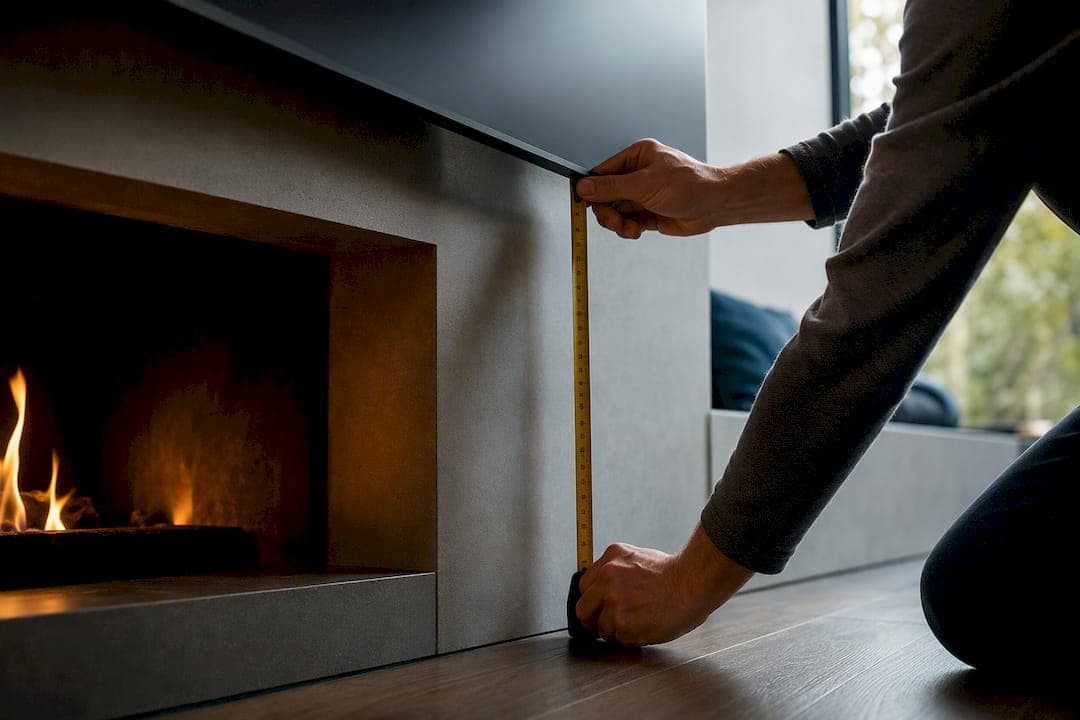
Turning a Pinterest-style layout into a finished wall takes a bit of measuring before any cutting starts.
- Measure your main seating distance and sightline to confirm where the screen center should land.
- Match TV size to viewing distance so the picture doesn't feel too big or too small from the sofa.
- Check the fireplace's heat clearance and required mantel depth before finalizing TV height.
- Plan for in-wall power and in-wall rated cabling so cords disappear behind the panel.
- Choose a mount type and test the tilt angle before committing to final placement.
- Confirm ventilation needs, since electric inserts generally run cooler than gas units but still need clear airflow.
Pro Tip: Bring your measurements, TV size, and fireplace spec sheet to any installer or DIY kit order, it saves a round of back-and-forth before work even starts.
A step-by-step fireplace media wall guide can help you work through these steps in more detail if you're planning the project yourself.

How Pre-Cut Media Wall Kits Solve the Hard Parts
The trickiest parts of a TV and fireplace wall are rarely the design choices, they're the fit, the wiring, and the finish work. A pre-cut, pre-labeled kit removes most of that friction.
- Panels arrive cut to size and labeled for order, so there's no on-site measuring or trimming.
- Hidden wire channels keep cables out of sight without opening drywall.
- Integrated lighting options are built into the panel layout rather than added after the fact.
- Matching finishes across shelving, cabinetry, and slat panels avoid the mismatched look of piecing materials together separately.
The Media Wall Store built its kits around this weekend-install approach, with over 1,000 customers who've used pre-cut, pre-labeled panels instead of hiring a contractor for custom carpentry, backed by expert support and returns if a kit doesn't fit the space.
Comfort or Cohesion: What Actually Matters More
Most readers chasing a stacked TV and fireplace wall are optimizing for a photo, not for how the room feels after six months of actual use. A wall that looks flawless in a listing photo but forces you to tilt your neck every movie night isn't a design win. Accept the stacked layout when your seating is far enough back and low enough that the angle stays comfortable. Reconfigure to adjacent or recessed when it isn't. Cohesion is worth chasing, but only after comfort checks out.
— Jake
Getting Your TV and Fireplace Wall Built the Easy Way
If you've landed on a layout you like but don't want to hire a contractor to execute it, that's exactly the gap The Media Wall Store's kits are built to close. Their Media Wall Kits are pre-cut and pre-labeled, so you can build the stacked, adjacent, or niche layout you've settled on without custom framing.
- Browse Media Wall Kits or request a Full Design & Quote for $299 one-off if you want a layout mapped to your room.
- Add a Single Concept Design for $99 one-off if you just need one clear direction to work from.
- Pair your kit with an electric fireplace or acoustic slat panel sold through their accessories shop.
- Bay Area homeowners can also book White-Glove Installation instead of assembling it themselves.
Start by measuring your wall and sightlines, then browse the shop to see which kit fits your layout.
Where to Read More Before You Build
- Houzz's design debate on TV-over-fireplace placement.
- Best electric fireplace for a TV wall, a client guide.
- How to make a TV look better in your living room.
Sources
- Is it OK to hang the TV over the fireplace? — Houzz Magazine
- WoodUpp alternative: Best 2026 options — Accio
FAQ
Where should you put the TV on a wall with a fireplace?
Put the TV above the fireplace only if your seating keeps the screen close to eye level once you account for tilt. If seating is low or close to the wall, an adjacent wall or a recessed niche beside the fireplace usually gives a more comfortable viewing angle.
Are TVs mounted over fireplaces still in style for 2026?
Yes, stacked layouts remain common, especially when paired with slat wood panels or stone finishes that unify the wall. Designers still flag the ergonomic trade-offs, so the style holds up best when the room's seating distance supports it.
How do you style a fireplace wall with a TV built in?
Choose one dominant material, such as slat wood panels, stone, or painted shiplap, and carry it across the fireplace surround and TV surround so the two don't compete visually. Integrated shelving and lighting help balance the wall so the TV doesn't sit like an afterthought above the mantel.
How close should a TV be to a fireplace?
There's no single required distance, but the fireplace manufacturer's heat clearance specs should set your minimum mounting height, and a mantel or heat deflector adds a layer of protection. Electric inserts generally produce less radiant heat than gas or wood-burning units, which gives more flexibility in placement.