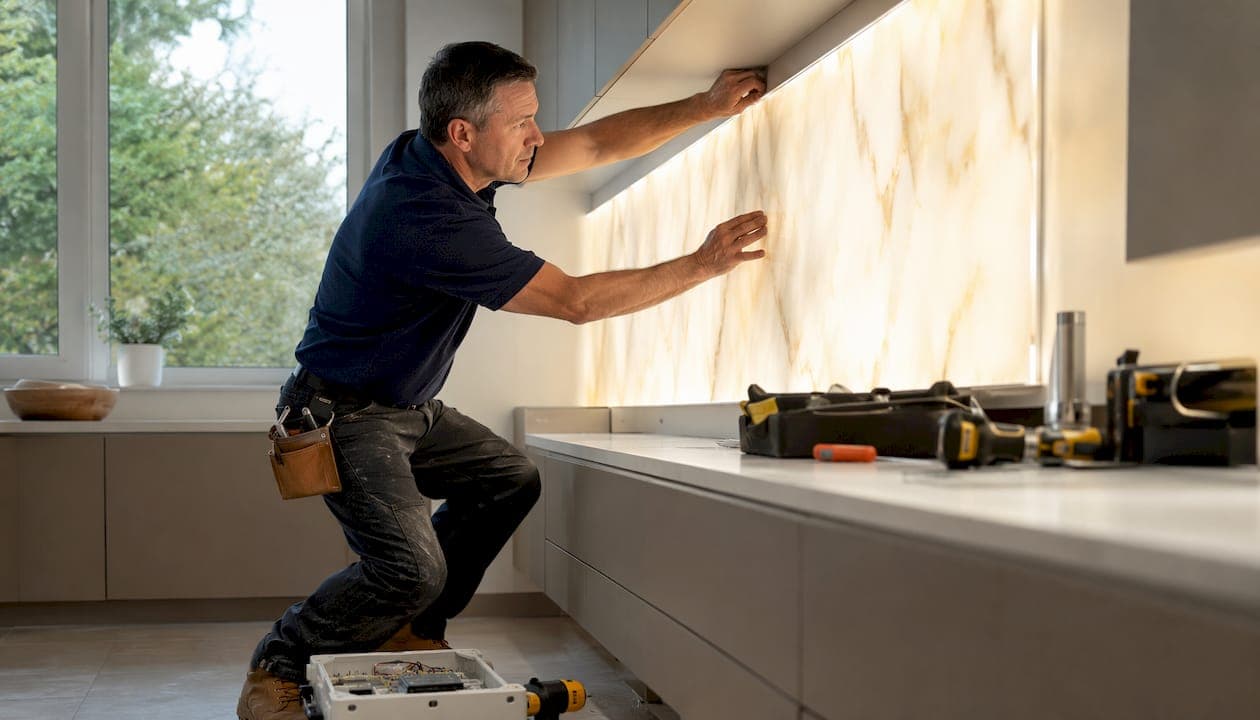
A backlit wall is a decorative wall system that places integrated LED lighting behind translucent materials, creating a seamless, glowing surface that transforms the mood of any room. Unlike surface-mounted fixtures or spotlights, the light source is fully hidden. What you see is the wall itself appearing to glow, edge to edge, with no visible hardware.
This effect works because integrated LED lighting distributes light evenly through a translucent face material, whether that's acrylic, onyx, resin, or a specialized fabric. The result is depth, warmth, and a focal point that no paint color or artwork can replicate.
Here's what defines a well-executed backlit wall:
- Translucent face material (acrylic, natural stone, resin, or fabric) that diffuses light without creating hot spots
- Integrated LED arrays positioned behind the face, fully concealed from view
- Frameless construction that eliminates visible borders and keeps the illuminated surface uninterrupted
- Uniform glow from edge to edge, making the wall surface appear as the light source itself
What are the real benefits of backlit wall panels?
Backlit wall panels deliver advantages that traditional decor simply can't match, and the gap is wider than most homeowners expect.
- Customization: Panels can be sized, shaped, and colored to fit any space. Because composite materials flex, they can wrap around curves, columns, and corners that would be impossible to finish with glass or tile.
- Energy efficiency: LED arrays distribute light evenly, reducing the need for multiple fixtures and cutting electricity consumption compared to conventional lighting setups.
- Durability: Acrylic panels are impact-resistant and thermally stable, unlike glass or mirrors that crack, scratch, or warp with temperature swings. High-traffic commercial spaces and busy family homes both benefit from this.
- Lightweight construction: Acrylic is significantly lighter than stone or glass, reducing structural demands and simplifying installation. Most panels go up with minimal tools.
- Ambiance control: Tunable white LEDs let you shift from warm candlelight tones to crisp daylight color, adjusting the mood without changing a single fixture.
- Versatility: The same panel technology works in a living room accent wall, a hotel lobby, a retail display, or a home theater. The aesthetic scales up or down without losing its effect.
How do you maximize the visual impact of a backlit wall?
Placement and material choices determine whether a backlit feature wall looks like a design statement or an afterthought. A few principles separate the two.
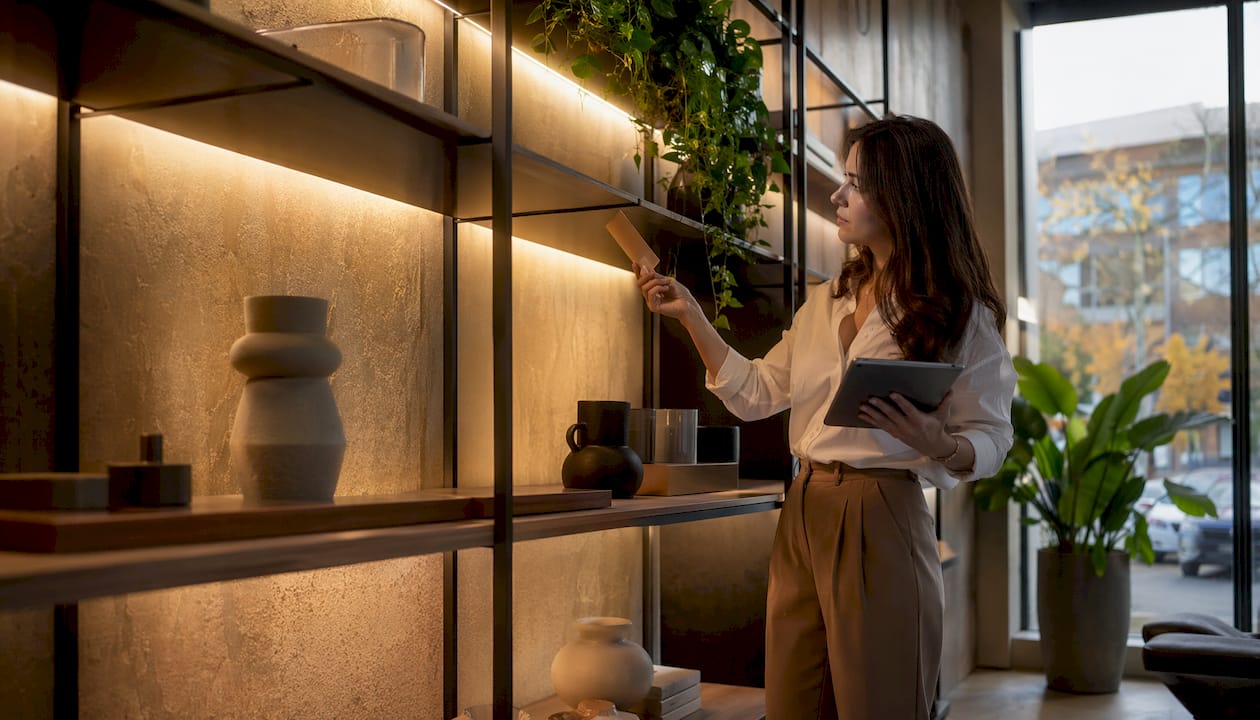
Pick one focal point and commit to it. A backlit panel behind a TV console, a reception desk, or a dining room sideboard draws the eye immediately. Spreading illuminated panels across multiple walls dilutes the effect. One strong focal point beats three mediocre ones.
Match color temperature to the room's purpose. Modern LED lighting now produces warm white options that are indistinguishable from conventional sources, which makes them ideal for living rooms and bedrooms where a cozy atmosphere matters. Cooler temperatures (4000K–5000K) suit kitchens, offices, and retail spaces where clarity and alertness are the goal.
Use contrast deliberately. A white acrylic panel against a dark wall creates drama. A stone-finish panel in a neutral room adds texture without visual noise. The face material and the surrounding wall color work together, so choose them as a pair, not independently.
Wrap architectural challenges. Columns, curved walls, and recessed alcoves are notoriously difficult to finish well. Backlit panels wrap around these features and deliver continuous illumination where conventional decor would leave awkward gaps or shadows.
Layer with other decor elements. A backlit panel behind floating shelves, artwork, or a fireplace surround adds depth that a plain glowing surface alone can't achieve. The light interacts with the objects in front of it, creating shadow play and dimension.
Pro Tip: Pair tunable white LEDs with a dimmer switch so you can shift the panel's mood from bright and energizing during the day to warm and relaxed in the evening, all without touching the panel itself.
What materials and specs should you know before installing?
Getting the technical details right before you start saves you from expensive corrections later.

Face materials and their diffusion properties:
| Material | Light Diffusion | Weight | Best Use |
|---|---|---|---|
| Acrylic | Even, minimal hot spots | Lightweight | Residential, retail |
| Translucent fabric | Soft, uniform glow | Very lightweight | Large-format walls, commercial |
| Resin / onyx | Dramatic, veined glow | Moderate | Luxury accent walls |
| Image glass | Sharp graphics with backlight | Moderate | Branded environments |
High-quality translucent fabric coverings are available up to 500 cm wide and 50 m long, allowing seamless large-scale installations with no visible seams. Fabric weight around 160 g/m² is standard for even light diffusion at that scale.
Installation depth matters more than most guides admit. Frameless systems require at least 17 mm of clearance behind the face material to allow the LED array to distribute light evenly. Less than that and you'll see hot spots directly above each LED point. More depth generally improves uniformity.
Frameless vs. framed construction: Frameless panels extend illumination fully to the edge, creating an uninterrupted glowing surface. Framed panels introduce a visible border that breaks the continuity of the light, which is the single most common reason a backlit wall looks cheap rather than polished.
LED technology options:
- Standard white LED arrays cover most residential and commercial applications, with long lifespans and low maintenance.
- Tunable white LEDs let you adjust color temperature (typically 2700K–6500K) without replacing any hardware.
- RGBW LED systems add full color control for retail displays, hospitality environments, or entertainment spaces.
- OLED panels produce extremely even, thin-profile illumination but carry a higher cost and are typically reserved for premium commercial installations.
Selecting the right diffuser material is as critical as the LED choice. Translucent fabrics, specialized acrylics, and image glass each diffuse light differently. An unsuitable face material creates glare or uneven patches regardless of how good the LED array is.
Common mistakes that ruin a backlit wall
Most backlit wall failures come down to a handful of predictable errors.
Using framed panels. Any visible border, even a subtle aluminum trim, pulls the eye away from the illuminated surface and toward the hardware. Frameless construction is the standard for professional results.
Insufficient installation depth. Mounting the LED array too close to the face material creates bright spots directly above each light source. The 17 mm minimum clearance rule exists for a reason. Cutting corners here produces a result that looks more like a light box than a feature wall.
Wrong face material. Clear acrylic transmits light but doesn't diffuse it, so every LED point shows through as a visible dot. The face material needs to be translucent, not transparent. Specialized diffuser acrylics or translucent fabrics scatter the light before it reaches the surface.
Overusing backlighting. A backlit wall works because it's the focal point. Install illuminated panels on every wall and the effect disappears entirely. The contrast between the glowing surface and the surrounding room is what creates the impact.
Mismatched color temperature. A 6500K cool white panel in a warm-toned living room looks clinical and out of place. Match the LED color temperature to the existing lighting in the room, or use tunable white LEDs so you can adjust after installation.
Pro Tip: Before committing to a face material, hold a sample against a light source and look for even diffusion with no visible hot spots. If you can see the light source through the material, it's too transparent for backlighting.
How much does a backlit wall cost?
Backlit wall projects vary widely in cost depending on size, materials, and whether you hire a contractor or go the DIY route.
DIY panel kits are the most accessible entry point. Pre-cut, pre-labeled kits designed for weekend installation bring the cost of a luxury look down to a fraction of what a custom build would run. Themediawallstore's DIY media wall kits are built around this model, with integrated LED lighting and all components included.
Material choice drives cost more than anything else. Translucent fabric systems cost less than resin or onyx panels. RGBW LED systems add cost over standard white arrays. Image glass with custom printed graphics sits at the premium end.
Professional installation adds labor on top of materials. In the San Francisco Bay Area, for example, custom installation services command a premium over kit-based DIY. For most homeowners outside that market, a well-designed DIY kit eliminates the contractor cost entirely.
Budget anchors to keep in mind:
- Small accent panel (single wall section): lower cost, achievable with a basic DIY kit
- Full feature wall with tunable white LEDs: mid-range investment, materials plus basic tools
- Large-format commercial installation with RGBW and custom graphics: premium budget, typically requires professional specification
The biggest cost mistake is underestimating the value of frameless construction. A framed kit costs less upfront but delivers a noticeably inferior result. Spending slightly more on a frameless system with proper diffuser materials pays off in the final appearance.
Where do backlit walls work best?
The same technology adapts across residential and commercial settings, though the design priorities shift.
Residential spaces:
Living rooms are the most common application, typically as a feature wall behind a TV or sofa. Bedrooms use backlit panels as headboard accent walls, replacing traditional bedside lamps with ambient glow. Entryways benefit from a single illuminated panel that sets the tone for the whole home the moment a guest walks in.
Commercial environments:
Reception areas use backlit walls to signal quality and reinforce brand presence. Retail displays place illuminated panels behind product shelving to draw customer attention. Restaurants and hotel lobbies rely on the calm, even glow to create atmosphere without glare. Conference rooms and breakout spaces use them to project a polished, professional environment.
Hospitality and public spaces:
Spa environments, museum installations, and wayfinding elements all use backlit panels for their legibility and visual clarity. The even, glare-free light reads well at a distance and holds up under heavy foot traffic.
The glass interior design principles that make frameless, translucent elements work in doors apply directly to backlit walls: the absence of visible framing is what makes the material feel architectural rather than decorative.
Key Takeaways
A frameless backlit wall with proper installation depth and the right diffuser material delivers a professional, seamless glow that no surface-mounted fixture can replicate.
| Point | Details |
|---|---|
| Frameless construction is non-negotiable | Visible borders break illumination continuity; frameless panels extend light fully to the edge. |
| Installation depth affects quality | At least 17 mm of clearance behind the face material prevents hot spots and uneven light. |
| Face material determines diffusion | Translucent acrylics, fabrics, or image glass scatter light evenly; clear materials show LED dots. |
| Color temperature shapes the mood | Match LED temperature to the room's purpose; tunable white LEDs offer post-install flexibility. |
| DIY kits reduce cost significantly | Pre-cut, pre-labeled kits bring luxury backlit aesthetics within reach without contractor fees. |
FAQ
What does "backlit" mean in wall design?
Backlit means the light source is positioned behind the face material rather than in front of it. The result is a surface that appears to glow from within, with no visible fixtures.
What is a backlit LED panel?
A backlit LED panel combines a translucent face material with an LED array mounted behind it. The LEDs illuminate the face material evenly, creating a uniform glow across the entire surface.
How much does a backlit wall cost?
Cost varies by size, materials, and installation method. DIY kits are the most affordable option; custom professional installations with premium materials like onyx or RGBW LED systems sit at the higher end of the budget range.
What materials work best for a backlit wall?
Translucent acrylic, specialized diffuser fabrics, resin, and image glass all work well. The key is that the material diffuses light rather than transmitting it directly, which prevents visible hot spots.
Can you install a backlit wall yourself?
Yes, with the right kit. Pre-cut, pre-labeled DIY kits from Themediawallstore are designed for weekend installation without contractor help, making a high-end backlit look accessible to homeowners.