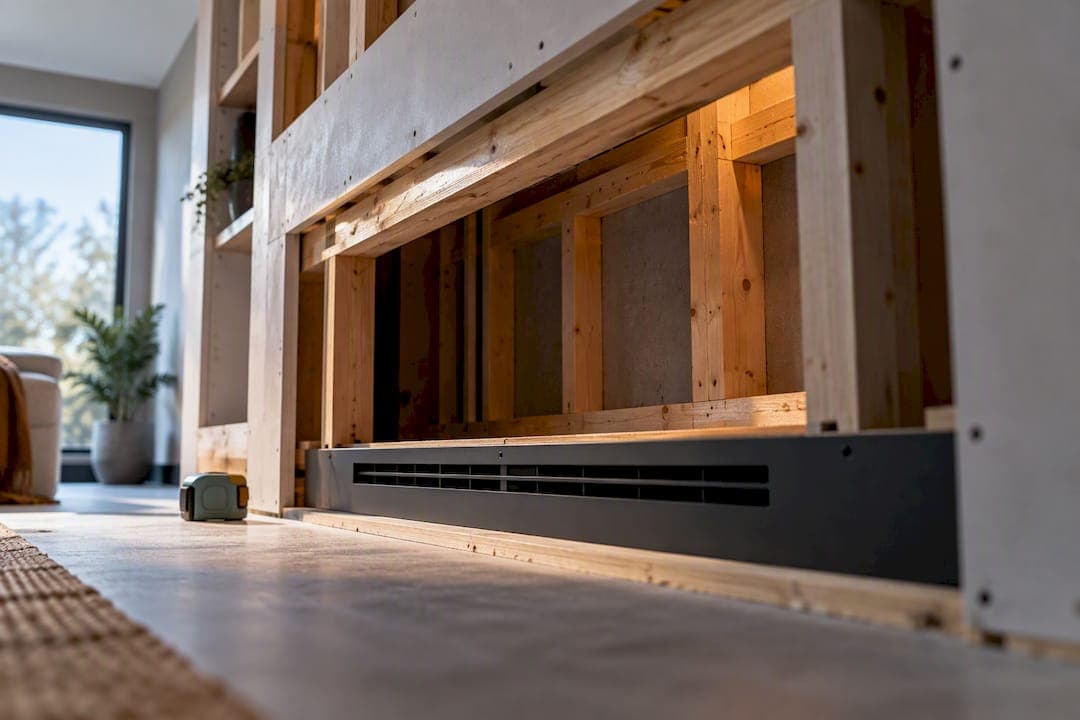
Recessed electric fireplaces are safe when installed and used according to the manufacturer's clearance and electrical requirements. Unlike gas or wood units, they produce no flame, no carbon monoxide, and no combustion byproducts, but they still generate real heat and draw serious current. Four things govern recessed electric fireplace safety: a certified product, a dedicated circuit, correct clearance and airflow, and never blocking the vents.
TL;DR:
- Recessed electric fireplaces must be installed with proper clearances and on a dedicated 20 amp circuit to prevent overheating and electrical issues.
- Maintaining a 3-foot operational clearance zone and a 7-inch floor clearance at the intake vent is essential for safety and proper airflow.
- Proper cavity framing, ventilation, and cord management before wall sealing are critical to avoid blocked airflow and fire hazards.
- Certification marks like UL, ETL, or CSA indicate third-party safety testing, but safety features like overheat sensors should not replace correct installation and good habits.
- Never leave a recessed electric fireplace unattended overnight and use timers to minimize risks from blocked vents or malfunctions.
Table of Contents
- How Recessed Models Differ From Freestanding Electric Fireplaces
- What Clearances Do You Actually Need Around the Unit?
- Do You Need a Dedicated Circuit for an Electric Fireplace?
- Which Safety Certifications Actually Mean Something?
- Installation and Placement Best Practices for Media Walls
- Keeping Children and Pets Safe Around the Fireplace
- Routine Maintenance and What to Do in an Emergency
- Planning a Safe Recessed Fireplace Into a Media Wall
- Where to Get Kits, Fireplace Inserts, and Installation Help
- Primary Sources on Electric Fireplace Safety
- Sources
- FAQ
How Recessed Models Differ From Freestanding Electric Fireplaces
A freestanding unit sits on the floor or a mantel. You can move it if it runs hot, unplug it in a hurry, or slide it away from a curtain. A recessed unit lives permanently inside a wall cavity, and that changes the risk profile entirely.
Once the drywall or paneling closes around it, a measurement mistake stops being a quick fix and becomes a demolition job. Recessed fireplaces also depend entirely on the intake and exhaust airflow built into the cavity design. Block that airflow with insulation, a stray stud, or an over-tight faceplate, and the unit either trips its safety switch or, in a worse case, overheats components not designed for it.
Some things stay constant no matter where the fireplace sits, and some are unique to a built-in cavity:
- Engineered enclosures from manufacturers like EcoSmart Fire can be rated zero-clearance to combustible framing, but that only covers the frame itself.
- Room clearances and operational clearances (what has to stay clear while the unit runs) still apply on top of that framing rating.
- A recessed unit relies on published intake and exhaust airflow specs that a freestanding model doesn't need.
- Fixing a clearance error after the wall is closed usually means opening it back up, which is exactly why engineered enclosure guidance treats clearance as non-negotiable at the framing stage, not an afterthought.
If you're planning the cavity now, get the recess depth right before anything gets sealed in.
What Clearances Do You Actually Need Around the Unit?
Two numbers matter more than any other spec on the box. The first is the 3-foot (0.9 m) keep-out zone for combustibles while the fireplace is running, a figure the Consumer Product Safety Commission applies broadly to electric heating appliances. The second is floor clearance for the intake vent on recessed models, typically around 7 inches (180 mm), a spec that shows up consistently in manufacturer guidance from brands like EcoSmart Fire.
That 3 foot rule isn't just an install-day measurement. Experts describe it as an "operational envelope," meaning the space must stay clear the entire time the unit runs, not just when you first set the room up. A rug that crept two feet closer over a year of vacuuming, a console table added last Christmas, a curtain that got swapped for a heavier one. All of it counts.
Here's a simple sequence for marking that envelope before you finalize furniture placement:
- Measure 3 feet out from every exposed surface of the fireplace, including the sides, not just the front.
- Mark the floor temporarily with tape while you're arranging furniture, then commit once everything clears.
- Check curtain length and swing radius, since fabric drifting in a draft is an easy way to violate the 3 foot line.
- Confirm the mantel or shelf above the unit meets the vertical clearance in the installation manual, which is often stricter than the front clearance.
- Recheck the 7 inch floor clearance at the intake vent specifically, since furniture and rugs tend to migrate toward the warmest spot in a room.
Certain finish materials change the math. Stone veneer, tile, and some engineered wood surrounds may need additional standoff distance or non-combustible backing board, depending on the manufacturer's install sheet. Never assume a "fireplace-safe" finish claim from a tile or paneling brand overrides the fireplace manufacturer's own clearance numbers. When the two conflict, the fireplace maker's spec wins.
Pro Tip: Take a photo of your measured clearance zone with a tape measure visible in frame before you close up any drywall. It's the fastest way to settle a dispute later if a rug or shelf creeps into the zone.
Do You Need a Dedicated Circuit for an Electric Fireplace?
Most recessed electric fireplaces draw between 1,200 and 1,500 watts on the heat setting, which is enough current that manufacturers frequently call for a dedicated 20 amp circuit. That's not a suggestion you can shrug off if your outlet already has a lamp and a phone charger plugged in.
A dedicated circuit means the fireplace is the only thing drawing from that breaker. Share it with a space heater, a hair dryer circuit in a nearby bathroom, or a kitchen appliance loop, and you risk nuisance tripping at best and an overloaded, overheating circuit at worst.
A few electrical rules apply here without exception:
- Never run an electric fireplace on an extension cord or power strip, a warning the CPSC repeats every winter alongside space heaters and furnaces.
- Some built-in models are designed to be hardwired rather than plugged in, which removes the cord and plug from the equation entirely, but that installation belongs to a licensed electrician, not a weekend project.
- If your electrical panel is older, undersized, or already near capacity, a licensed electrician needs to check it before you commit to a recessed install.
- A flickering light or warm outlet cover near the fireplace circuit is a sign to stop using it and call an electrician, not a quirk to ignore.
If you're not sure whether your panel can handle a dedicated 20 amp run, that's a five-minute conversation with an electrician that saves you from a much longer conversation with an insurance adjuster.
Which Safety Certifications Actually Mean Something?
A "UL Listed," "ETL Listed," or "CSA Certified" mark on the box means the unit passed independent third-party testing for electrical and fire safety against a recognized standard. It's not a marketing sticker; it's proof someone outside the manufacturer stress-tested the wiring, the heating element, and the housing.
Beyond the certification mark, a handful of built-in features separate a well-designed fireplace from a bare-minimum one:
- Thermal cutoffs or overheat sensors that shut the unit down automatically if internal temperatures climb too high.
- A timer or auto-shutoff function that turns the unit off after a set period, useful if you tend to fall asleep with it running.
- Cool-touch glass, which stays far cooler to the touch than the glass front on a gas insert, though it can still get warm enough to cause discomfort.
- A child lock or control lockout that prevents toddlers from cranking the heat setting or turning the unit on unsupervised.
None of these features replace correct installation or good habits. An overheat sensor is a backup, not a substitute for clearance done right and a circuit sized correctly. Treat certifications and safety features as your second line of defense, with proper install and sensible use as the first.
Installation and Placement Best Practices for Media Walls
Most blocked-vent problems trace back to one decision made during framing or finishing, long before anyone plugs the unit in. Getting the cavity right the first time avoids almost every recessed fireplace complaint you'll find in a homeowner forum.
A few practices consistently separate a clean install from a problem one:
- Follow the manufacturer's specified air gap around the entire unit, not just the front face, since side and rear clearance affect heat dissipation too.
- Keep intake and exhaust vents completely clear of faceplates, decorative trim, rugs, and kickplates, since even a partial obstruction changes airflow.
- Use non-combustible materials inside the cavity when the manufacturer calls for it, or follow the exact specs for an engineered zero-clearance enclosure if that's what you bought.
- If you're mounting a TV above the fireplace, follow the TV manufacturer's own heat-clearance guidance, since electronics sitting in rising heat can shorten their lifespan or trigger thermal shutdowns.
- Consider a thermostatic fan or dedicated AV venting behind the TV recess if the cabinet is enclosed, which prevents the heat buildup that causes overheating in tight media console cavities.
The mistake homeowners make most often isn't skipping a step. It's assuming that because the fireplace fits in the opening, the airflow around it is automatically fine too.
Keeping Children and Pets Safe Around the Fireplace
Cool-touch glass genuinely reduces burn risk compared to a gas fireplace front, but it's a mitigation, not a green light to stop watching a toddler near the unit. Glass that stays cooler can still feel uncomfortably warm to a small child's hand, and curious hands don't check the temperature before touching.

Physical barriers, whether a hearth gate or furniture placement that keeps crawling distance to a minimum, do more real-world work than any single product feature. Pair that with active supervision whenever young kids or pets are in the room.
Cords deserve their own attention. Route them through conduit or in-wall channels where possible, use cord covers if the cable has to cross open floor, and make sure the plug itself is secured so it can't be tugged loose by a curious pet chewing on slack cable.
- Never leave the unit running unattended or overnight, a habit the CPSC and NFPA both call out as a leading factor in heating-appliance incidents.
- Use the built-in timer as a backup for forgetfulness, not as your primary shutoff strategy.
Pro Tip: If you have a pet that likes to nap near warm spots, check the floor temperature near the intake vent after an hour of runtime. If it's noticeably hot to your hand, it's too hot for a dog or cat lying directly on it.
Routine Maintenance and What to Do in an Emergency
A recessed fireplace needs a short maintenance check roughly once a month during heavy-use season, and it takes less time than vacuuming the room it sits in.
- Inspect the intake and exhaust vents for dust buildup, pet hair, or anything that's crept into the opening.
- Check the power cord for fraying, discoloration near the plug, or heat damage, and stop using the unit immediately if you find any.
- Test the auto-shutoff and any timer functions to confirm they still trigger correctly.
- Replace bulbs or LED components strictly per the manufacturer's replacement instructions, since mismatched wattage can affect heat output.
- Wipe down the glass front only with the cleaner the manufacturer recommends, since some standard glass cleaners can damage certain coatings.
If you smell burning or see smoke, turn the unit off and unplug it immediately if it's safe to reach the plug. If you see actual flame or the smoke doesn't clear, get everyone out and call emergency services before you try to troubleshoot anything yourself. Minor issues, like a tripped thermal cutoff after the vents got blocked, are worth calling a licensed technician for. Anything involving damaged internal wiring or a burning smell that persists after unplugging means it's time to replace the unit rather than repair it.
Planning a Safe Recessed Fireplace Into a Media Wall
Most clearance mistakes happen at the framing stage, long before anyone thinks about safety certifications or auto-shutoff sensors. That's the part of the process pre-cut kits actually fix. When the cavity dimensions and vent openings are engineered and labeled ahead of time, you remove most of the guesswork that leads to a blocked intake or a cavity that's a half inch too tight.
Hidden wire management matters here too. Cords tucked into a labeled, purpose-built channel don't end up draped near a heat source or pinched behind a panel that gets screwed down too tight. That's a small detail, but it's the kind of thing that turns into a real hazard when it's improvised on-site.
Complex builds, like a media wall combining a recessed fireplace, a mounted TV, and integrated AV wiring, are where white-glove installation earns its keep. If your electrical panel needs work or the cavity has to route around existing framing, that's not a solo weekend project anymore.
— Jake
Where to Get Kits, Fireplace Inserts, and Installation Help
There are providers offering pre-cut, pre-labeled panels that include vent openings and recess depth engineered into the kit, helping to avoid guesswork with clearance measurements.

Every kit ships with labeled panels, so the intake and exhaust paths are marked from the start instead of discovered by accident after the drywall goes up. Browse fireplace inserts and accessories built to fit our recess specs, or start from the full shop if you're still comparing kit styles. If your project involves a complicated electrical setup, a tricky cavity, or you'd simply rather not handle the framing yourself, our White-Glove Installation service covers everything from vent planning to final AV hookup. Request a design quote and get a plan built around your actual wall, not a generic template.
Primary Sources on Electric Fireplace Safety
This guide draws on the CPSC's safety brief on portable electric heaters, USFA/FEMA heating fire-prevention guidance, and incident-cause data from SERVPRO's fire damage resources. Manufacturer-specific clearance and circuit guidance comes from installation documentation published by EcoSmart Fire. Always confirm the exact figures against your unit's own installation manual, since specs vary by model and wattage.
Sources
FAQ
Is It Safe to Leave an Electric Fireplace on All Night?
No. Even certified units with auto-shutoff should never run unattended overnight, since a blocked vent or a malfunction won't get caught until you're asleep. Use the timer as backup and turn the unit off manually before bed.
What Are the Main Risks of Using an Electric Fireplace?
The leading risks are blocked intake or exhaust vents, overloaded electrical circuits, and damaged cords, all of which show up repeatedly in incident reports. None of these involve flame or carbon monoxide, which is the main safety advantage over gas units, but the electrical and heat risks are still real.
Can You Recess an Electric Fireplace Into a Wall?
Yes, provided the cavity meets the manufacturer's clearance and ventilation specs, and the framing follows either standard build-out rules or an engineered zero-clearance enclosure's own documentation. Pre-cut kits from Themediawallstore simplify this by having the recess depth and vent openings pre-engineered.
How Much Clearance Do You Need Around an Electric Fireplace?
Keep at least 3 feet (0.9 m) between the unit and any combustible material while it's running, per CPSC guidance. Recessed models also need roughly 7 inches (180 mm) of floor clearance at the intake vent, a figure confirmed in manufacturer installation guidance from brands like EcoSmart Fire.
Does Themediawallstore Sell Fireplace Inserts With Safety Certifications?
Themediawallstore's fireplace accessory category offers inserts designed to fit engineered recess specs. Current pricing and certification details for specific models are listed on the product pages themselves.