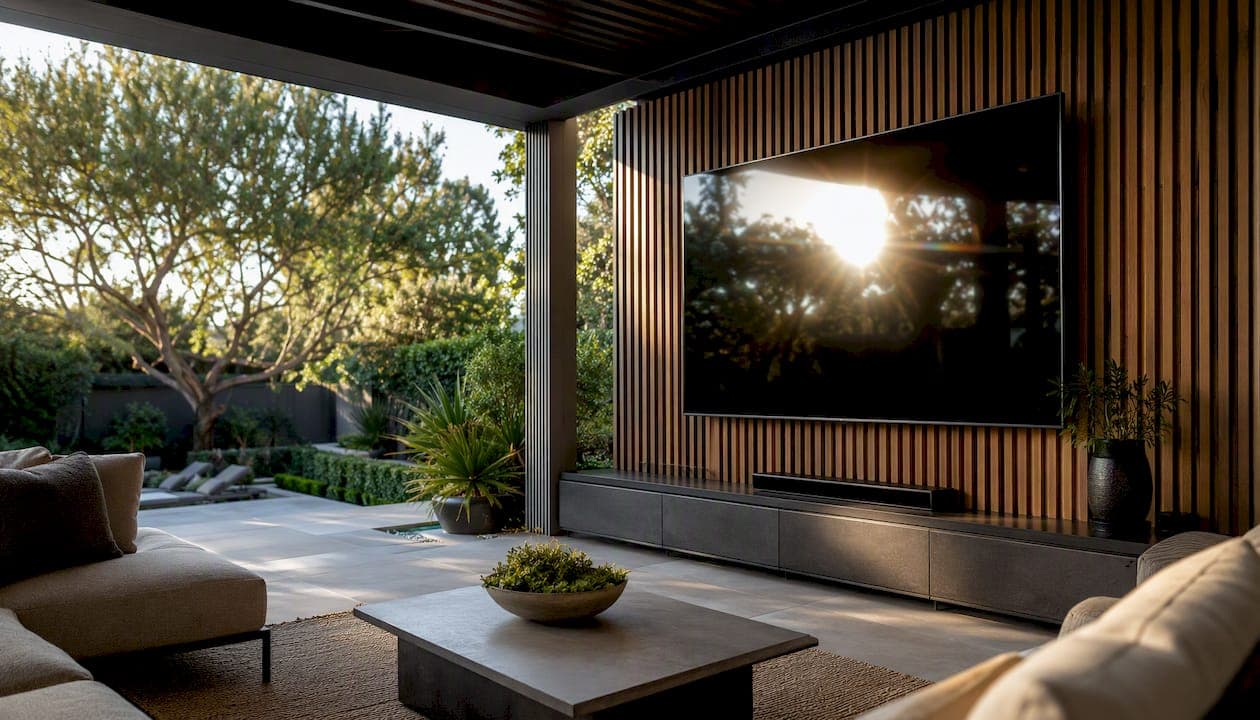
The fastest way to kill TV glare is to control the light path first, then adjust the screen angle. Close the blinds over the offending window, swivel or tilt the TV 10 to 20 degrees away from the reflection, and move any lamp that's throwing light onto the screen. If that combination doesn't fully solve it, layer in blackout shades or an anti-glare screen protector as a backup.
Try this first:
- Close curtains, blinds, or shades during peak sun hours.
- Tilt or swivel the TV 10 to 20 degrees off the light source.
- Move any lamp or bright fixture out of the reflection zone.
- Turn on a soft bias light behind the screen for evening viewing.
- Wipe the screen with a dry microfiber cloth. Smudges scatter light and make glare worse.
These five moves cost nothing but a few minutes and cover most living rooms. The sections below explain why each one works and which products are worth buying if the free fixes only get you partway there.
Key Takeaways
The most effective TV glare solutions control the light source and screen angle first, then add screen protectors or film only where room fixes fall short.
| Point | Details |
|---|---|
| Fix light source first | Close curtains or install blackout shades before touching TV settings or buying products. |
| Blackout curtains win for windows | Properly sealed blackout curtains eliminated nearly all direct sunlight reflections in testing. |
| Small angle changes work | Tilting or swiveling a TV 10 to 20 degrees redirects most lamp and side-window glare. |
| Bias lighting helps comfort, not sun | Set bias lighting to 6500K at about 10% brightness for evening viewing, not daytime glare. |
| Screen protectors trade clarity for glare control | Anti-glare protectors reduce reflections but can slightly soften sharpness, especially past 65 inches. |
Table of Contents
- Why Do TV Screens Reflect So Much Light?
- Which Window Treatments Actually Block TV Glare?
- Does Moving or Tilting the TV Reduce Glare?
- How Should You Set Up Bias Lighting Behind the TV?
- Do Anti-Glare Screen Protectors Actually Work?
- What TV Settings and Cleaning Habits Cut Glare?
- How We Tested These TV Glare Solutions
- How Do You Pick the Right Glare Fix for Your Room?
- Combining Multiple Fixes for the Best Results
- Solve Glare Where You Mount the TV, Not Just on the Screen
- What Homeowners Get Wrong About TV Glare
- Sources
- FAQ
Why Do TV Screens Reflect So Much Light?
Glare happens because a TV screen acts like a mirror for anything brighter than the image itself. Windows, lamps, and glossy furniture bounce light straight back at your eyes in a phenomenon called specular reflection, and the effect gets worse as the contrast between the screen and the room around it grows.
Three culprits cause almost every glare complaint: a window catching direct sun, a lamp positioned behind or beside the viewing seat, and a mounting angle that points the screen straight into one of those sources. That's why controlling the light path or changing the TV's angle usually beats fiddling with picture settings. Settings can compensate a little, but they can't stop a physical light source from hitting a physical screen.
Which Window Treatments Actually Block TV Glare?
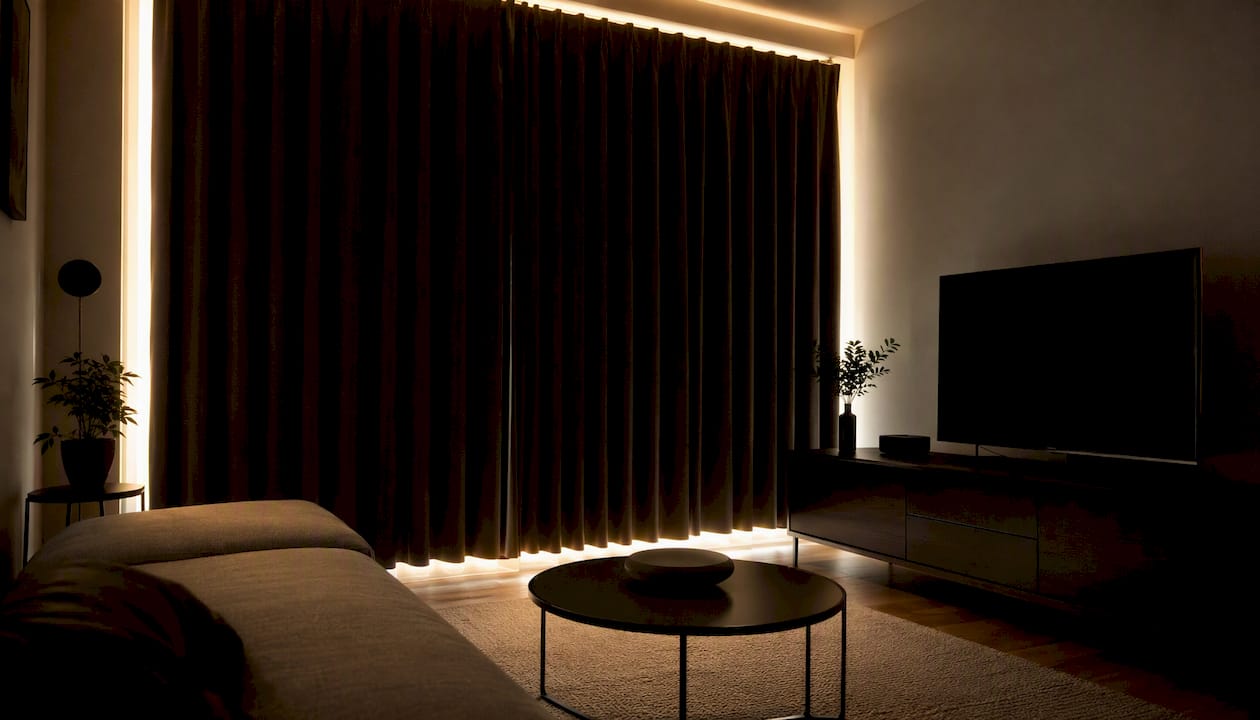
Windows cause the worst glare because sunlight is far brighter than any lamp in the room, so this is where you get the biggest return on effort. Blackout curtains are the top performer: testing across multiple rooms found true 100% blackout panels eliminated nearly all incoming light when hung close to the glass and sealed along the sides. NICETOWN 100% Blackout Curtains are a widely used option in this category, typically running $30 to $60 per panel depending on width and length, and they work well in any room where you're fine losing the view entirely during viewing hours.
If you want daylight without the glare, your options shift:
- Room-darkening curtains cut most light but let some through, a middle ground for rooms used during the day.
- Adjustable blinds let you tilt slats to redirect light upward instead of blocking it outright, useful for rooms with shifting sun angles.
- Solar or low-e window film stays on permanently, softening incoming light while preserving the outside view. Reflective films handle glare, low-e films add thermal insulation, and both are worth a professional installation for optical clarity.
Pro Tip: Mount curtain rods a few inches wider than the window frame and let panels overlap the wall by at least two inches on each side. That single detail stops the sliver of light that sneaks in around the edges of a "blackout" curtain.
Budget shapes the choice here. Blackout curtains are the cheapest full fix. Film costs more upfront but never needs closing or opening, which matters if you're pairing it with a broader room refresh like the ideas in this media wall design guide.
Does Moving or Tilting the TV Reduce Glare?
Yes, and it's often the cheapest fix nobody tries first. A perpendicular, 90-degree layout relative to your main window keeps direct sun from ever hitting the screen head-on, which is why so many living rooms with a window on the side wall have less glare trouble than ones with a window facing the seating area.
If moving the whole wall isn't realistic, a small angle change often does the job:
- Try tilting the screen down 5 to 10 degrees if the glare source is overhead lighting.
- Swivel it 10 to 20 degrees away from a side window or lamp.
- Lower the mount height slightly if the reflection lands right at eye level.
The mount you own determines how far you can go. A fixed mount gives you zero flexibility. A tilting mount buys you a few degrees of vertical adjustment. A full-motion swivel mount lets you rotate the screen toward the seating area and away from the window, which solves most side-glare problems outright. For TVs mounted above a fireplace, a pull-down mount that brings the screen to eye level often solves the glare and the neck-craning problem at once, since it changes both the angle and the viewing height.
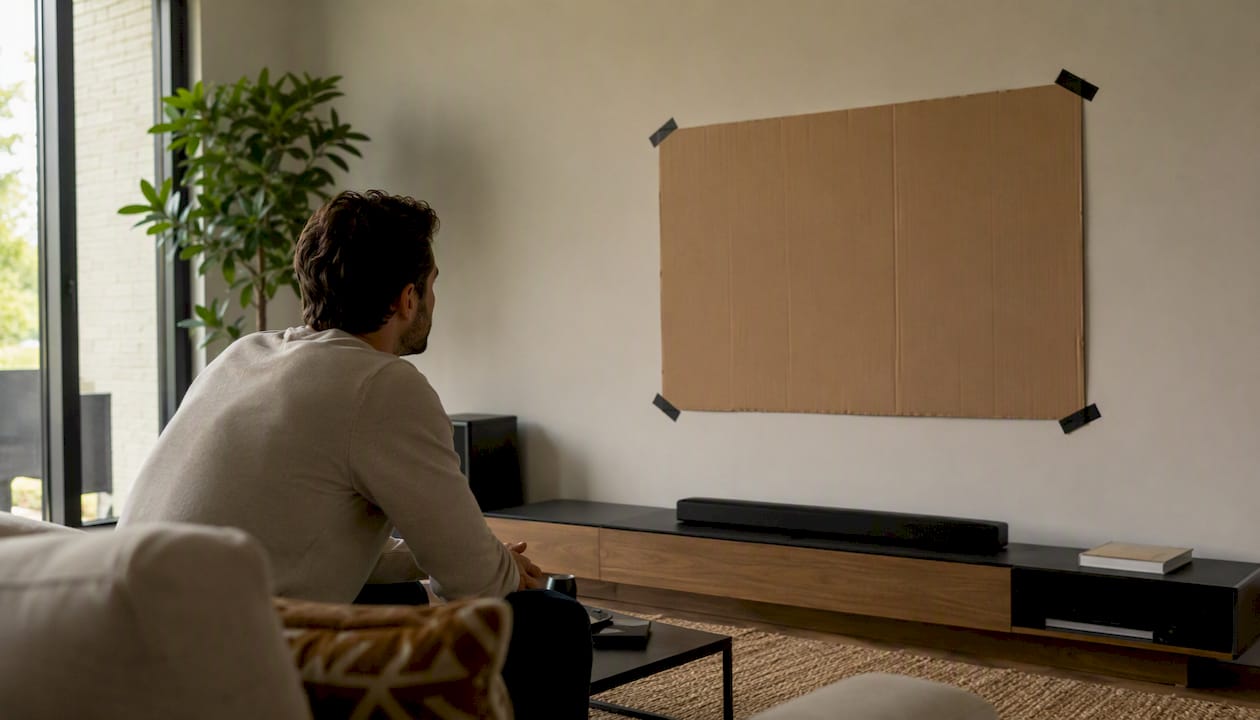
Pro Tip: Before buying a new mount, tape a piece of cardboard to the wall at the proposed TV angle and check the reflection from your usual seat. It takes five minutes and saves you from installing a mount that doesn't fix the problem. For mounting options that work with different wall types, the Media Wall Mount Guide breaks down which hardware suits which setup.
How Should You Set Up Bias Lighting Behind the TV?
Room lighting causes a different kind of glare than windows do, and it's usually a lamp placement problem, not a light-source problem. If a floor lamp or table lamp sits directly behind your viewing seat, its reflection lands squarely on the screen. Moving it to the side, or angling the shade away from the seating line, often fixes it without buying anything.
Bias lighting solves a related but separate issue: eye strain from staring at a bright screen surrounded by a dark room. It doesn't remove a daytime window reflection, but it narrows the contrast between the panel and the wall behind it, which reduces how harsh glare feels even when some reflection is still present. The recommended setup is specific: a color temperature around 6500K and brightness at roughly 10% of the screen's output, mounted directly behind the TV so it lights the wall, not your eyes.
- LED bias-lighting strips (often USB-powered, sold in kits under $20) are the simplest install.
- Smart bulbs with adjustable color temperature work if you already have ambient fixtures nearby.
- Skip bias lighting as a daytime fix. It's built for evening and dim-room viewing, not direct sun.
For home theater rooms where lighting is part of the overall design, the Home Theater Wall Ideas guide covers how to integrate bias lighting into the wall itself rather than bolting it on as an afterthought.
Do Anti-Glare Screen Protectors Actually Work?
They work, with real trade-offs worth knowing before you buy. A matte or diffusing anti-glare film scatters light across the surface instead of reflecting it in one direction, which cuts the mirror effect dramatically. The catch: product testing found these protectors reduce visible reflections but can slightly soften image sharpness and dim brightness, so they're a compromise, not a free upgrade.
They're also a better fit for some TVs than others. They're renter-friendly and reusable, which makes them appealing if you can't install curtains or repaint a wall. But fit and installation get genuinely difficult past 65 inches, so oversized screens are where they make the least sense.
Among named products, the VizoBlueX 65-inch screen protector and the Vizomax 55-inch TV screen protector are sized for common living-room TVs and use anti-glare matte coatings designed for that trade-off between reflection control and clarity. Generic anti-glare protectors in this category run a wide price range depending on coating quality, but all of them share the same core limitation: they help most against lamp glare and moderate ambient light, and they help least against a wall of direct afternoon sun, which curtains or film handle better.
If you're installing a large protector yourself, get a second person to help align it. A crooked install traps dust and air bubbles that create their own small glare spots, undermining the whole point.
What TV Settings and Cleaning Habits Cut Glare?
Picture settings won't stop a reflection, but they can keep the image from washing out once some glare is already reduced. Start here:
- Switch to a Movie or Cinema picture mode during the day. Vivid mode over-brightens whites, which exaggerates glare instead of fighting it.
- Raise backlight or OLED light moderately, not to maximum. Overdoing it blows out colors without actually beating a sunlit reflection.
- Turn off adaptive or automatic dimming, since it tends to underexpose the picture in bright rooms right when you need more contrast, not less.
None of this replaces the room fixes above. Settings are the last five percent, not the first fix.
Maintenance matters more than most people assume. Dust and fingerprints scatter light across the screen surface, which makes existing glare look worse and adds a second layer of haze on top of it.
Pro Tip: Wipe the screen weekly with a dry microfiber cloth, and only use a manufacturer-approved cleaning solution if smudges persist. Skip glass cleaner and paper towels. Both can scratch matte and anti-glare coatings.
How We Tested These TV Glare Solutions
Testing covered seven glare-reduction products across rooms with different lighting conditions: direct morning sun, afternoon side glare, and lamp-heavy evening setups. Each solution got a visual before-and-after comparison from a fixed seating position, with reflections rated against a simple checklist rather than a lab-grade meter.
The results split cleanly by category. Blackout curtains eliminated direct sunlight reflections almost entirely once properly sealed at the sides, confirming they're the strongest single fix for window-driven glare. Screen protectors reduced reflections consistently but introduced a visible softness in fine detail, especially on 4K content. Bias lighting didn't touch daytime window glare at all, but it noticeably improved comfort during evening viewing in dim rooms.
What that means by scenario:
- Bright room, direct sun on the TV: blackout curtains or solar film first.
- Evening glare from lamps: reposition the lamp, then add bias lighting.
- Renter or can't modify windows: an anti-glare screen protector sized to your TV.
- Mixed glare from multiple sources: combine a mount adjustment with one screen-side fix.
How Do You Pick the Right Glare Fix for Your Room?
Start by naming your dominant glare source, because that single answer points to almost everything else.
- Window is the main culprit: try blackout curtains or solar film first. Free option: close existing blinds during peak sun and see how much that alone helps before spending anything.
- Lamp or fixture is the main culprit: move it out of the reflection path, or swivel the TV instead. This costs nothing.
- Mixed sources, no single fix works: combine a tilt or swivel adjustment with a screen protector, since neither alone solves a multi-source problem.
Budget tiers make this easier to act on. Free fixes: closing curtains, repositioning lamps, cleaning the screen. Low-cost purchases ($20 to $60): bias lighting strips, a basic screen protector, room-darkening curtains. Premium: full-motion mounts, professional window film, or true blackout curtains sized for large windows.
Before buying anything, ask three questions: does it fit your exact TV size, is it removable or permanent, and what's the return policy if the color or clarity impact bothers you after a week of real use.
Combining Multiple Fixes for the Best Results
No single fix solves every glare source in a typical living room, which is why the strongest setups stack two or three methods instead of betting on one. The order matters: fix the light source first, then the angle, then the screen itself.
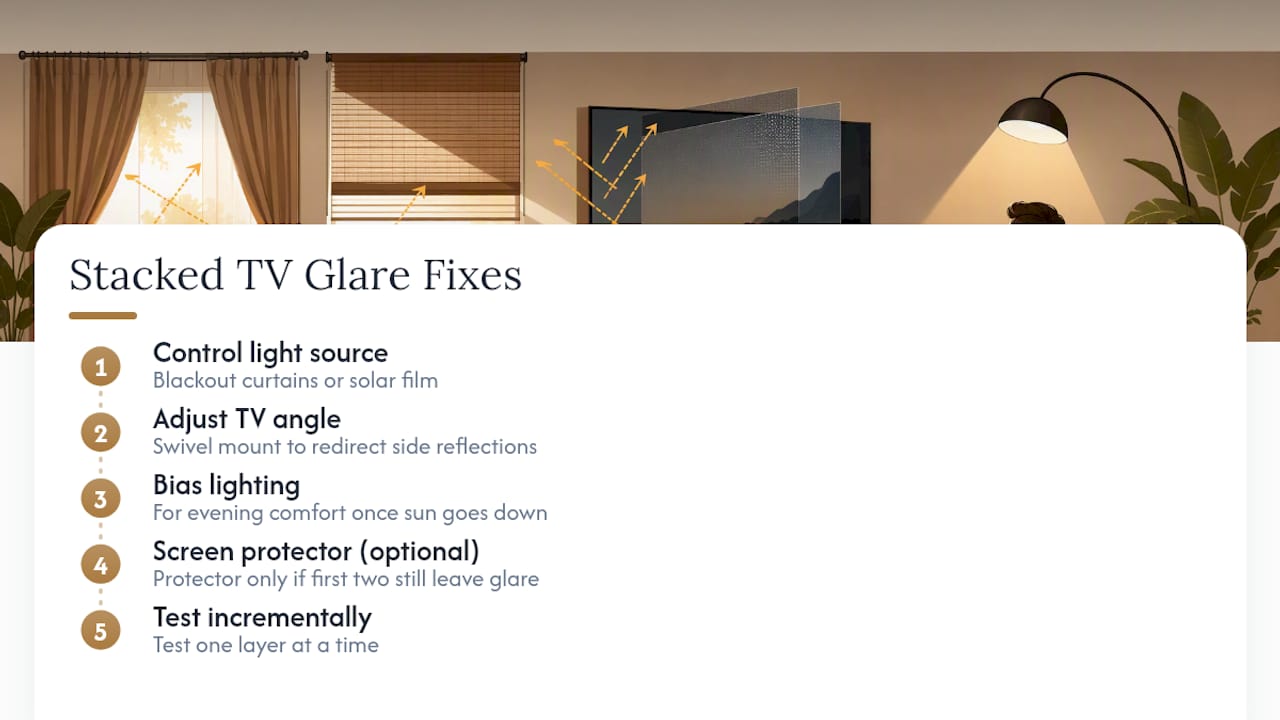
A common combination that works well: blackout curtains or solar film to kill direct window glare, a swivel mount to redirect any remaining side reflections, and bias lighting for evening comfort once the sun goes down. Each layer handles a different failure mode, so they don't compete with each other. A screen protector only earns its place in this stack if the first two layers still leave lamp glare or a fixed viewing angle you can't change.
Rooms with multiple windows or an open floor plan usually need the full stack, since no single treatment covers every angle sunlight can hit. Smaller rooms with one problem window often solve entirely with curtains and a tilt adjustment, no product purchase required. If you're planning a broader room refresh alongside your glare fix, matte or textured wall finishes near the TV, like the ideas in this accent wall paint guide, reduce secondary reflections bouncing off nearby surfaces onto the screen. Test one layer at a time so you know which one actually moved the needle before adding the next.
Solve Glare Where You Mount the TV, Not Just on the Screen
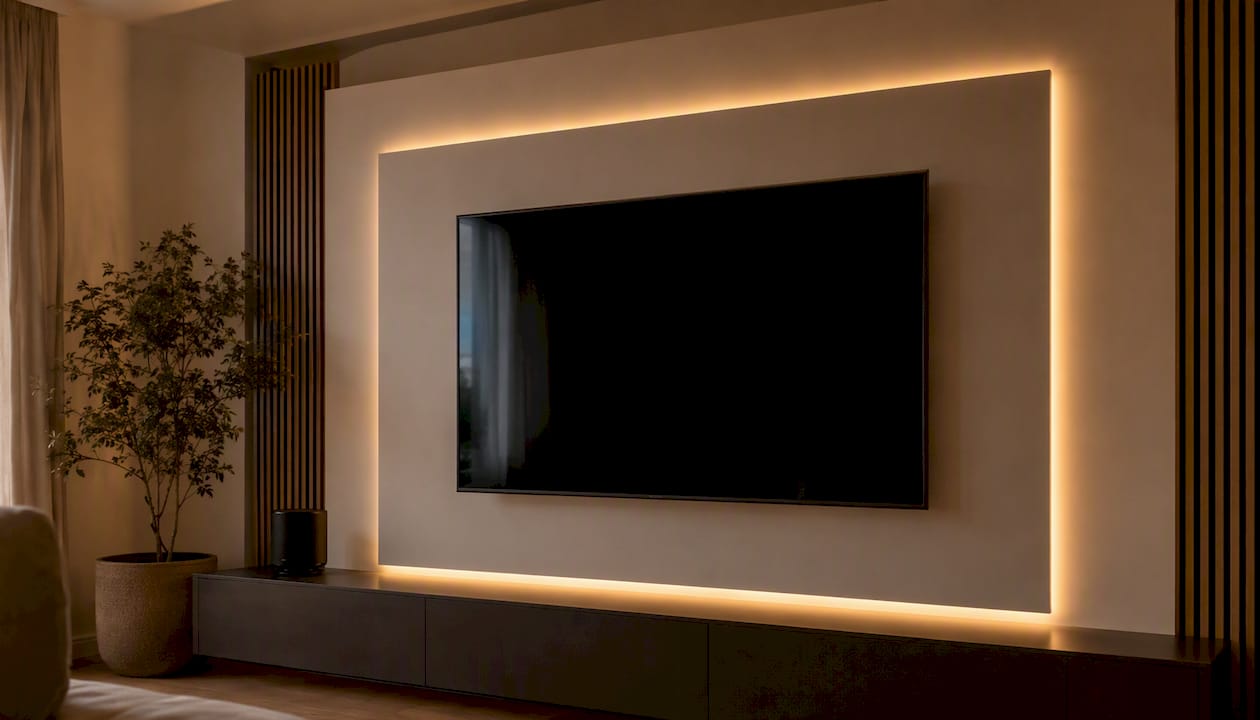
A media wall built around your actual light conditions solves glare before you ever need a curtain or a protector. Themediawallstore's DIY media wall kits come with pre-cut panels and integrated LED lighting already positioned for bias-lighting setups, so you're not retrofitting a strip light onto a stock TV stand after the fact. For rooms where the TV sits over a fireplace, a layout like the 70" Distressed White Electric Fireplace TV Stand puts the mount and cabinetry at the right height from the start, instead of forcing a pull-down mount fix later. Every kit ships pre-labeled for a weekend install, and the accessories page covers the mounts and LED add-ons that pair directly with the glare fixes covered above.
What Homeowners Get Wrong About TV Glare
Most people treat glare as a TV problem and reach for a product first. That's backward. The research is consistent on this point: room-first fixes like curtains and TV angle consistently outperform screen-only solutions, both in effectiveness and in how much picture quality you keep. A screen protector is a patch, not a cure. It's the right call when you're renting, or the window truly can't be treated, but it's rarely the best first move.
The other mistake is chasing picture settings before fixing the room. Cranking brightness to fight a sunlit window is a losing trade. You lose color accuracy and still see the reflection, because no backlight setting beats a direct light source hitting glass. Fix the light path, then the angle, then settings, in that order.
If I had to pick one underrated fix, it's the swivel mount. It's a one-time purchase that solves glare from multiple angles as the sun moves through the day, something no curtain or protector can do on its own.
Sources
- Best TV Glare Solutions: 7 Products Tested for Perfect Viewing
- How To Reduce TV Screen Glare From Windows: Step-By-Step Guide
- Behind monitor lighting
- How to Reduce TV Glare in Bright Rooms
FAQ
Is There a Film I Can Put on My TV to Reduce Glare?
Yes. Anti-glare screen protectors and matte films are designed to sit directly on the TV panel and diffuse reflections, though they can slightly soften image sharpness compared to the bare screen.
Do Anti-Glare TV Screen Protectors Actually Work?
Yes, they measurably reduce visible reflections, but testing shows they typically come with a small trade-off in brightness and clarity, so they work best as a secondary fix rather than a first move.
Can You Add Anti-Glare to a TV That Doesn't Have It?
Yes. A screen protector or matte film can be added to almost any flat-panel TV after purchase, and it's one of the few glare fixes that requires no changes to the room itself.
Does Tilting a TV Reduce Glare?
Yes. Tilting or swiveling a TV by even 10 to 20 degrees can redirect reflected light away from typical seating positions, which is why full-motion mounts are effective against lamp and side-window glare.
What's the Single Best Fix if I Can Only Do One Thing?
Cover the window causing the glare. Blackout curtains eliminated nearly all direct sunlight reflections in product testing, making them the strongest single-step fix for most living rooms.