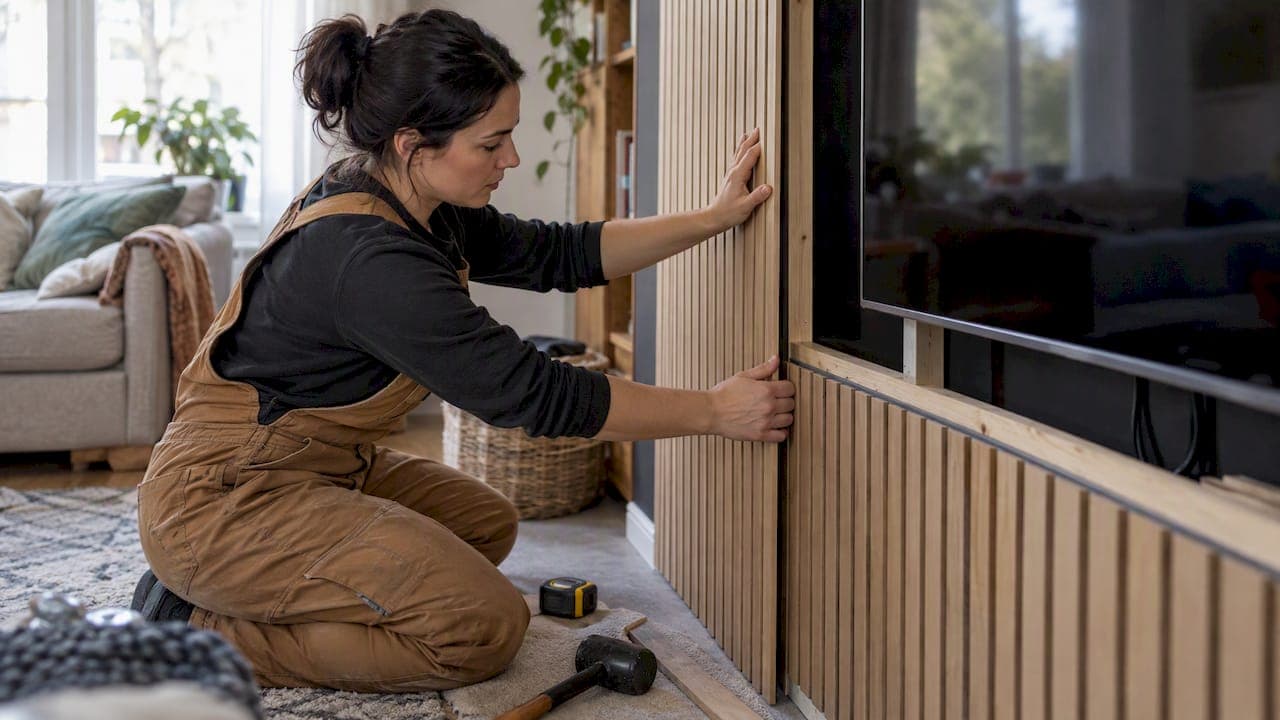
Polymer-based panels with built-in UV stabilizers, high-density engineered panels, and abuse-resistant gypsum typically last longest. Judge each on three axes: moisture, impact and abrasion, and UV colorfastness. But no material reaches its rated life on its own. Substrate prep, fastening, sealing, and routine care decide whether a panel hits its lifespan or fails early, so wall panel durability is always a system question.
TL;DR:
- For sunny walls, choose polymer with UV stabilizers built into its formulation; surface coatings wear away, and ordinary PVC or polystyrene can fade.
- For wet rooms, choose waterproof polymer or gypsum rated for mold, with sealed seams; high traffic walls suit gypsum tested under ASTM C1629.
- Even durable panels fail early over damp or uneven walls, so follow maker guidance for substrate prep, moisture barriers, expansion gaps, fasteners, and sealants.
- Before buying, request test results, written installation requirements, and warranty exclusions; UV claims without a stated test method leave performance unclear.
- Clean most finishes with mild soap and a soft cloth, inspect seams and soft spots, and repair isolated damage after fixing its cause.
Table of Contents
- What really decides how long wall panels last
- How the main panel materials compare
- How installation and detailing change real life
- How to clean, repair, and know when to replace
- How to choose panels that will last
- A practical take from a media wall specialist
- How we help your panels last
- FAQ
- Sources
What really decides how long wall panels last
Start with formulation. UV resistance is a property built into the polymer, not a coat of paint on top. Integrating HALS and UV absorbers into the polymer matrix holds up far better than a surface coating that wears away. High-end polymer formulations with HALS can show strong color stability under accelerated weathering, while lower-grade coatings can visibly degrade sooner.

Those results can be evaluated using ISO 4892 accelerated weathering, a method for testing weathering and UV resistance. Mold resistance is covered by ASTM D3273, which we revisit below.
The installation system matters just as much. A waterproof panel still needs substrate preparation, moisture barriers, and proper sealants, and damage usually starts where detailing was sloppy. Panel choice can also borrow from nearby trades: this look at which cabinet materials resist water shows the same moisture logic applied to interior joinery.
Before you buy, ask a seller to show you:
- Whether UV protection is built into the material or applied as a surface coat
- The test standards behind each durability claim
- Written substrate, adhesive, and fastener requirements
- Moisture barrier and sealing instructions for your room
- The warranty terms and what voids them
Pro Tip: If a product page claims "UV resistant" but never says how, treat that as an unanswered question, not a feature.
How the main panel materials compare
Service life depends on exposure, so treat these as cautious ranges, not guarantees. Indoor, protected installations tend toward the longer end. Wet, sunny, or high-traffic walls pull toward the shorter end.
- PVC/vinyl: It can suit humid rooms, depending on the product and installation. Lifespan varies with exposure and care. Direct sunlight is a caveat unless the formulation carries UV stabilizers.
- Polystyrene (PS): Light and easy to handle, a good fit for decorative indoor walls. It is more vulnerable to impact and UV than denser materials, so keep it out of knock-prone or sunny spots.
- WPC/composite: Usually more dimensionally stable than wood. UV and moisture performance depends heavily on the formulation, so ask what is in it.
- MDF/engineered wood: Lifespan rides on the finish. Sealing and keeping it dry can help it last longer. Direct moisture is its enemy.
- Solid wood: Can last decades with a good finish and stable humidity. Untreated wood shows significant degradation within one to two exposure seasons outdoors, so sealing is not optional.
- FRP: Strong against impact and abrasion. Moisture performance varies with the laminate and how seams are detailed.
- Abuse-resistant gypsum and gypsum-fiber: ASTM C1629 classifies surface abrasion, indentation, and soft- and hard-body impact. Panels tested to it resist abrasion, indentation, and puncture better than standard drywall, and the same source reports that USG Fiberock AR earns the highest score of 10 in mold resistance under ASTM D3273. Manufacturer submittals matter here: USG's Mold Tough VHI Firecode submittal sheet describes 5/8 in. Type X panels built to resist abrasion, indentation, and impact, with storage and installation requirements.
As a rule of thumb, stabilized polymer and coated engineered panels may last longer in average conditions. Well-protected, well-installed gypsum and sealed wood systems can also last for many years. Poor installation erases any of those advantages.
How installation and detailing change real life
A good panel on a bad wall fails early. Work through these steps, or ask your installer to confirm each one:
- Prep the substrate. The wall should be flat, dry, and compatible with the adhesive or fasteners the panel calls for.
- Manage moisture. Use the specified moisture barrier, and keep panels away from direct water unless they are rated for it.
- Leave room to move. Polymer panels expand and contract with temperature, so follow the manufacturer's gap guidance. Engineered wood needs correct screw and clip placement.
- Match adhesives and sealants. The wrong product can attack the panel chemically or trap moisture behind it.
- Check structural claims. Where a panel carries load, evaluation reports such as ICC-ES ESR-1679 show how much anchorage detail and design input are required. APA load-span tables assume dry conditions and call for adjustment factors when moisture or heat are in play.
Hire a pro when warranty terms depend on certified installation or the wall has moisture history. Our own DIY media wall weekend guide shows where a pre-cut kit simplifies the work, and a door specialist's guide to interior panel construction is a useful companion on interior finishing.
How to clean, repair, and know when to replace
Most premature replacements come from skipped upkeep or the wrong cleaner.
- Clean gently: Mild soap and a soft cloth work for most finishes. Skip harsh solvents on polymer panels.
- Fix scratches early: Veneer and polymer surfaces often respond to quick touch-ups. See our scratch repair visibility test to judge what is worth fixing.
- Inspect periodically: Check seams, fasteners, discoloration, and soft spots, which can signal hidden moisture.
- Repair or replace? A single damaged panel is usually cheaper to repair or swap than a full wall, provided the cause is fixed first.
Pro Tip: Photograph your wall in good light once a year. Slow fading and seam movement are easy to miss day to day but obvious side by side.
How to choose panels that will last
Ask these six questions of any listing:
- Is UV stability built into the formulation or only coated on?
- Which ASTM or ISO test results back the claims?
- How long is the warranty, and what does it exclude?
- Which substrates and adhesives does the maker require?
- What maintenance does the maker recommend?
- What is the repair or replacement policy?
Then apply simple rules by exposure. For wet rooms, choose waterproof polymer or mold-rated gypsum with sealed seams. For high-traffic walls, favor ASTM C1629-rated gypsum or dense engineered panels. For sun-exposed walls, insist on UV-stabilized formulations. For decorative indoor walls, finish and fit matter more than raw toughness.
When comparing warranties, anchor to the ranges above: a promise far beyond them deserves a closer read of the exclusions. Our pre-cut kits paired with installation help can reduce the risk of installation errors.
A practical take from a media wall specialist
The best panel I have seen fail was installed over a damp wall, and the plainest one I have seen last was installed right. Formulation plus installation decides whether a panel reaches its rated life. That is why our kits arrive pre-cut and pre-labeled, and why customers have trusted us with their walls. One habit to adopt: confirm the finish and UV rating before choosing anything for a sunny wall.
— Jake
How we help your panels last
We built our approach around the two things that most often shorten panel life: guesswork at install time and mismatched finishes. Here is what that looks like:
- Pre-cut, pre-labeled media wall kits that cut measuring and cutting errors
- Curated finishes chosen to work together
- Optional white-glove installation when you want it done to a professional standard
- Design help through our shop, from a Single Concept Design at $99 to a Full Design & Quote at $299
Browse the kits or book a consultation, and we will help you match panels to your wall and your light.
FAQ
How long do PVC wall panels typically last?
PVC panels' lifespan depends on UV stabilization, correct installation, exposure, and care. They may last longer indoors away from direct sun.
What is the best material for wall panels?
It depends on the wall. Mold-rated, abuse-resistant gypsum suits high-traffic and damp areas, stabilized polymer suits wet rooms, and sealed engineered wood suits dry decorative walls.
Is it hard to panel a wall?
Not with pre-cut, labeled panels and a flat, dry wall. The hard part is substrate prep and sealing, which is where most failures begin.
Does wall panel durability depend on the finish?
Yes. UV stabilizers built into the polymer hold color and strength longer than a surface coating, so ask which one you are getting.