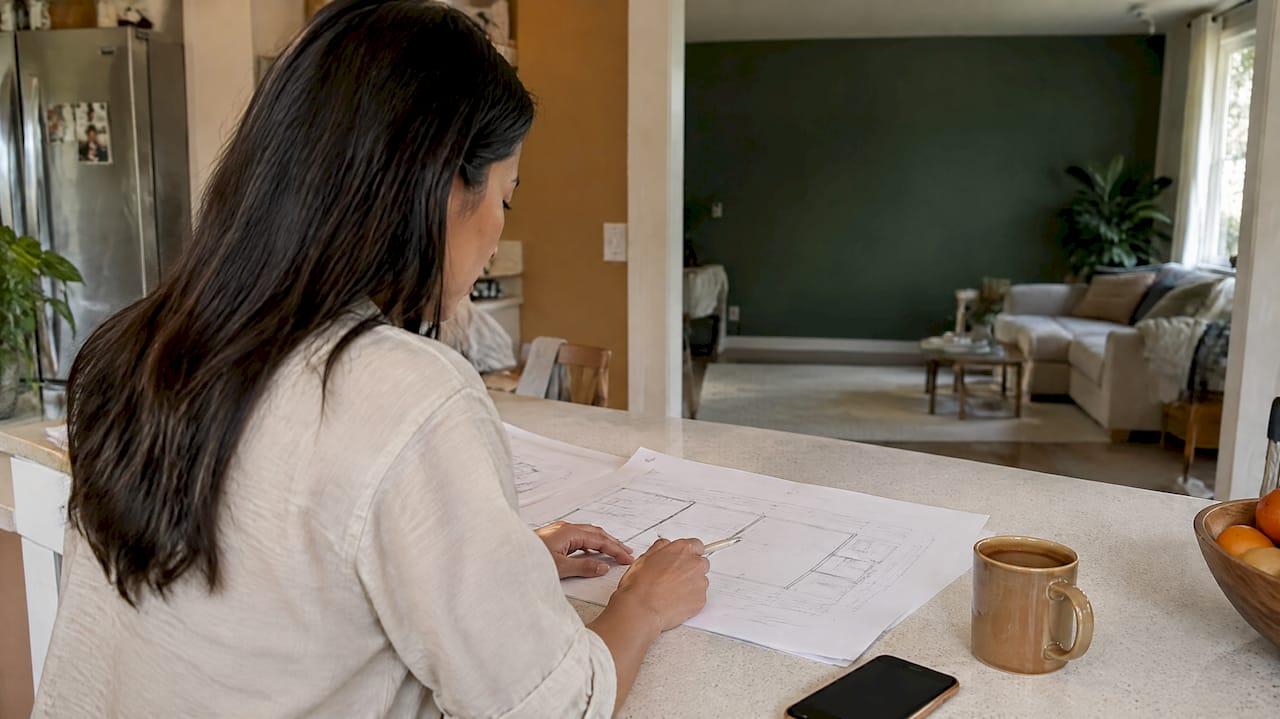
Most indoor media walls built from panels, cabinets and shelves do not need a building permit, because building departments treat that work as finish work. A permit usually comes into play when the project adds electrical circuits, moves or removes a wall, or changes the structure. Rules differ by city, so the final answer comes from your local building department. This guide shows where the line usually falls and how to check in one phone call.
TL;DR
- Cosmetic and finish work (panels, paint, cabinets, shelving) is commonly exempt from building permits.
- New circuits, outlets or relocated wiring usually need an electrical permit, often pulled by a licensed electrician.
- Removing walls or altering framing almost always needs a permit.
- Every city has its own code, so confirm with your building department before you start.
- Unpermitted work can cause fines and problems when you sell.
Table of Contents
- Why a media wall is usually not a permit project
- What can trigger a permit
- Quick reference
- How to check your local rules
- What happens if you skip a required permit
- Where finish-work lines get drawn
- Promo: a design plan that keeps the scope clear
- Our perspective
- FAQ
- Sources
Why a media wall is usually not a permit project
A media wall is mostly a decorative layer: panels, a floating cabinet, shelves, lighting and a TV mount. Permit offices draw their lines around structure, safety systems and use of the building, not around looks. Nolo's guide to home permits notes that adding kitchen cabinets or floor coverings usually does not require a building permit, while projects that change a home's structure or use are the most likely to.
City lists say the same thing in their own words:
- Chicago lists painting, wallpapering, installing cabinets or countertops without plumbing or electrical connections, and nonfixed shelves, cases and partitions no taller than 7 feet as work that needs no building permit. It adds that the work must still follow the Chicago Construction Codes.
- Berkeley, CA exempts painting, tiling, cabinets, countertops and similar finish work.
- Fayette County, GA exempts cabinets, shelving, casing, baseboards and similar millwork, and states that an exemption does not allow work that violates the residential code.
- New York City says minor work such as new kitchen cabinets, painting or cosmetic renovation needs no permit.
The pattern is consistent: slat panels, floating cabinetry and shelving fall on the finish side. Our DIY media wall guide explains how that kind of build goes together in two to three days.
What can trigger a permit
The parts of a media wall project that move it out of the exempt category are few, and you can see them coming in the planning stage.
New or moved electrical
This is the most common trigger. Fairfax, VA requires an electrical permit to add, remove or relocate wiring, light fixtures, outlets, switches or panels, though not for in-kind replacement in the same spot. San Dimas, CA lists adding a new circuit or extending one as permit work. Philadelphia requires an electrical permit for installing or altering electrical and communications wiring, while exempting minor repairs such as replacing switches and receptacles, and plugging approved portable equipment into existing receptacles.
That last distinction matters for a TV wall. Plugging a TV, soundbar and an LED strip into outlets that already exist is one thing. Cutting in a new outlet box behind the TV is another. If you want power at the TV location, read two legal ways to power a wall-mounted TV under the NEC, and see our notes on outlet placement for a media wall before you decide how many receptacles you need.
Who pulls the permit also varies. Washington, DC issues plumbing, mechanical and electrical permits only to licensed and bonded master trade professionals, so homeowners cannot apply for them. Some other jurisdictions allow owner-builder electrical permits with inspection, so ask which applies to you.
Moving or removing walls
Building a media wall in front of an existing wall is not the same as building a new one. Richardson, TX requires a permit for all alterations, including moving or erecting walls, with dimensioned before-and-after floor plans and a framing plan for structural changes. Chicago's exemption covers removing or replacing up to 1,000 square feet of drywall only when mechanical, electrical and plumbing systems are untouched. If your design opens up a wall to recess a TV or fireplace, check that the cut does not affect framing or wiring.

Fireplaces and gas
An electric fireplace plugged into an existing outlet is typically an appliance. A gas unit is a different matter: Richardson asks for a fuel gas sizing plan for gas appliances. If you are planning a recessed electric unit, our safety rules for recessed electric fireplaces cover clearances and power.
Rules by height and fixed versus movable
Some cities exempt partitions and fixtures only up to a certain height: 7 feet in Chicago, 5 feet 9 inches in Berkeley. A wall-mounted panel system that is attached to an existing wall is treated differently from a freestanding partition, which is one more reason to describe your project precisely when you call.
Quick reference
| Project element | Usually permit? | Why |
|---|---|---|
| Slat or flat wall panels over existing wall | No | Finish work |
| Floating cabinets and shelves | No | Cabinet and millwork exemptions |
| Paint, wallpaper, trim | No | Cosmetic |
| Plugging a TV into an existing outlet | No | Existing equipment |
| New outlet or circuit behind the TV | Usually yes (electrical) | Wiring added |
| Relocating switches or lights | Usually yes (electrical) | Wiring moved |
| Removing or altering a wall | Yes | Structural change |
| Gas fireplace | Often yes | Gas system |
This table summarizes the city rules above, not a ruling for your address.
How to check your local rules
Because each municipality has its own building code, a project that needs nothing in one city can need a permit in the next one over. Here is the routine.
- Write a one-paragraph scope. List what you are doing: panels over the existing wall, floating cabinet, LED lighting, TV mount, and whether any outlet or wire is new.
- Find your building department. Search your city or county name plus "building permits." Many cities have a "find my permit" tool, such as Raleigh's residential permit directory, which requires electrical permits for new circuits, outlets, switches or lighting.
- Ask the specific question. "I'm adding decorative wall panels and a floating cabinet over an existing wall. Is any permit needed? Does adding an outlet need an electrical permit?" Get the answer by email if you can.
- If a permit is needed, expect an application, a plan or site sketch, the permit before work begins, scheduled inspections and a final approval, as Nolo outlines. Hall County, NE, for example, lists framing, electrical rough-in and final inspections for remodels, and requires permits for new electrical installations.
- Check the code year. Codes update. Boulder, CO says permits applied for on or after August 1, 2026 are reviewed under the 2026 NEC, so an electrician will quote against the code in force where you live.
Homeowners in condos and HOAs often have extra approval layers on top of the city. Our media wall guide for condos covers layouts and rules for that case.
What happens if you skip a required permit
For a panel-and-cabinet wall that is exempt, nothing. The risk sits with the electrical or structural pieces. Philadelphia's L&I says retroactively legalizing unpermitted work can require plans for completed work and destructive inspections when wiring is covered, and that violations carry a statutory fine of at least $300 per violation per day. The same guide warns that unpermitted work stays with the property, so a new owner can inherit compliance costs.
If you hire anyone, the owner remains responsible. NYC's Department of Buildings stresses that owners answer for all work on their property, so verify licenses. For plans, inspections and paperwork on larger projects, a homeowner's guide to plans and inspections shows how documentation works on a build that does need sign-off.
Where finish-work lines get drawn
Offices separate decorative additions from construction by asking whether the work alters the structure, a building system or the use of the space. A guide on balancing wall decor with home theater design helps with the visual side once the permit question is settled.
Promo: a design plan that keeps the scope clear
Our kits are pre-cut and pre-labeled, with hidden wire management and integrated LED lighting, built to go up in a weekend without a contractor. A clear scope is also what makes your permit call easy, and our design packages put it on paper: Single Concept Design at $99, 3 Concepts + Revision at $199, or Full Design & Quote at $299. In the SF Bay Area we also offer white-glove installation, and every kit can be returned risk-free.

Browse the media wall designs or see how it works.
Our perspective
We have watched homeowners worry about permits for a project that is mostly panels, a cabinet and a TV mount. In nearly every case the real question is narrower: are you adding electrical? Plan the wall around the outlets you already have, or decide early to bring in a licensed electrician for new ones, and the rest of the project stays in finish-work territory.
That is why we design our kits as a modular, pre-engineered layer with hidden wire management: the wall looks custom, the build stays simple, and you know the scope before you call your city. A written design makes that call a two-minute conversation.
Jake
FAQ
Do I need a permit to install slat wall panels?
Usually not. Cities such as Chicago, Berkeley and Fayette County list decorative finish work and cabinets among exempt items. Confirm with your own building department, since local codes differ.
Do I need a permit to add an outlet behind my TV?
Often yes. Fairfax, VA and San Dimas, CA require electrical permits for new outlets or circuits. Some places let licensed electricians pull it, others allow owner permits, so ask your city.
Is a permit required for an electric fireplace in a media wall?
A plug-in electric unit on an existing outlet is generally treated as an appliance, but new wiring to power it can need an electrical permit. Gas units involve a gas system and commonly need one.
Who is responsible if work is done without a permit?
The owner. Unpermitted work can bring fines, inspections that open walls and issues at sale, and it stays with the property.
Sources
- Nolo: When Homeowners Must Obtain Permits for Home Projects
- City of Chicago: Interior Finishes and Furnishings
- City of Berkeley: Work Exempt from Building Permits
- Fayette County, GA: Residential Permit Guide
- NYC Department of Buildings Work Permits Guide
- City of Fairfax, VA: Permit FAQs
- City of San Dimas: When Do I Need a Permit
- Philadelphia Start Right guide
- Washington, DC Homeowner's Center
- Richardson, TX: Interior Remodel
- Raleigh: Find My Residential Permit
- Hall County, NE: Inspections and What Needs Permits
- Boulder: Building Permits and Inspections
- Philadelphia L&I Atlas