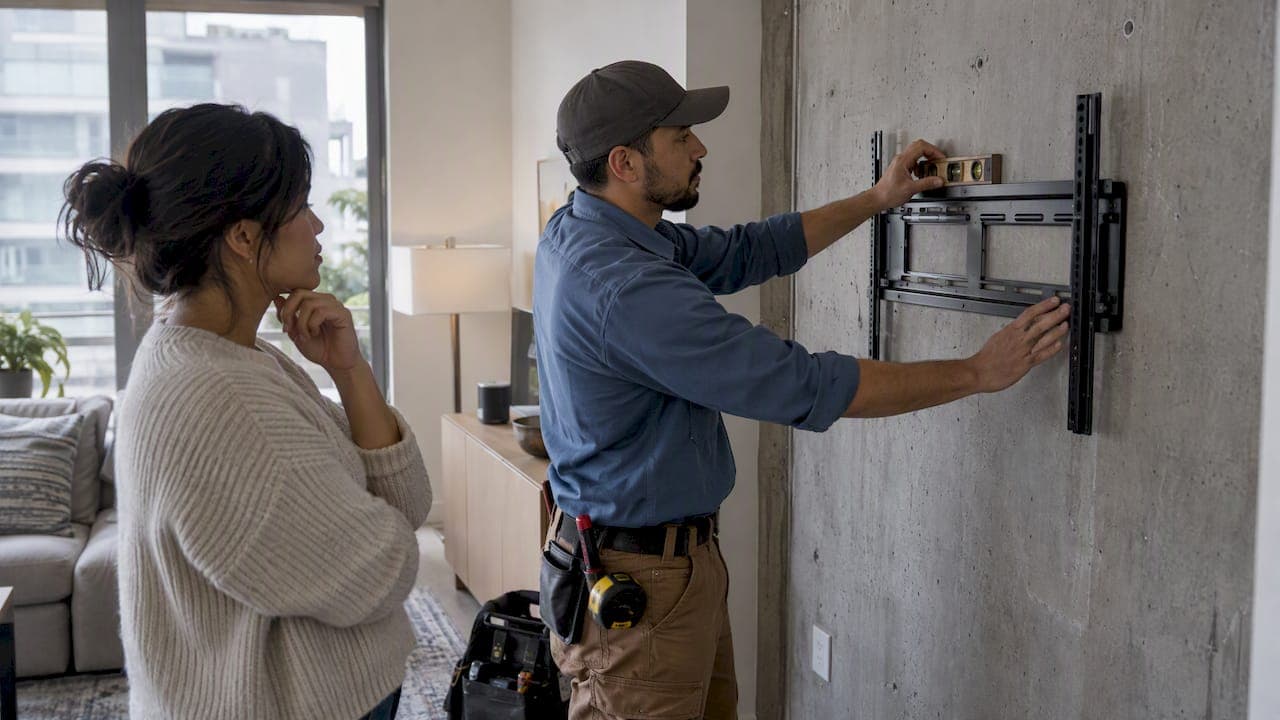
For most San Francisco condos, the right call depends on your wall. Hire a vetted local installer when you have metal studs, concrete, or lath-and-plaster and want wire concealment or an above-fireplace mount. Choose a pre-cut media wall kit from The Media Wall Store, with optional Bay Area white-glove installation, when you want a faster, high-end finish without a full custom build. Either way, confirm your wall substrate and anchor the TV properly before anything goes on the wall, since the Consumer Product Safety Commission recommends anchoring TVs regardless of how they're mounted.
TL;DR:
- Installing on metal studs or concrete requires specific hardware and inspection to ensure proper anchor placement, especially in older or mixed-wall buildings.
- Costs range from a few hundred dollars for basic drywall mount-only jobs to over $17,000 for fully custom media walls with finishes and built-in systems, depending on scope and wall type.
- Wall substrate knowledge is crucial; guessing incorrectly on lath-and-plaster or masonry walls can cause structural damage, requiring professional assessment before mounting.
- Renters should use surface raceways or paintable channels for cable concealment, as in-wall power relocation demands permits and is usually limited to owners.
- A pre-cut media wall kit offers a quick, designed solution with hidden wire channels and minimal patching, ideal for straightforward condo walls, while complex or heavy setups benefit from a professional.
Table of Contents
- Top ways to get a TV wall in a San Francisco condo
- What installation typically costs in San Francisco and what drives price
- Condo wall types and the mounting constraints you must check first
- Power, wiring, and concealment options that work for condos
- How to hire and brief an installer in San Francisco: questions, red flags, and prep checklist
- Client solution: how a pre-cut media wall kit solves common SF condo constraints
- Author perspective: Jake on where DIY works and when to call a pro
- How The Media Wall Store helps San Francisco condo owners: offer and next steps
- FAQ
- Sources
Top ways to get a TV wall in a San Francisco condo
A local installer makes sense when your condo has an unusual substrate or you want the wiring fully hidden. Most San Francisco installers offer a handful of standard packages:
- Mount-only: bracket installation on a confirmed stud or masonry anchor, no wire work.
- Mount plus bracket: installer supplies the mount and handles TV placement and leveling.
- Wire concealment: in-wall cable routing with a low-voltage kit, often paired with a new outlet.
- New outlet or power relocation: a licensed electrician moves power behind the TV.
- Recessed mount: the bracket sits flush or near-flush, common for fireplace walls.
A pre-cut kit, like the panels from The Media Wall Store, fits owners who want a finished, designed wall rather than just a mounted screen. Panels arrive pre-labeled with hidden wire channels built in, so a weekend project replaces a multi-day custom build. DIY stops being the right choice once the substrate is unknown, the TV is oversized or especially heavy, or the mount sits above a fireplace where structural support and heat clearance both matter. In those cases, a quick inspection from a pro before you buy anything saves a wall repair later.
What installation typically costs in San Francisco and what drives price
Pricing in San Francisco tracks the wall more than the TV. A straightforward mount-only job on drywall tends to sit at the low end, while media wall projects in San Francisco commonly range from $3,000 to $17,000 once you add custom cabinetry, lighting, or a full design build.
Rough bands to expect, by scope:
- Mount-only on an identified stud: lowest cost, fastest job.
- Mount plus wire concealment: moderate increase for the low-voltage kit and patching.
- In-wall power relocation: adds licensed electrician time and possibly a permit.
- Recessed mount or fireplace install: higher cost due to structural checks and finish work.
- Full media wall kit with white-glove installation: pricing varies by design complexity and finishes chosen.
Older buildings add cost on the substrate alone: lath-and-plaster and masonry walls take longer to anchor correctly than drywall, which shows up directly in the quote. Ask every installer for an itemized estimate and photos of comparable completed jobs before you book, since SF parking and travel surcharges can otherwise appear as a surprise line item.
Condo wall types and the mounting constraints you must check first
San Francisco's building stock is mixed: Victorian flats with lath-and-plaster, mid-century wood-stud condos, and newer high-rises built on metal studs or poured concrete. Each substrate calls for different hardware, and guessing wrong is how brackets fail.
- Wood studs: tap the wall every 16 inches for a solid sound; a stud finder confirms it. Use through-stud lag bolts rated for the mount's load.
- Metal studs: lighter tap, slightly hollow sound, and a magnet will catch screw heads behind drywall. Self-tapping metal-stud screws or toggle anchors through the stud flange hold best; see our guide to mounting on metal studs for hardware specifics.
- Lath-and-plaster: older buildings often hide wood lath strips behind plaster; a stud finder can misread the lath as solid backing. Toggle anchors rated for plaster, not drywall-only anchors, are required here.
- Concrete or masonry: a dense, dull knock and no stud reading at all. Masonry anchors or sleeve anchors drilled into the concrete do the job; our brick and masonry mounting guide walks through the drill bits and anchor types.
The risk of guessing wrong isn't cosmetic. An anchor rated for drywall in a plaster or masonry wall can pull loose under the TV's weight, and flatpanel mounts are generally tested against multiples of the TV's weight, so the margin for error is already built into quality hardware, not into guesswork on the substrate.
Pro Tip: Before buying anchors, tap the wall in a grid pattern across the planned mount area, not just at one spot, since studs and lath can shift within a single panel.

Power, wiring, and concealment options that work for condos
Condos limit how much you can cut into a wall, so the right wiring approach depends on whether you own the unit or rent it. Surface raceways and paintable channel covers need no wall cuts and suit renters who want a clean look without altering shared structure; see our guide to hiding wires without cutting walls for options. In-wall power relocation, where a licensed electrician moves an outlet behind the TV, requires permits in many SF buildings and is a permanent change best suited to owners; our safe DIY wiring guide covers when that step is worth it.
- Surface raceways: no permit, renter-friendly, visible but paintable.
- In-wall power relocation: permit and electrician required, cleanest result.
- Recessed power and signal boxes: owner-only, built into new construction or renovation.
- Wire-management kits: bundle cables along the wall or inside furniture, no cutting.
| Option | Permit needed | Best for |
|---|---|---|
| Surface raceway | No | Renters, quick setup |
| In-wall power relocation | Yes | Owners, permanent install |
| Recessed power box | Yes | New builds, renovations |
| Wire-management kit | No | Any condo, visible hardware |
Keep set-top boxes ventilated and within remote line of sight; our guide to hiding a cable box covers placement that avoids overheating.
How to hire and brief an installer in San Francisco: questions, red flags, and prep checklist
A short screening call saves a bad install. Ask these before booking:
- Have you mounted TVs in condos with lath-and-plaster or concrete walls?
- Can you show proof of insurance and bonding?
- Do you handle permits for power relocation, or do I need to arrange that?
- Can you share photos of a comparable condo job?
- What's included in cleanup, and is there a workmanship warranty?
Red flags include no insurance paperwork, reluctance to inspect the wall before quoting, and vague answers about prior condo experience.
Before the visit, prepare:
- TV weight, screen size, and mount model if you've already bought one.
- Clear floor and wall access, with furniture moved.
- Your condo association's rules on wall modifications, if any apply.
Client solution: how a pre-cut media wall kit solves common SF condo constraints
A pre-cut, pre-labeled kit removes most of the guesswork that drives up installer time. Panels arrive sized for common TV footprints with hidden wire channels built in, so there's no on-site cutting, minimal dust, and far less patching than a custom build requires.
- Pre-cut panels and labeled hardware cut assembly to a weekend.
- Hidden wire management keeps cables out of sight without wall surgery.
- Finish options let a DIY build look custom without custom pricing.
- Optional white-glove installation handles the parts you'd rather not do yourself.
Explore kits and design packages on our shop page, or see installation details on our media wall kits page.
Author perspective: Jake on where DIY works and when to call a pro
My take after looking at both routes: a kit wins when your wall is straightforward and you want a designed look fast. A pro wins the moment the substrate is uncertain, the mount is going above a fireplace, or the TV is large enough that a failed anchor becomes a real hazard. The honest shortcut is to identify your wall type first, then pick the path that fits it, rather than picking a method and hoping the wall cooperates.
— Jake
How The Media Wall Store helps San Francisco condo owners: offer and next steps
We built our kits so a weekend replaces a multi-week custom build. Pre-cut panels, hidden wire channels, and a range of finishes give a condo living room a designed look without a contractor crew in your unit for days. For owners who want the design handled without doing the labor, white-glove installation covers the parts a DIY schedule can't always fit.
- Browse kits and design packages on our shop page.
- Request a quote or send room photos to get a finish recommendation online.
Orders come with expert support and a return policy if the kit isn't right for your space.
FAQ
Where can I get my TV mounted in San Francisco?
Local AV installers and handyman services across San Francisco offer TV mounting, with packages ranging from mount-only to full wire concealment and new outlets. For a designed wall rather than just a mounted screen, a pre-cut kit with optional white-glove installation is a direct Bay Area option.
What's the average cost to install a TV on the wall?
Cost depends heavily on wall type and scope, with full San Francisco media wall projects commonly running $3,000 to $17,000 once cabinetry and finishes are included. A basic mount-only job on drywall costs far less than a recessed mount with power relocation.
What are the rules for mounting a TV on the wall?
There's no single mounting code, but safety guidance from the Consumer Product Safety Commission recommends anchoring TVs to prevent tip-over, and many condo associations require approval before altering shared walls. Always confirm your building's rules and the wall substrate before drilling.
What are some famous TV show houses in San Francisco?
San Francisco's Victorian row houses, like the "Painted Ladies" near Alamo Square, are widely recognized from television and film due to their distinctive architecture. That architectural era is also why so many San Francisco condos still have lath-and-plaster walls, which changes how a TV should be mounted.